Archive for the ‘Books’ Category

7
Jul

The pages of history: J. N. Petit Library

   Posted by: arzan sam wadia   in Bombay, Books, Mumbai

The staff of the JN Petit, home to 150,000 titles, do more than just take care of books

If you can’t remember the last time you visited a heritage library, you are not alone. Edged out by modern lending libraries, and threatened by the Internet, Mumbai’s heritage libraries are floundering. Some have been able to get companies to help restore their period architecture, but most struggle to get funds for conservation and even the purchase of books.

The JN Petit Library at Fort is a typical example of a once-magnificent library running to seed. Housed in a beautiful heritage building dating back to 1895, this massive library has 150,000 books, including a rare copy of Firdausi’s 11th century epic poem The Shahnama, illustrated with gold leaf. Its huge, airy reading room, with stained glass portraits of the Petit family, is supposedly the largest in Asia. Its eclectic collection of books includes rare Parsi and religious books dating from the 16th century, as well as modern self-help books and current copies of magazines such as The New Yorker and Scientific American.

Read the rest of this entry »

Bookmark this entry: These icons link to social bookmarking sites where readers can share and discover new web pages.
  • del.icio.us
  • digg
  • Reddit
  • Furl
  • Facebook
15
May

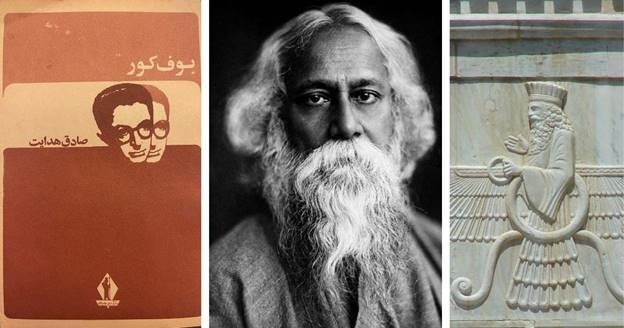
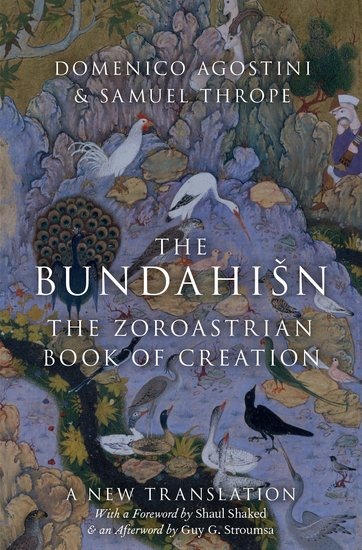
Shahnameh: The Great Poem That Came Out of Persia

   Posted by: Mehernaaz Sam Wadia   in Books, History, Iran

By ROYA HAKAKIAN

My earliest memories of the Shahnameh, the greatest work ever written in the Persian language, belong to my childhood in Iran. I and other girls in my elementary school recited verses of the epic poem, rounding out our chests and puffing our cheeks in our best effort to strike the pose of peacocks brimming with pride. Too young to grasp the book’s literary merits, we nonetheless understood it to be the deed to our nation’s glory.

If it were possible, Iranians would raise the Shahnameh on flagpoles and swear allegiance to it. No other book captures so much of Iran’s history while revealing the innermost workings of the Iranian sensibility and preoccupations. The Shahnameh has attained its revered status not only because of the truths it speaks but also because it embodies something that goes unspoken: the struggle of Iranians to maintain their identity.

Read the rest of this entry »

Bookmark this entry: These icons link to social bookmarking sites where readers can share and discover new web pages.
  • del.icio.us
  • digg
  • Reddit
  • Furl
  • Facebook
22
Jan

Mehernosh Mody: La Porte des Indes

   Posted by: arzan sam wadia   in Books, Food and Drink

The Legacy of France in Indian Regional Cuisine

The creation of the famous La Porte des Indes restaurants that sprinkle Europe is as much a love story as it is anything else.

In 1986, Mehernosh Mody hired a young chef, Sherin, as his assistant. They soon were inseparable, and their mutual love for one another and French-Indian cuisine bore the very first La Porte des Indes in London.

After a 2.5 million pound, two-year transformation, this quiet, humble restaurant soon became one of the most respected eateries in all of Britain — winning the praise of Pat Chapman, founder of The Curry Club.

He awarded it Best UK Restaurant twice, a difficult achievement considering Britain is home to 8,500 Indian restaurants. Today, the Modys and their small team of chefs prepare at least 300 meals a day.

The restaurant’s history and recipes are showcased in Mehernosh and Sherin Mody’s book, La Porte des Indes Cookbook: The Legacy of France in Indian Regional Cuisine.

Looking back

Before their success, however, Mehernosh and Sherin researched France’s presence in India. It is a history they share with readers early on in their book. In 1670, the French arrived on India’s southeastern coast. And for 300 years, a Creole community of people of French extraction and of Franco-Indians lived there.

Read the rest of this entry »

Bookmark this entry: These icons link to social bookmarking sites where readers can share and discover new web pages.
  • del.icio.us
  • digg
  • Reddit
  • Furl
  • Facebook
14
Jan

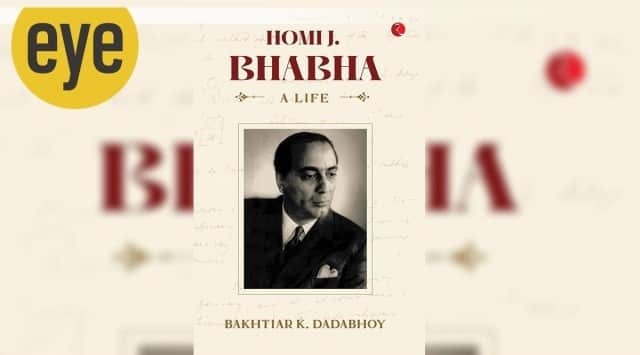
Sugar in Milk : Lives of Eminent Parsis by Bakhtiar K. Dadabhoy

   Posted by: arzan sam wadia   in Books

Authoritative, fascinating and insightful, Sugar in Milk is a collection of twelve in-depth profiles of some of the greatest Parsis India has produced.

Ranging from the nineteenth century to the contemporary, here are freedom fighters and industrialists, a lawyer and a scientist, a field marshal and a western classical musical conductor.

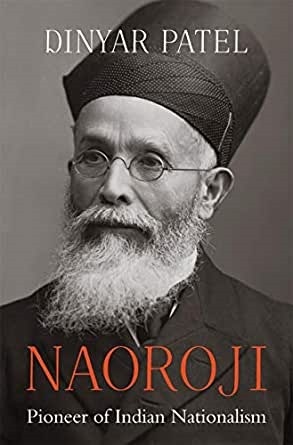
They are ordered chronologically and provide fascinating juxtapositions of characters, so Ardeshir Godrej follows Madame Bhikhaiji Cama, and Zubin Mehta follows Nani Palkhivala. Other personalities in this collection include Sir Jamsetjee Jejeebhoy, Dadabhai Naoroji, Jamsetji Nusserwanji Tata, Sir Pherozeshah Mehta, A.D. Shroff, J.R.D. Tata, Homi J. Bhaba and Field Marshal Sam Manekshaw. Liberally illustrated with photographs, this is the first collection of its kind in recent times.

Written in a simple anecdotal style, these biographies of exceptional Parsis are also a revealing history of the times they lived in. Endlessly engaging, this is an indispensable volume for anyone with an interest in knowing about the contribution these great Parsis have made to national life.

Bookmark this entry: These icons link to social bookmarking sites where readers can share and discover new web pages.
  • del.icio.us
  • digg
  • Reddit
  • Furl
  • Facebook
8
Sep

Sons And Other Flammable Objects By Porochista Khakpour

   Posted by: arzan sam wadia   in Books, Iran

Sons And Other Flammable ObjectsBy Porochista Khakpour. 398 pages. $24. Grove Press.

By Judy Budnitz

In the opening scenes of Porochista Khakpour’s novel “Sons and Other Flammable Objects,” we meet the Adam family. The Adams fled their homeland, Iran, during the revolution, and now live in Southern California in an apartment complex called Eden Gardens. There, the father, Darius, begins a campaign to protect the local blue jays by belling the complex’s cats, provoking the perplexed irritation of his neighbors and the embarrassment of his son, Xerxes. Years later, when Darius visits his now grown son in his apartment in New York, Xerxes asks his father to explain the incident. Darius instead relates a different story, one from his childhood that has weighed on his conscience ever since, a story that also involves birds but in which he is abuser rather than savior. The story so shocks his son and shames Darius that the two resolve never to speak to each other again. What purports to be their final conversation, appropriately enough, concerns the allowable weight of carry-on baggage.

Read the rest of this entry »

Bookmark this entry: These icons link to social bookmarking sites where readers can share and discover new web pages.
  • del.icio.us
  • digg
  • Reddit
  • Furl
  • Facebook
22
Jun

Thrity Umrigar: If Today Be Sweet

   Posted by: arzan sam wadia   in Books, Individuals

A Disquieting Clash of Cultures

In a wintry suburb of Cleveland, a recently widowed Parsi named Tehmina has come from her apartment in Bombay to visit — maybe to live with — her only son, Sorab, and his American wife, Susan. The couple have a 7-year-old child nicknamed Cookie, on whom Tehmina dotes. If this were India, it would be a given that Tehmina would live out her life with this small family, but this is America, and Susan has been complaining about the gray hairs her mother-in-law has been leaving in the shower. It’s unclear just how long Tehmina has been visiting, but the premise of the novel depends on whether she’ll return to Bombay — where she has no family and very few friends — or decide to stay in this sterile and isolated American suburb. It’s the middle of December, and she needs to decide by the New Year.

It seems like a straightforward idea for a novel, an opportunity to explore cultural differences and so on, but things don’t go right in this story. Thrity Umrigar, born and raised in Bombay, moved to Ohio to go to college. She was a journalist for many years and has a PhD in English. She should be thoroughly versed in both Parsi and American culture, but these characters — major and minor ones — seem just a bit hesitant, even sketchy. At one point, out on the couple’s front lawn, Tehmina remarks, “I think I’ll go inside for a few minutes.” Twelve lines later, her daughter-in-law suggests, “Listen, why don’t you go inside for a bit?” Repetitive, disconnected speech like this was employed by Stephen Crane in “The Red Badge of Courage,” and certainly by Pinter in some of his plays, but it seems strange in a conventional, domestic novel of manners.

Read the rest of this entry »

Bookmark this entry: These icons link to social bookmarking sites where readers can share and discover new web pages.
  • del.icio.us
  • digg
  • Reddit
  • Furl
  • Facebook
25
Apr

The Song of Kahunsha

   Posted by: arzan sam wadia   in Books, Individuals

Canadian novelist and playwright Anosh Irani pulls back that iconic image of his home city of Mumbai, India — malnourished and deformed beggar children — to reveal the tender heart of human need in his devastating yet surprisingly gentle novel, “The Song of Kahunsha.” In this tale of a 10-year-old boy struggling to maintain hopefulness, Irani threads strands of beauty and kindness into the weave of violence, squalor and depravity. The characters he creates face utter peril and are forced to degrade themselves daily, but his hero, little Chamdi, still dreams of Mumbai becoming a place he calls Kahunsha (City of No Sadness).

Chamdi lives in an orphanage when we meet him; he is skinny to the point of protruding ribs, but he is relatively well cared for by benevolent adults and is free to dream. When the orphanage is forced to close, however, Chamdi flees into the streets of Mumbai in search of the father he never knew. To guide him, Chamdi has only a white cloth with three drops of blood he believes belonged to his father when the man abandoned his son at the orphanage.

Read the rest of this entry »

Bookmark this entry: These icons link to social bookmarking sites where readers can share and discover new web pages.
  • del.icio.us
  • digg
  • Reddit
  • Furl
  • Facebook
5
Mar

Rusi Lala writing book on 100 yrs of Tata Steel

   Posted by: arzan sam wadia   in Books, Industry

It is a history of the makers of steel. Make that Tata Steel. RM Lala, the official biographer of JRD Tata, Beyond the Last Blue Mountain, may be pushing 80 but he is busy with his latest work, The History of Tata Steel, to be released this year, its centenary year. Clad in his trademark Parsi cap and coat, the frail Lala is having his customary evening cuppa with his wife and friend at the Parsi Gymkhana when we catch up with him. What strikes one at the outset is Lala’s genteel self, his interest in and concern for people, and the deep respect and love for JRD.

The Tatas and Russi Lala’s bonding is stuff of legend. But what really makes him want to go through the whole writing process again? He dismisses his role lightly: “I am just doing one part of the book. I had written it years ago and Muthuraman [MD, Tata Steel] wanted me to complete it. He told me, ‘It will make such easy, elegant reading’.”

Read the rest of this entry »

Bookmark this entry: These icons link to social bookmarking sites where readers can share and discover new web pages.
  • del.icio.us
  • digg
  • Reddit
  • Furl
  • Facebook
27
Dec

A Few Stray Thoughts by Farzana Contractor

   Posted by: arzan sam wadia   in Bombay, Books, Opinion

Sweet Dadi, younger brother of Behram is here, all the way from the South of France, St Rapheal, where he now lives

It’s not often that I have house guests. And rarely if ever as welcome as the one I have right now. Sweet Dadi, younger brother of Behram is here, all the way from the South of France, St Rapheal, where he now lives. It’s only his second visit in 40 years, the last being 12 years ago and neither his ‘to do’ list nor he, have changed much. Except that his hair is much longer now, curling over the nape of his neck, like a Victorian monarch. That’s because his wife Monique likes it so, “tres chic, ne c’est pas?”

Dadi has already done his rounds, walked around Fort, Colaba Causeway, Bori Bunder. He walked into the Town Hall Library to read the papers, and after that into the St Thomas Cathedral at Horniman Circle to cool off under the fan. He has eaten his Thali at the Welcome Hindu Hotel (”not very thiku”), visited the old family apartment - where some other people now live, at Rustom Baug. He was happy to go for a Parsi wedding and enjoyed the Lagan-nu-bhonu, exclaiming with glee, “Ah, ma Rotli”, as the bearer half chucked it onto his patra and speeded away. Some things don’t change. And we don’t want them too, either. We all miss the soap and water jug ritual to clean our fingers after some saas-ni- machhi, as it is!

Read the rest of this entry »

Bookmark this entry: These icons link to social bookmarking sites where readers can share and discover new web pages.
  • del.icio.us
  • digg
  • Reddit
  • Furl
  • Facebook
16
Oct

Parsi Authors

   Posted by: arzan sam wadia   in Books

Then there was a clutch of Parsi novelists–all settled abroad. Gifted story-tellers with good command of the language and the ability to laugh at themselves. They were at their best writing about their small circle of Bawajis. None went beyond, their plots became predictable. The most acclaimed in recent years was Rohinton Mistry (A Fine Balance and Family Matters). I read them, enjoyed what I read–and forgot who had written what.

Read entire article here

Bookmark this entry: These icons link to social bookmarking sites where readers can share and discover new web pages.
  • del.icio.us
  • digg
  • Reddit
  • Furl
  • Facebook
5
Aug

The burden of a song

   Posted by: arzan sam wadia   in Bombay, Books, Opinion

By Farrokh Dhondy

The Archbishop of Canterbury wants to kill the tradition of singing hymns in colonial places. I can’t imagine Bishops School, Pune, without the hymns, alien songs to the alien god we learned to love.

But Arch is in trouble. He is a shepherd in danger of losing half his flock. His American congregations want to ordain women Bishops and gay priests and his African flock believes that these developments are abominations unto the Lord.

The African Anglicans, the majority on god’s earth, have to be pampered and thrown a concession now and then.

So Archy throws the Africans a piece of decolonisation. He denounces the tradition of hymn singing, wondering aloud if the hymns in the Anglican hymn book are ‘relevant’ to African congregations.

When I sang from the very same hymn book as a boy in Bishops School, Pune, I was so colonised that the question of being subjected to mental colonisation didn’t occur.

Read the rest of this entry »

Bookmark this entry: These icons link to social bookmarking sites where readers can share and discover new web pages.
  • del.icio.us
  • digg
  • Reddit
  • Furl
  • Facebook
20
Jun

‘Indian Cowboy’ to come to life in DreamAcres…

   Posted by: arzan sam wadia   in Art, Books, Individuals

‘Indian Cowboy’ to come to life in DreamAcres barn

By Gretchen Mensink Lovejoy

Zaraawar Mistry may have never expected his character Gayomar Katrak to find himself in a barn, but that is precisely where this unique character will come to life during a special performance at the DreamAcres Farm.

Zaraawar Mistry will bring his unique “Indian Cowboy” character to the stage at DreamAcres Farm in Spring Valley next month. The special performance is being held as a fund raiser for Dreamery Rural Arts Initiative.

“Indian Cowboy” is a play written by Mistry that is scheduled to appear at the DreamAcres Farm performance barn next month as part of a fund-raising effort sponsored by the Spring Valley Diversity Task Force (SVDTF) and the newly-formed Dreamery Rural Arts Initiative.

The play chronicles the life experiences of a boy found under a banyan tree by three Parsi brothers in Hyderabad, India, as he grows to become a man who travels to America searching for his sense of self.

According to DreamAcres Farm proprietor and SVDTF member Eva Barr, “It’s a fictional account of an Indian immigrant who comes to the United States in pursuit of an acting career and ends up finding himself caught up in the events surrounding the fall of the Twin Towers in 2001, which shakes him up and ultimately causes his return to India.”

“Who are we, really?” asked thespian Mistry. “The play, while not autobiographical, is an expression of my soul. It comes from deep within my belly. As an artist, my work is not intended to be didactic, but open-ended, not descriptive, but evocative. I seek to reach my audience in unexpected ways, through the back door, tackling serious subjects through humor.”

He explained in the play’s Mixed Blood Theatre (of Minneapolis) program, “While some parts of the story are based on experiences that I’ve had, the events described, other than the historical ones, are imaginary, and all the characters are fictional. When Jack Reuler (of Mixed Blood Theatre) commissioned a script from me in 1999, I intended to write a play inspired by the life of Sabu Dastagir, an Indian-born Hollywood actor from the 1930s. I was born in India, but my Zoroastrian ancestors were themselves immigrants to India from Iran in the 10th century. The Zoroastrians of India, who are known as ‘Parsis’ because they came from the Iranian province of Pars, are to this day a very small but distinct minority in India - less than 100,000 people in a country of a billion. Sabu was not a Parsi, but he was an actor, and his life story was fascinating to me.”

Read the rest of this entry »

Bookmark this entry: These icons link to social bookmarking sites where readers can share and discover new web pages.
  • del.icio.us
  • digg
  • Reddit
  • Furl
  • Facebook
24
May

Whats the Fuss About: Da Vinci Code

   Posted by: arzan sam wadia   in Books, Issues

It’s the Da Vinci showdown

As protests against The Da Vinci Code gather momentum, Mumbai comes out strongly in favour of freedom of expression

I was invited by the Censor Board to watch The Da Vinci Code. The film drags on and, to me, is not very special. The book was much better. It was a racy thriller.

I am a practicing Christian and there’s nothing in the film that’s spurred me to give up my religion. However, I cannot speak for anyone else. There may be people who are offended by the film.

I am against all such bans. It’s ridiculous to have such an attitude. Anybody who is offended can choose not to see the film. It’s ironic that the only Christian country in Asia — Philippines — has not banned the film, whereas people in India are clamouring for a ban. I see no reason why the film shouldn’t be screened.

– Julio Ribeiro Former Commissioner of Police, Mumbai

Let’s talk

If Vatican is okay, why aren’t they?

I definitely want to see The Da Vinci Code. But all the hue and cry seems a little overboard. It’s not they are being ignored just because they are a minority community. The censor board has given the film an ‘Adult’ rating. So, in any case, children will not be able to see the film. If the Vatican, the paramount Christian authority, has okayed the film, why are the Indian Christians protesting? If The Da Vinci Code can be released in the US and Europe where majority of the people follow Christianity, why stall it here? And how can you label it as blasphemous, when the book is clearly a work of fiction? In fact, if they ban the film, the market will be inundated with pirated CDs and people will be more curious about the film. As it is, many have already read the book. That doesn’t leave too much to imagination, does it?


Read the rest of this entry »

Bookmark this entry: These icons link to social bookmarking sites where readers can share and discover new web pages.
  • del.icio.us
  • digg
  • Reddit
  • Furl
  • Facebook
14
May

Rediscover the Axial Age ethos

   Posted by: arzan sam wadia   in Books

complained to Lord Mazda (Aryan god of harmony): ‘For whom did you shape me? … Fury and raiding, cruelty and might hold me captive.’ ” Lord Mazda replied that Zoroaster, a priest, would protect her, and the cow’s response was something like - big deal, he’s got no power.

Zoroaster had a vision of a resurgent Mazda who acted a lot like the single god of many modern religions; and he won a lot of converts, desperate for faith. The plundering Aryans moved into the Punjab region of India, where, among the robber barons, a priestly contingent began composing one of the most enlightened works of all time, the Rig Veda.

Read entire article here.

Bookmark this entry: These icons link to social bookmarking sites where readers can share and discover new web pages.
  • del.icio.us
  • digg
  • Reddit
  • Furl
  • Facebook
25
Apr

In The Song of Kahunsha

   Posted by: arzan sam wadia   in Books, Individuals

In The Song of Kahunsha (Doubleday Canada, $29.95), the second novel from North Vancouver’s Anosh Irani, paradise is a place of no sadness. Or so believes his protagonist, 10-year-old Chamdi, an orphan who winds up on the streets of Bombay just as Hindu-Muslim violence is tearing the city apart. This paradise–Kahunsha–will be a place of magic and beauty, full of “words that are positive, that can only soothe, never hurt.?He will create a language that does not have the word ‘No’ in it. Then his request for food will always have the desired outcome.”

Sadly, such generosity is not forthcoming.

“I don’t think such a place can exist,” Irani says over samosas at a West Side caf?. “What Chamdi’s trying to reach for is the good that exists in Bombay. Somehow children see the good, whereas when you grow up, we become so cynical that we fail to see small acts of kindness, we fail to recognize goodness in people, or in ourselves. So he creates that dream out of goodness, out of hope, out of the faith that he has.”

Read the rest of this entry »

Bookmark this entry: These icons link to social bookmarking sites where readers can share and discover new web pages.
  • del.icio.us
  • digg
  • Reddit
  • Furl
  • Facebook
29
Mar

Of myths, legends and fabled Parsi gems

   Posted by: arzan sam wadia   in Bombay, Books, Heritage

Of myths, legends and fabled Parsi gems

SHAPURBAUG: A retired school teacher is trying to cull out fables and legends about the Parsis in a bid to retrace the path trodden by the community and record people’s lives for posterity.

“The Parsi community cannot simply be allowed to forget its culture,” says Ratti Wadia, former principal of Queen Mary’s school, herself a Parsi born and brought up at Shapurbaug near Opera House.

“Earlier, mothers sat with children and narrated tales,” she says. “But in this age of urbanisation, working women do not have the inclination to spend time with their children.”

“I feel this gap needs to be filled. There isn’t a single book which compiles all the myths and legends about the Parsis. This is what I’m trying to do,” Wadia explains. “I am re-writing these mythologies in my own way, so that a child can enjoy the simple narrative.”

Wadia’s roots are entrenched in the city. “What I am writing cannot be termed as history, but the legends we grew up with. I think these tell us about what it means to be a Parsi, through what our traditions are,” she states.

“I have chosen the ones relevant to children and adults. This has some of the most important lessons that today’s generation can learn.”

Wadia, whose inspiration was Principal B R Shelton while she studied at St Mary’s, always loved to write long letters. “My letters were extremely long. And Shelton told me after I retire, I must write a novel,” she says.

“I want the title to be as simple as the book. It could be something like ‘Myths and Legends of the Parsis’ or ‘Zoroastrians of Iran’.”

Read the rest of this entry »

Bookmark this entry: These icons link to social bookmarking sites where readers can share and discover new web pages.
  • del.icio.us
  • digg
  • Reddit
  • Furl
  • Facebook
14
Mar

Love, death and adjectives in Mumbai

   Posted by: arzan sam wadia   in Books

Two for one, three for two: no noun without an adjective, never a single adjective where two or more will do. Silence is “utter”, hatred “raw and naked”, puddles “brown, murky and stagnant”. The quirkiest of all appendages in this novel is the heroine’s nose: not only “long, straight” but also “impervious”.

That misplaced “v” embodies the ingredients Thrity Umrigar brings to what might have been a tried (or tired) intertwining of genres: a Mumbai novel, a Mumbai Parsi novel, a post-nationalist slum poverty novel and, perhaps most compelling, a maid-and-mistress story: think Douglas Sirk’s film Imitation of Life. The varied elements of this tale of affection and class conflict are carried off with a winning ease and enthusiasm that make it both engrossing and moving.

The narrative perspective is double. The story alternates between well-to-do Parsi mistress Sera (of the impervious nose) and feisty maid Bhima. They have become closer than maid and mistress usually do in India (though Sera won’t drink from a glass Bhima uses) because of Bhima’s granddaughter, Maya, whose benefactor Sera has become.

Read the rest of this entry »

Bookmark this entry: These icons link to social bookmarking sites where readers can share and discover new web pages.
  • del.icio.us
  • digg
  • Reddit
  • Furl
  • Facebook
14
Mar

The Space Between Us;

   Posted by: arzan sam wadia   in Books

A new novel by Thrity Umrigar;

WHEN was it that you last thought of your household help as human? More importantly in a crunch who would you trust — the help or your own family?

thrity_umrigar.jpgSera Dubash, a Parsi housewife, is bound to her home and hearth and her only daughter Dinaz and her son-in-law Viraf. Sera has had a difficult life but in the autumn of her life she is beginning to relax.

Her life cannot be complete without Bhima, her help, who has seen her through her ordeals. Sera looks after Bhima’s granddaughter’s education.

Everything is all right till Bhima’s granddaughter becomes pregnant and gives up her dreams of college and a better life. An embittered Bhima tries to get the name of the child’s father but is pushed away by the granddaughter till one day the situation becomes clear. Both women are confronted by a naked truth. To this point the author has managed well, but then the plot suddenly deteriorates into a soap opera with accusations flying fast and thick. With a predictable ending the book once again reinforces stereotypes.

Original review

Bookmark this entry: These icons link to social bookmarking sites where readers can share and discover new web pages.
  • del.icio.us
  • digg
  • Reddit
  • Furl
  • Facebook
26
Feb

Parsi History: Objective documentation or hagiography?

   Posted by: arzan sam wadia   in Books

Enduring Legacy: Parsis of the 20th Century

Edited and published by Nawaz B. Mody

4 volumes

Pages: 1,168

In my early years at school, I was frequently embarrassed by the clannish appeals of my Parsi friends. This was not a Parsi school, but a fine Jesuit institution with a thoroughly cosmopolitan mix of boys. Yet, it being Bombay, there was that inevitable bunch of laggards in every class who thought nothing of trundling up to one, slapping one viciously on the back, and breaking into a garrulous spate of Parsi Gujarati. I am able to speak the language fluently myself but instinctively detested the idea of chatting in Parsi - as I dislike, even today, any claims made on me of a parochial or cliquish nature. I preferred to find my friends from among the less familiar majority, converse in English.

Forty years on, leafing through four hefty tomes chronicling Parsi achievers and achievements of the 20th century, I confess to a twinge of regret. Did I miss out on something essential by not being more whole-heartedly Parsi? Why couldn’t I embrace life’s challenges with more of that exemplary striving and courage which my forefathers had displayed? Should I have taken more pride in belonging to the clan? Such ambition and enterprise, such far-sighted, unwavering integrity. And, unquestionably, momentous accomplishments — the Parsi dramatis personae, who enacted the drama of nation-building, played their parts with great flourish and excelled in every sphere of social activity: political leaders and freedom-fighters, social reformers and educationists, civil servants, entrepreneurs, industrialists, philanthropists, lawyers, judges, doctors, soldiers, policemen, scientists, musicians, painters, dancers, sportsmen? name the calling, and you’ll find a Parsi at its forefront.

This lavishly produced set of books has well-written and painstakingly researched essays on their accomplishments, as well as rare photographs culled from archival sources and family albums. The entire compilation creates an overpowering effect of commemoration, of an aide-memoire to chapters in history that could well have been misplaced, but have been reclaimed, perhaps, just in the nick of time. Wherever one begins to read, one is drawn in by the writing. There’s so much history in these essays, so much fascinating detail of personality, character, and event. So much one never knew about, and so much that one had forgotten.

Leave aside the Dadabhais, the Phirozeshah Mehtas, Jamshetji Nusserwanji, JRD and all the Tatas; forget, for a moment, the Wadias, the Godrejs, the Pallonjis and Homi Bhabha — about them one may well have picked up some information willy-nilly from school history texts. But there are so many equally astonishing personalities who inhabit the margins of our national history whom I had never even heard of. Such as Jamshedji Mehta (1886-1952), mayor of Karachi, whose tremendous caring and generosity towards the sick and the poor earned him the appellation of Parsi saint, and, recently, on his birth centenary, the honour of becoming the only Parsi and non-Muslim in whose memory Pakistan has issued a commemorative stamp.

Others, like him, too, who had made it their mission not merely to generate capital but use it for the uplift of the downtrodden; to participate in politics solely with the aim of creating social transformation. Such as Munchershah Avari, who spent 12 years in jail because of his commitment to Gandhi and Satyagraha, or Nusserwanji Sattha, another revolutionary, who founded the Peasants and Workers’ Party in Maharashtra. Or Shavaksha N. Jhabvala, who single-handedly formed dozens of trade unions at a time when trade-unionism was more a humanitarian than a political pursuit.

In the epithets used to describe our Parsi pathfinders, activists and achievers, there are, inevitably, superlatives abound. Almost every one of them is described as ‘erudite’, ‘visionary’ ‘towering’ ‘outstanding’ ‘intensely humane’, ’scrupulously honest’, ‘titan’ ‘a giant among giants’, attributes amply substantiated by incident and fact, yes, but the aura of virtuousness does get a bit dazzling. Is this objective documentation, one may well ask, or hagiography? All the myths about the community, aren’t they being doubly reinforced in these volumes? Enterprise, righteousness, charity, the unfailing Parsi sense of humour? But then, though we may be inclined to describe them as ‘myths’ today, perhaps their lineage runs deep into historical soil, removed from our own time by several decades, at least.

We have grown accustomed to strange times, inured to the expectation of even worse. From our present perspective, politics and the public life have become euphemisms for making a killing, in more senses than one. In contrast, this is what KF Rustamji and Jamsheed Kanga have to say in their essay on the Administrative Services:

These were “men of integrity not because they were Parsis, but because integrity was universal at that time. An ICS officer received a salary of about Rs 4,000 a month which in today’s terms should be equivalent to rupees three or four lakhs… There was shame attached even to a whisper of corruption… It was an ‘age denoted by simplicity, austerity and economy’?” The shadow of scepticism, if there be any, will have to be attributed to our own failure and cowardice — to the fact that we have remained mute spectators while every form of idealism has been expunged from our lives. Only the stench of putrefaction hovers about the body politic; the rot has already gangrened in our social discourse. I, for one, am fully convinced that the lives of the Parsis recorded in Enduring Legacy were indeed as noble and heroic as they seem now to us, lived with courage, truth and conviction. Nevertheless, it must be said, inspiring as they are, these stories clearly belong to another age.

Original article here

Bookmark this entry: These icons link to social bookmarking sites where readers can share and discover new web pages.
  • del.icio.us
  • digg
  • Reddit
  • Furl
  • Facebook
6
Dec

Labour of love

   Posted by: arzan sam wadia   in Books

This book has a little bit for everybody.

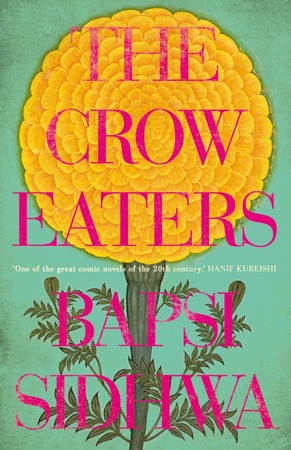
City of Sin and Splendour: Writings on Lahore, edited by Bapsi Sidhwa, Penguin, Rs.395.

AN anthology is like a Jack of all Trades — it has a little bit for everybody, but ends up being master of none. That being said, City of Sin and Splendour is an indisputably interesting collection of essays, poems and fiction. Parsi-Pakistani novelist, editor Bapsi Sidhwa said at the book’s launch that it had taken three years of her life to put this collection together. It’s a labour of love that contains a multitude of excellent choices, many of them already well known. Urdu writer Ismat Chugtai’s trial for writing “Lihaaf”, a tale of forbidden lesbian love (from her autobiography), Kipling’s story of young Kim and Mahbub Ali, the horse trader (an extract from his novel Kim), and extracts from Sidhwa’s own classic novel of Partition, The Ice Candy Man (later made into the Aamir Khan starrer “1947 Earth”) are some examples.

Recollections

Contemporary writers include Pakistani emigrant Sara Suleri (author of the critically acclaimed Meatless Days) who writes from faraway Maine on the “geography of the city’s grace”, the sights and sounds of the newly independent Lahore of her childhood. “Transcontinental mongrel”, Pakistani-born Mohsin Hamid analyses the changes in his first love, Lahore, on his return home for a family wedding: “She is less complacent than she was then, less sure of her enduring centrality in her universe”. From India, Urvashi Butalia, in “Ranamama”, tells the poignant tale of meeting long lost family in Lahore; Khushwant Singh reminisces about life in Lahore and New York-based Ved Mehta writes a nostalgic account of revisiting his ancestral home. There are poems by Pakistani greats like Iqbal (”Lost in its own silent rhythm, the Ravi sings its song”), Faiz Ahmed Faiz and the lyrics of Bulleh Shah’s “Bulleh ki Jaana Main Kaun” (recently rendered chart-breakingly popular by Sufi singer Rabbi Shergill). Samina Qureishi constructs an archaeological map of sorts from modern day Lahore with its markets clustered around the great Wazir Khan Mosque to “imperial Lahore, queen of cities, crown capital of all the Punjabi kingdoms there have ever been’. There is much else — all of it eminently readable, Rukhsana Ahmed’s “The Gatekeeper’s Wife” a touching tale of marital relationships, and essays on topics as interesting and diverse as the insomniac Englishman Rudyard Kipling’s midnight walks through the Lahore streets, Benazir Bhutto’s campaign trail, the Karachi vs. Lahore debate and the legend of Anarkali.

Continue reading at the Hindu.

Bookmark this entry: These icons link to social bookmarking sites where readers can share and discover new web pages.
  • del.icio.us
  • digg
  • Reddit
  • Furl
  • Facebook
6
Dec

Author plans holiday home for street kids

   Posted by: arzan sam wadia   in Books, Events

Delhi Newsline - Delhi,India

New Delhi, November 30: As a seven-year-old Indian migrant in London, Zerbanoo would sell tiny flags outside a hotel run by her Parsi parents. …

Bookmark this entry: These icons link to social bookmarking sites where readers can share and discover new web pages.
  • del.icio.us
  • digg
  • Reddit
  • Furl
  • Facebook
21
Nov

A fine Balance: Theater

   Posted by: arzan sam wadia   in Books, Culture

London’s Tamasha theatre will unveil its long anticipated adaptation of the Rohinton Mistry novel A Fine Balance in January next year.

The highly acclaimed novel, which was published in 1995 and described by the Guardian as “a masterpiece of illumination and grace” will be on stage for the first time.

The book is set in 1975 when the Indian prime minister Indira Gandhi declared a state of emergency. In these uncertain times, Dina Dalal - a spirited Parsi widow determined to avoid a second marriage - takes a student boarder and two Hindu tailors into her ramshackle flat.

Continue reading at Asians in Media

Bookmark this entry: These icons link to social bookmarking sites where readers can share and discover new web pages.
  • del.icio.us
  • digg
  • Reddit
  • Furl
  • Facebook
21
Nov

K. F. Rustamji: I was Nehru’s shadow.

   Posted by: arzan sam wadia   in Books, Events, Individuals

The ‘One-Man’ Army!

Last evening, Abu Salem was not on anybody’s mind as a distinguished lot of Mumbai policemen gathered at Oxford Bookstore for the launch of K. F. Rustamji’s book i was Nehru’s shadow. Rustamji, for those who don’t know, was the founder Director General of the Border Security Force and one of India’s finest and most highly decorated policemen. He passed away in 2003. The book, written by P. V. Rajgopal, a retired IPS officer of the Madhya Pradesh cadre, comprises entirely the diaries Rustamji kept between 1952 and 1958 when he was Chief Security Officer of Prime Minister Jawaharlal Nehru. It was released by Police Commissioner A. N. Roy at an elegant and classy function put together by Farzana Contractor, CEO of the Afternoon Despatch & Courier, and a relative of the Rustamji family. Mumbai was represented at the book launch by several retired police commissioners, some currently serving IPS officers, besides friends like Major General (retd.) Tej Kaul of the Indian Army and relatives of the Rustamji family like Perveez Agarwal and Rustamji’s son, Cyrus.

K. F. RustamjiRajgopal, who specially came down for the function, said he had broached the subject of the book to Rustamji in 1999 when he was the director of the National Police Academy and Rustamji a very popular speaker at the institution. “But who will read it,” the 83-year-old former policeman protested. Rajgopal persisted, having been struck by the idea of doing a book on Rustamji’s years as Nehru’s Chief Security Officer, and finally Rustamji agreed. He allowed Rajgopal the privilege of looking through seven cartons of his personal diaries and papers that had been donated to the Nehru Memorial and Museum in Delhi. “There were 3,500 hand-written pages dated between 1938 and 1970 which were a torture to decipher,” Rajgopal revealed to a tittering audience. Out of these pages, 1,600 were on Rustamji’s years with Nehru. “The book gives a complete picture of Nehru as a person and as the Prime Minister seen through the eyes of his Chief Security Officer,” explained Rajgopal. Read the rest of this entry »

Bookmark this entry: These icons link to social bookmarking sites where readers can share and discover new web pages.
  • del.icio.us
  • digg
  • Reddit
  • Furl
  • Facebook
21
Nov

The Possibility Of An Island: Book Review

   Posted by: arzan sam wadia   in Books

If you’re not familiar with the name, Michel Houellebecq is the French novelist, now living in Ireland, who invited the ire of Islamists with his novel Platform in 2001, and whose work is peppered with comments such as: “The dream of all men is to meet little sluts who are innocent but ready for all forms of depravity – which is what, more or less, all teenage girls are.”

That line is from his new novel The Possibility Of An Island, already being tipped as a potential winner of the Goncourt prize, France’s Booker. As a statement of fact it’s difficult to disprove, of course, but in its ludicrous cynicism it’s equally hard to take seriously. And that, in a nutshell, is the paradox of Michel Houellebecq.

The novel is narrated by Daniel, a comedian and provocateur. He styles himself as “a sort of Zarathustra of the middle classes” whose stage shows and occasional forays into music and film have made him a notorious and celebrated figure in his native France. Not unlike Houellebecq, in fact.

Continue reading at the Sunday Herald.

Bookmark this entry: These icons link to social bookmarking sites where readers can share and discover new web pages.
  • del.icio.us
  • digg
  • Reddit
  • Furl
  • Facebook
24
Oct

Writing is the music in the background of my life

   Posted by: arzan sam wadia   in Books

Writing is the music in the background of my life - III

Julie Rajan has an intimate chat with Pakistani, Parsi writer Bapsi Sidhwa on life, words and all the cracks in-between

Why do you think it is so? I mean, by comparison, we do not think of the Partition as so evil and terrible as a tragedy like the Holocaust?

It was a devastating moment in our lives and a defining moment in South Asian history. It changed the map of the world. Its repercussions are still being felt; it’s not over. I think it will perhaps be worse than the Holocaust by the time it is over. Then again — you cannot force a generation to produce writers; whoever was capable of writing, wrote. Saddat Manto and Ismat Chugtai wrote powerfully in Urdu.

Read the rest of this entry »

Bookmark this entry: These icons link to social bookmarking sites where readers can share and discover new web pages.
  • del.icio.us
  • digg
  • Reddit
  • Furl
  • Facebook
24
Oct

For word’s worth

   Posted by: arzan sam wadia   in Books

By Sunaina Kumar

[ Saturday, October 22, 2005 09:40:23 pmTIMES NEWS NETWORK ]

The author of four successful novels and many essays, Bapsi Sidhwa has spiced up her writing with her multi-cultural experiences…

Home alone: As a child, I suffered from polio. The doctor advised my parents to keep me at home. It was a lonely childhood with no companions of my age. My parents were always busy with their own thing.

I filled up the hours by reading. I realise now that it crippled me as a person. My formative years were spent amongst books and I never learnt to interact with people, just like the character of Lenny in Ice Candy Man.

Memories of Partition: I was only seven at the time, yet my memories are distinct. I remember hearing the mob shouting religious slogans and feeling that it threatened me and my family. I witnessed houses being burnt and families dislocated. It all became a part of my mental landscape.

The voice within: During Partition, a mob entered our house to loot us and our cook dispersed them by saying that it was a Parsi household. It was such an unforgettable experience that when I chose to write about the Partition in Ice Candy Man, I hit upon the Parsi child’s voice. It was only through the eyes of an innocent child that I could maintain some sort of objectivity on such an emotional subject.


Read the rest of this entry »

Bookmark this entry: These icons link to social bookmarking sites where readers can share and discover new web pages.
  • del.icio.us
  • digg
  • Reddit
  • Furl
  • Facebook
19
Oct

A radiant entry

   Posted by: arzan sam wadia   in Books

Deccan Herald - Bangalore,India

… Cyrus writes about Mumbai. A city that is entirely captivating in its madness. Jingo, the protagonist, hails from a middle-class Parsi family. …

Bookmark this entry: These icons link to social bookmarking sites where readers can share and discover new web pages.
  • del.icio.us
  • digg
  • Reddit
  • Furl
  • Facebook
19
Oct

From Parsi to Pakistani to Indian and more

   Posted by: arzan sam wadia   in Books

Daily News & Analasys - Mumbai,India

Born in Karachi and brought up in Lahore, she now lives in Houston, Texas.
How would you describe yourself as an author? I always see myself as a Parsi first. …

Bookmark this entry: These icons link to social bookmarking sites where readers can share and discover new web pages.
  • del.icio.us
  • digg
  • Reddit
  • Furl
  • Facebook
14
Oct

Bapsy Sidhwa comes to Bombay

   Posted by: arzan sam wadia   in Books

Afternoon Dispatch and Courier INDIRA RODERICKS | Thursday, October 1