A series of events in the capital seeks to demystify the fast-dwindling community who migrated to India more than a...
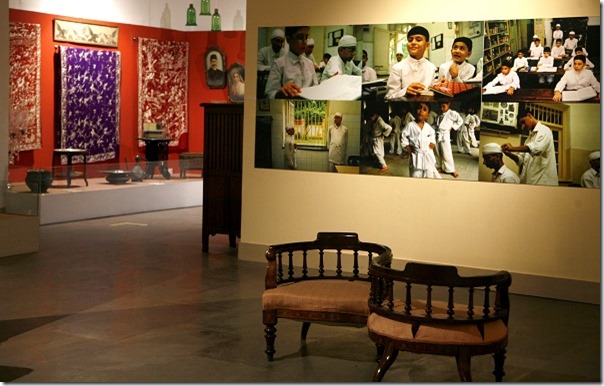

A series of events in the capital seeks to demystify the fast-dwindling community who migrated to India more than a...
This video by Pallavi Shroff is an attempt to inform people about the basic customs, traditions and beliefs of one of...
From time to time we invite readers to contribute. This article is by Havovi Govadia. The occasion was my brother’s children’s Navjote. Parsis celebrate this “initiation into the Zoroastrian faith”...

Brownpaperbag knocks on doors from Cusrow to Behram Baug to scout six Parsi ladies with hobbies and businesses that you should know about. 30.04.2015 Ranging from suspicious and wary to chatty and...

We have received the below from our regular reader and good friend Pesho Kotwal. He received this as a forward. Pesho writes One notices from time to time that "we" do not have an accurate and...

For most people across the world, March 20th signifies little more than early morning rush hours, household chores and office deadlines to meet. They go about their business as per usual which — if...

Friends and collaborators Bina Rao and Villoo Mirza are bound by their passion for handlooms Bina Rao of Hyderabad-based Creative Bee foundation and Villoo Mirza of SEWA (Self Employed Women’s...

It is fashionable amongst engineers and systemic solution experts to talk about India’s last mile problem. It applies to roads, power plants, and pretty much any type of construction, they will say....

Parsis don’t have the reverence for the dead that other Indians do and their irreverence is extreme, as shown by numerous Parsi sayings By Aakar Patel | Livemint The Parsis are my favourite Indian...

Relative Value: Sarfaraz K Irani, 28, and Bakhtyar K Irani, 31 Meet the two boys who gave Mumbai's iconic dairy a steroid shot of success. Brothers Bakhtyar, 31, and Sarfaraz K Irani, 28, can't...
Part of every Parsi bride’s trousseau, the gara sari is an enchanted garden of visual delight Author: Saloni Madan | Source: Deccan Chronicle A thing of beauty is a joy forever/ Its loveliness...

Ray Medhora would be a good catch in any community. He is 27, handsome, a former Sunday school teacher and a family counsellor. By Julie Power | Sydney Morning Herald Happy families: Zoroastrians...
A humorous take on a very pertinent issue that we all face at some point in our lives. Good friend of Parsi Khabar, Er. Marzban J. Hathiram write on Frashogard.com The question is often put...
Two members of the Zoroastrian community have taken the initiative to preserve the community's oral history by compiling a book on Parsi-Gujarati idioms. You can contribute too By Aviva Dharmaraj |...
All of us at different times in life have heard our grandparents or parents using very typical Parsi Gujarati phrases that cut to the chase and explain exactly what they have in mind, without using...
Parsi garas, characterised by intricate needle work on them, date back to the 1800’s. By Homai Sagar | Deccan Herald According to research findings, three brothers of the Kaikhushroo Joshi family of...
Parsis living in the UK, USA and Canada are more conscious of their identity than their Mumbai counterparts. This statement would have been wholly incorrect, some forty years ago, in the 70’s....
Parsi embroidery is being kept alive by a few patrons in the Capital. At Navjote or during a Parsi wedding, the entire congregation of Parsi women is transformed into a sea of Gara saris, in shades...

Ashdeen Z Lilaowala walks us through the creation of the hallowed Zoroastrian kusti or sacred thread that is an integral part of spiritual tradition among members of the Parsi community [ TOI...

Sari sorority: Why Parsi ladies are a national fashion treasure As this small but influential Indian community has their new year this week, CNNGo's shop section celebrates the embroidered Parsi...
Ervad Marzban J. Hathiram clears a very common misnomer…that of wishing “Pateti Mubarak” on Parsi New Year. On 19th August, we Parsis will celebrate our New Year with traditional gaiety, visiting...
Ervad Marzban Hathiram at Frashogard.com writes a very informative piece on the Muktad Days at the end of the Parsi Calendar year. Ten days before the Parsi New Year, fire temples around the city...
The 150-year-old gara embroidery is stunning, mysterious, but not dead, as it was once believed. Designers and entrepreneurs are doing their best to revive what was originally a Chinese art form. By...
An exhibition by Kersi Dubash, displaying a wide range of antique Parsi Garas, Gara borders and Gara shalwar kameez suits, French chiffons, Lucknow saris and shalwar kameez suits, Kantha saris and...

Below is the text of presentation by Pervin J. Mistry at the Parliament of Worlds Religions, Melbourne, December 5th, 2009. This was circulated by the author via email to a newsgroup. All copyrights...
It's a Sunday morning. A fire is burning on a silver urn in the sanctum sanctorum as about 30 children pray with a priest in the main hall of the Darbe Meher, the place of worship and community...
The following is an article on "Life After Death as in Zoroastrianism" by Ervad Pervez D. Mithaiwala, revealed to us by Behesti Minocher N. Pundol Saheb as per teachings of Magav Sahebs of Demaavand...
In the 10th century, a group of Zoroastrians arrived from Iran on the shores of Gujarat, India, and sought refuge in the kingdom of Jadi Rana in Sanjan. An oft-told tale then describes a meeting...
With numbers dwindling, young Parsis turn to organized social events to meet, and hopefully marry, others of their cultural group. By Hanna Ingber Win — GlobalPost A group of about a dozen young...

A decade ago, karate champion Vispi Kapadia (52) lost his five-and-a-half-year-old daughter Fareena. Seven years ago, she appeared in his dreams and asked him to do "something for...
When life in a Parsi household was lived at a leisurely pace... By Silloo Mehta Indian cities were beautiful a century ago. Bungalows had gardens, leafy parks were well maintained and flowering...
SHERNAAZ ENGINEER peers into the minutiae of life in the Parsi colonies (or our baugs bustling with busybodies) and dishes up some delightfully saucy details. Forget 'Life in a Metro'. 'Life in a...
Nargol is set to become the first village in the country to host a Parsi festival. This will be similar to government sponsored annual fests like Tarnetar fair, Kutch festival and kite festival. The...

Somewhere in the noisy lanes of Dhobi Talao stands a picturesque shop; a little old fashioned, with a small cosy bench, and loads of memories. The owner is a fourth generation Parsi; but the heavy...
Europe’s classical music is trying for us to listen to, and very few Indians like it By Aakar Patel in LiveMint.com To understand a culture we must examine its classical roots. No real understanding...
By PUSHPA CHARI for the Hindu Where have the old Parsi garas gone, with their bewitching stitches and magnificence? How does one describe the sheer perfection of Parsi gara embroidery in which birds...
This is a delightful piece sent to us by Mickie Sorabjee, a regular here at Parsi Khabar. The author of this piece is not known. The intent of this article is humour and nothing else. It is* Friday...
Iranian hospitality attack A survival guide for the non-Iranian traveler By Hamid Taghavi March 20, 1998 The Iranian Beware! Forget about all the xenophobic, anti-Iranian propaganda dominating the...
On the occassion of Mother’s Day, Parsi Khabar wishes all the mothers of the world a very special Happy Mother’s Day. We all remember and experience everything that our mothers have done and...
By Ervad Marzban Hathiram We live in tumultuous times. Our miseries seem never-ending. Calamities, both natural and human-made, visit us with uncanny regularity. Faced with these misfortunes, some...
It is seen as a landmark case. After 40 years as man and wife, a Parsi couple is fighting a bitter divorce battle. Roshan Cooper, all of 74, has dragged her 80-year-old husband Dadi Eruchshaw to the...
The Islamic Culture and Relations Organization (ICRO) and India’s Cama Oriental Institute are to hold a seminar on Iran and Zoroastrianism on April 27. ICRO International Department Director Khalaj...

Aryanmehr, an Iranian blog has a long write up about the Persepolis celebrations of 1971. We are awake 2,500-year celebrations revisited By Cyrus Kadivar The sky was dark on that Christmas Day in...
Mumbai: It's that time of the year again -- a day when every Parsi home will prepare traditional foods in a special lunch, for March 21 that marks the vernal equinox is special to Iranis and Paris...
Love conquers all but tradition Maryam Sinaiee, Foreign Correspondent Young people shop for Valentine’s gifts in a mall outside Tehran on Valentine’s Day. Newsha Tavakolian / The National TEHRAN //...

Norouz 2009 event at Philadelphia Museum of Art on March 8th Silk Road Dance Company - click here for high resolution image The fourth annual Norouz (Persian New Year) event will be held at the...
When Pouroo Dorabshaw flew to Los Angeles four years ago on a business trip, her mother urged her to visit a family friend just outside the city. The friend, it just so happened, was having a party...
Cosmopolitan or confused? Liberal or conservative? For almost every term that can describe the Parsi youth, the opposite also holds true. To understand the mindset of the young Parsi, Lata Narayan,...
The below is an article titled "Being Parsi" that appeared in the Indian Express. We would also like to give a shout-out to our friends at DelhiParsis.com. They have a very informative and wonderful...
During the sixties, the city had over 3,000 Parsees. Today, there are just 650, and the community is counting every birth and death. Thus, when the Parsee Club on the Maidan recently completed its...

The Calcutta Parsee Club, founded in 1908, will have the last of its centenary celebrations during the Christmas week. The 100-year-old club will organise a big show on December 25 night, followed...
Despite declining numbers of Zoroastrians worldwide, immigrants from India and Iran help the religion grow in Chicago area The ancient faith of Zoroastrianism is in decline worldwide, its numbers...