Archive for the ‘Industry’ Category

5
May

Tata, the headiest brew in the world

   Posted by: Mehernaaz Sam Wadia   in India, Individuals, Industry

An Indian Giant

Tea, cars, steel, IT… Tata, the headiest brew in the world

India’s extraordinary conglomerate has found unique solutions to many of its problems. But it’s still unclear what will happen when the boss retires

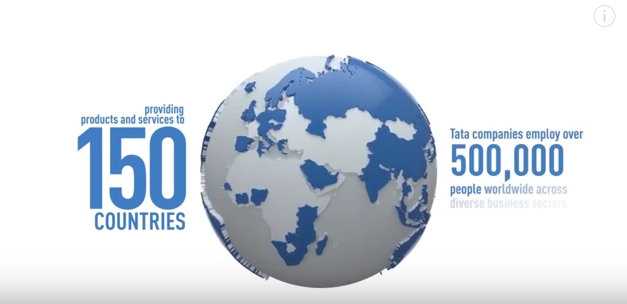
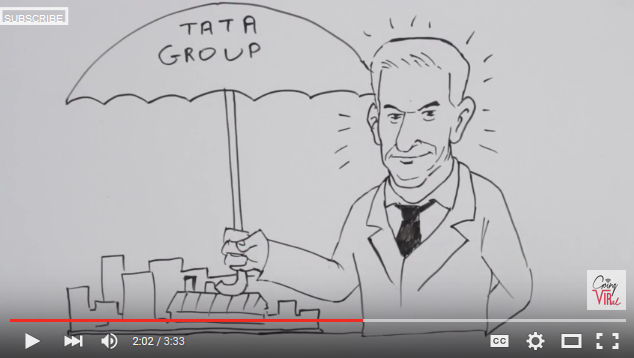
The favourite boast of executives of the Tata Group is that it accompanies the average Indian throughout the day. They wake to the alarm of its Titan clocks, drink its tea or coffee for breakfast, wear clothes bought from its Westside shopping centres, take a Tata car or bus to work on a computer set up by Tata Consultancy Services, lunch in a Tata hotel, arrange their evening appointments on a Tata mobile phone and use Tata power to light their homes.

These days, the influence of the Indian conglomerate is spreading beyond its home country. Back in 2000, it made the first major acquisition by an Indian group when it acquired the Tetley tea company; last year, that was trumped when it bought steelmaker Corus for £6.2bn, while in March it was confirmed as the purchaser of British icons Jaguar and Land-Rover from Ford. Next month, it will make its first foray into UK financial services when New Star launches an Indian investment fund that will be managed by Tata Asset Management.

That spending spree, together with less high profile acquisitions like chemicals company Brunner Mond, US business General Chemical Industrial Products and the truck-making business of South Korea’s Daewoo, means that India now represents just a quarter of the group’s interests, a smaller proportion than the UK; and it means that Tata can count itself among the world leaders in industries as various as tea, steel, consultancy services and soda ash, the key ingredient in washing soda.

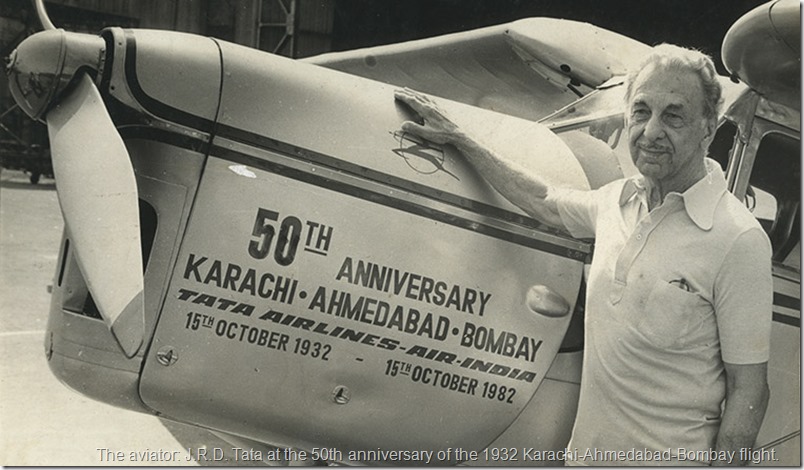
Much of the credit for the transformation goes to the reclusive Ratan Tata, who has chaired the group since 1991. While he does not even get a walk-on part in Keepers of the Flame, the film that reverently charts the group’s 140-year history, when the history of his chairmanship is finally written, he will be credited as being at least as influential as group pioneers such as founder Jamsetji Tata or JRD Tata, Ratan’s predecessor who led the group for a marathon 51 years.

Read the rest of this entry »

Bookmark this entry: These icons link to social bookmarking sites where readers can share and discover new web pages.
  • del.icio.us
  • digg
  • Reddit
  • Furl
  • Facebook
5
May

Ratan Tata: The 2008 TIME 100

   Posted by: arzan sam wadia   in Individuals, Industry

By Simon Robinson

Since Ratan Tata first suggested building a car that could sell for 100,000 Indian rupees ($2,500) four years ago, rival automakers have sniggered. “If you think about the direction that safety and environmental standards are going in India, you can’t sell a car for that kind of price,” said Osamu Suzuki, head of the eponymous Japanese car company that is the Indian-market leader. But in January, Tata unveiled his baby car, a cute rear-engined bubble called Nano. The Nano will meet all of India’s automotive standards and sell for 100,000 rupees.

“A promise,” said Tata, “is a promise.”

If the idea behind the Nano is to put a car within affordable reach of millions more Indians, Tata’s other big auto play is focused on the few. In March, Tata Motors, an arm of the Tata Group—a sprawling conglomerate based in Mumbai (formerly Bombay) that spans tea, steel, software, business services and hotels—bought the prestigious British automakers Jaguar and Land Rover from Ford for $2.3 billion.

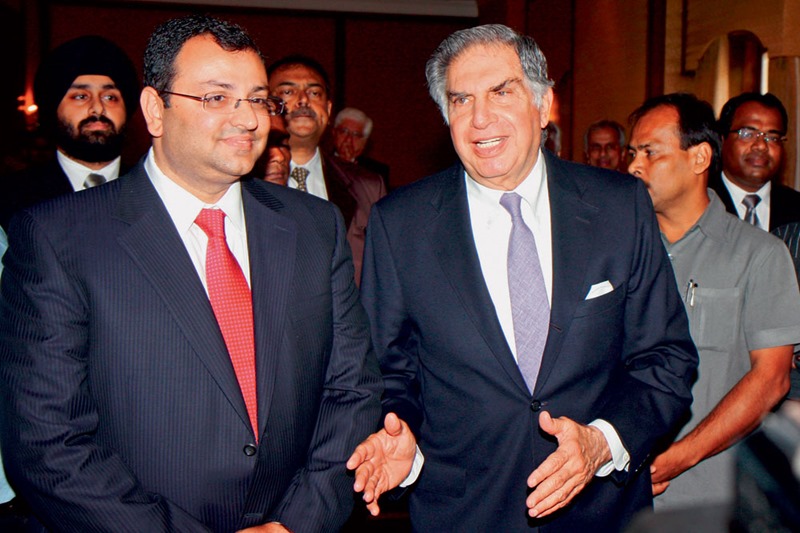
Analysts often cite Tata Group as the paragon of a company from a developing nation that is reshaping the globe. To ensure that the group stays at the forefront of that change, Tata, 70, a bachelor with no children, who told the Financial Times last year that he would like to retire after the successful launch of the Nano, will have to choose someone as savvy and visionary as he has been to lead the 140-year-old firm. That could prove even more difficult than creating a $2,500 car.

Original article here

Bookmark this entry: These icons link to social bookmarking sites where readers can share and discover new web pages.
  • del.icio.us
  • digg
  • Reddit
  • Furl
  • Facebook
9
Apr

An Accidental Millionaire: Tata

   Posted by: Shirin Kumaana-Wadia   in Individuals, Industry

The words used most often to describe Ratan Tata are shy and loner. The 71-year-old chairperson of the Tata Group shuns the media spotlight.

Quiet and unassuming, the Indian business baron drives himself to work in an unremarkable Tata sedan. His beachfront bachelor pad is found in the hippest tip of south Mumbai, but Ratan has only CDs, books and his dogs for company. He does not drink or smoke. His vices revolve around speed: driving fast cars, flying jets and at weekends racing his speed boat across Mumbai’s harbour.

Yet last week Ratan Tata found himself making headlines — and characteristically ducked any interviews. The reason for the attention was that the Tata Group found itself cast as reverse colonialists: an Indian company taking over two of the most distinctive British marques in car-making — Jaguar and Land Rover — for a little more than £1-billion.

A symbol of the shift in power from West to East, Tata is now the ultimate boss of 16 000 British workers, who were until this deal employees of United States giant Ford.

Read the rest of this entry »

Bookmark this entry: These icons link to social bookmarking sites where readers can share and discover new web pages.
  • del.icio.us
  • digg
  • Reddit
  • Furl
  • Facebook
31
Mar

Ratan Tata rode the tiger economy and now he drives Jaguar

   Posted by: arzan sam wadia   in Individuals, Industry

“Chairman of Corporate India”

By William Langley

tata.gifIt is tempting to look at Ratan Tata, the Indian tycoon whose company last week took over Land Rover and Jaguar, as a symbol of a nation’s headlong charge towards economic superpowerdom. This, we suspect, is how it tends to be with those pesky, nouveau riche Asians; one minute you’ve never heard of them, the next they are snaffling up all your best-known firms, and treating themselves to large, stucco-fronted mansions in Kensington.

Ratan, 70, and his faintly mysterious Bombay-based family, do not fit this caricature at all. Resoundingly non-nouveau, the Tatas have moved among India’s business aristocracy since Queen Victoria was on the throne, and while the last 150 years have seen a steady growth in their power, wealth and reach, the family is famed for never having done anything even remotely headlong.

Yet Britain is succumbing to them. The £1 billion acquisition of two of the UK motor industry’s most illustrious marques follows the £250 million purchase of Tetley tea in 2000, and last year’s £6.75 billion takeover of Corus, the Anglo-Dutch steelmaking combine. All this, moreover, is likely to be a mere warm up for the big invasion Ratan appears to have in mind. The Tatas are currently involved in everything from luxury hotels to watchmaking, but while their presence is inescapable in India, they see abundant room to grow in Britain.

The calm - some would say stealth - with which Ratan operates appears to be a consequence of both temperament and heritage. Sometimes described as the “Chairman of Corporate India” he is a non-drinking, non-smoking bachelor Parsee, descended from Zoroastrian priests who fled persecution in Iran more than 1,000 years ago. In the Gujarat region where they mostly settled, the Parsees have clung tightly to their distinctive culture and an austere set of religious values.

Even today they observe a prohibition against polluting earth, air or water, and traditionally dispose of their dead by leaving the corpses atop high, wooden “Towers of Silence” to be eaten by vultures - although a worsening Indian vulture shortage, even in rural areas, has lately led to the embrace of alternative methods.

Read the rest of this entry »

Bookmark this entry: These icons link to social bookmarking sites where readers can share and discover new web pages.
  • del.icio.us
  • digg
  • Reddit
  • Furl
  • Facebook
26
Feb

Indian Business Empire Eyes Global Role

   Posted by: arzan sam wadia   in Industry

A dozen years ago, many believed that India’s Tata Group - the country’s oldest and largest conglomerate - was a bloated behemoth that would eventually go under.

Instead, it has become a powerhouse in the 21st century, focusing on core businesses like steel and automobiles and seizing opportunities, including the hugely profitable outsourcing business, that came with India’s dramatic economic transformation.

A slew of recent acquisitions, including for Britain’s Tetley Tea and Boston’s Ritz Carlton Hotel, have thrust the Tata conglomerate - which comprises 98 companies and was largely unknown outside India until recently - into the global spotlight.

Read the rest of this entry »

Bookmark this entry: These icons link to social bookmarking sites where readers can share and discover new web pages.
  • del.icio.us
  • digg
  • Reddit
  • Furl
  • Facebook
14
Feb

Boeing partners with Tata for plane parts

   Posted by: arzan sam wadia   in Industry

Airplane maker creates partnership with India’s Tata to make more than $500 million in aerospace components.

Boeing and Tata have formed a joint venture for $500 million in aerospace components.

Boeing Co., the world’s second-largest commercial jet manufacturer, said Thursday it created a joint venture with Tata Industries Ltd. to make more than $500 million in aerospace components.

The joint venture, which is expected to be formed by June, will start building the components in India and export them to Boeing (BA, Fortune 500) and its international customers.

The companies said they will use Tata (TTM) manufacturing plants and will find new supply sources in India as well.

The first part of the agreement includes possible contracts for components for Boeing’s F/A-18 Super Hornet, CH-47 Chinook and the P-8 Maritime Patrol Aircraft. The deal may also involve a new research and development center.

Tata Industries is a part of the Tata Group, which had revenue of $28.8 billion from 2006 through 2007 and has more than 300,000 workers.

Original article here.

Bookmark this entry: These icons link to social bookmarking sites where readers can share and discover new web pages.
  • del.icio.us
  • digg
  • Reddit
  • Furl
  • Facebook
1
Feb

Why Blame Ratan Tata for the Nano?

   Posted by: Mehernaaz Sam Wadia   in Individuals, Industry

That is the title of a wonderful article by Govindraj Ethiraj. It is the only sensible arguement I have read amongst all the people who are gunning for Ratan Tata for creating more traffic and chaos on Indian roads.

Ratan Tata is chairman of Tata Motors. He is passionate about cars. Not just driving or admiring them but about building them as well. Ten years ago he unveiled the Indica, the country’s first indigenous car. The Indica was greeted with much acclaim. On the road, it was a different story. The car had several glitches and it took several years before they were resolved.

Tata acknowledged the Indica’s failings from start. It was not easy. Possibly he turned the criticism as encouragement to work even harder to create an error-free product. But the Indica experience, as traumatic as it may have been at outset, did not deter him from thinking even bigger - A project to build the world’s cheapest car.

So if Ratan Tata is a car maker, then all he can do, presumably, is to think of better, cheaper and bigger cars or dream of doing all of that. So he is only doing what he set out to do, or the founders of Tata Motors did when they set up the Tata Engineering & Locomotive Company (Telco which became Tata Motors recently) to make locomotives and other engineering products in 1945.

Continue reading the entire article here.

Bookmark this entry: These icons link to social bookmarking sites where readers can share and discover new web pages.
  • del.icio.us
  • digg
  • Reddit
  • Furl
  • Facebook
25
Jan

Ratam Tata Awarded the Padma Vibhushan

   Posted by: arzan sam wadia   in India, Industry

Ratan Tata was one of the 13 people who have been conferred with the nation’s second highest civilian award, the Padma Vibhushan.

It is a testament to the Tata House of Industry that successive chairmen have gone on to get the nation’s highest awards. J R D Tata was awarded the Bharat Ratna in 1992 and his successor has been awarded the Padma Vibhushan.

Parsi Khabar on behalf of all its authors and readers takes this opportunity to congratulate Ratan and the entire Tata Group.

Bookmark this entry: These icons link to social bookmarking sites where readers can share and discover new web pages.
  • del.icio.us
  • digg
  • Reddit
  • Furl
  • Facebook
24
Jan

How to turn a Nani into a Nano

   Posted by: arzan sam wadia   in Individuals, Industry

By Bachi Karkaria

Apro Ratan has allowed the masses to have an ‘apri gaadi’. So we don’t need Meddling Mamata’s permission to continue the rah-rah, and explain why it caught everyone’s imagination so dramatically. The size-surprise did not come only from the Nano’s physical dimensions. What’s more amazing is the way this new chit of a car altered the age-old karma of the House of Tata. But let’s save that for later.

For starters, there was so much ‘Horn OK’ about the Nano because it was such a ‘feel-good’ story. Hugely expensive polls and freely given opinions alike keep telling the media that good news is what people want, and never seem to get. Readers/viewers/listeners are tired of the dished-out diet of gloom and doom, blame and shame, corruption, disruption and every other shun you can think of. Clearly, not just ‘Mirchi sunnewale’, but sab media consume -karnewale want to be always khush .

So, with one eye on customer-delight and the other on shareholder-drooling, media is continuously in goodwill hunting mode, desperately seeking the cheer rather than the jeer. From Day One of 2008, we had been bombarded with outrage and ‘in’ rage, when, suddenly, like an emission of fresh air, the Nano arrived, and handed us the Holy Grail on a glittering ramp. Naturally, we grabbed it with both hands, both legs and any other appendage not entangled in the scrum of TV cameras.

Read the rest of this entry »

Bookmark this entry: These icons link to social bookmarking sites where readers can share and discover new web pages.
  • del.icio.us
  • digg
  • Reddit
  • Furl
  • Facebook
17
Jan

Godrej hosts Salman Rushdie, angers Muslims

   Posted by: arzan sam wadia   in Industry, Iran, Issues

An Islamic group in India is asking Muslims to boycott products of a top Indian business group if its owner does not apologise for hosting author Salman Rushdie on a brief holiday this week.

Rushdie stayed at the bungalow of the Godrej family while visiting Mumbai, where he was born and spent many of his early years. The author is a personal friend of the Godrejs, who are one of the big business families in India.

The fact that Rushdie was invited by the Godrejs has angered the All-India Ulema Council - a national grouping of Muslim organisations - which says the family had not cared for the sentiments of Muslims whom Rushdie had offended with his writings.

“We really hope Mr Godrej realises the hurt he has caused us and says sorry for it,” Maulana Mehmood Daryabadi, a council official, said. “Otherwise, we are asking Muslims all over to boycott his company’s products.”

The Godrejs were not available for comment.

The late Ayatollah Ruhollah Khomeini, Iran’s supreme religious leader, pronounced a fatwa on the author of Satanic Verses among others, in 1989 that called on Muslims to kill Rushdie because of perceived blasphemy in that novel. Rushdie was forced to live in hiding for nine years. In June, he was selected for a knighthood by Britain’s Queen Elizabeth, again angering some Muslims in Iran and Pakistan.

Recently, the presence of another controversial writer, exiled Bangladeshi Taslima Nasreen, has sparked riots by Muslims offended by her books. Threats against her have forced authorities to house her in a secret security facility in New Delhi since November, and she has appealed for more freedom.

Bookmark this entry: These icons link to social bookmarking sites where readers can share and discover new web pages.
  • del.icio.us
  • digg
  • Reddit
  • Furl
  • Facebook
14
Jan

Tata Pulls Ford Units Into Its Orbit

   Posted by: Shirin Kumaana-Wadia   in Industry

LONDON — When Ratan Tata visited the home of the designer Ralph Lauren last autumn, the two auto enthusiasts spent much of the time in the garage, admiring Mr. Lauren’s car collection, including the Batmobile-esque 1955 Jaguar XKD.

Now Mr. Tata is poised to take over Jaguar.

Tata Motors said Thursday that it was beginning detailed talks with the Ford Motor Company about buying the Jaguar and Land Rover brands, confirming what investors and analysts in India, Detroit and Britain have anticipated for months. Tata said it intended to reach an agreement over the next few weeks.

For Mr. Tata, who is 70, the takeover will cap 16 years of transforming one of the world’s most diverse and unusual conglomerates, the Tata Group. Through 98 companies, Tata creates and sells products ranging from steel to tea to watches, making the company’s name ubiquitous in India. Under Mr. Tata, the name has started to reverberate around the globe as well.

Read the rest of this entry »

Bookmark this entry: These icons link to social bookmarking sites where readers can share and discover new web pages.
  • del.icio.us
  • digg
  • Reddit
  • Furl
  • Facebook
10
Jan

Zoroastrians to convene AGM with a difference

   Posted by: Mehernaaz Sam Wadia   in Economy, Events, Industry

Pune’s Zoroastrian entrepreneurs will have a reason to celebrate this weekend as the city gears up to play host to over 200 Zoroastrian businesspersons and professionals across the country and the world. The occasion is the annual general meeting of rare chamber of commerce — the World Zarathushti Chamber of Commerce’s (WZCC) — where veterans get to meet novices, potential business partners get to strike deals.

Going by past records, what ensues are enriching discussions on various sectors like manufacturing, IT and financial services where the participants exchange tips, discuss problems and even secure funding for their ventures. According to the organisers, some of the previous meetings were successes ending with several businesspersons and professionals having forged partnerships, which continue successfully even today.

Read the rest of this entry »

Bookmark this entry: These icons link to social bookmarking sites where readers can share and discover new web pages.
  • del.icio.us
  • digg
  • Reddit
  • Furl
  • Facebook
4
Jan

Tata Pulls Ford Units Into Its Orbit

   Posted by: arzan sam wadia   in Industry

LONDON — When Ratan Tata visited the home of the designer Ralph Lauren last autumn, the two auto enthusiasts spent much of their time in the garage, admiring Mr. Lauren’s extensive car collection, including the Batmobile-esque 1955 Jaguar XKD.

Now Mr. Tata is poised to take over Jaguar itself.

Tata Motors said Thursday that it was entering detailed talks with Ford Motor about the takeover of Jaguar and Land Rover, confirming what investors and analysts in India, Detroit and Britain have anticipated for months. Tata said it intends to reach an agreement on a deal over the next few weeks.

For Mr. Tata, who is 70, the takeover will cap 16 years transforming one of the world’s most diverse and unusual conglomerates, the Tata Group. Through 98 companies, Tata creates and sells everything from steel to tea to watches, making the company’s name ubiquitous in India. Under Mr. Tata, the name has started to reverberate around the globe as well.

A string of international deals in recent years has diversified Tata to the point where more than half its revenue this year will come from outside India. Tata’s increasingly global outlook is bolstering the overseas ambitions of other Indian companies as well.

Read the rest of this entry »

Bookmark this entry: These icons link to social bookmarking sites where readers can share and discover new web pages.
  • del.icio.us
  • digg
  • Reddit
  • Furl
  • Facebook
3
Jan

Faces of enterprise: Ratan Tata

   Posted by: arzan sam wadia   in Individuals, Industry, Institutions

After celebrating his 70th birthday on Friday, Ratan Tata would in the normal course of affairs be facing mandatory retirement from the Tata Group.

Two years ago, however, India’s most respected and acquisitive conglomerate extended to 75 the age until which non-executive directors could serve, giving the man who has transformed it over the past 16 years a new lease at its helm.

Although corporate governance purists at the time criticised the change as retrograde, it is a decision that few investors now regret.

Mr Tata will be one of the most visible faces of the new India in 2008. He was waiting to hear whether Tata Motors, a truckmaker that has diversified into passenger cars, had been successful in its offer for Jaguar and Land Rover, luxury brands put up for sale by Ford.

Read the rest of this entry »

Bookmark this entry: These icons link to social bookmarking sites where readers can share and discover new web pages.
  • del.icio.us
  • digg
  • Reddit
  • Furl
  • Facebook
28
Dec

Ratan Tata turns 70 today

   Posted by: Mehernaaz Sam Wadia   in India, Individuals, Industry, Institutions

Tata Group chairman Ratan Tata turns 70 today (December 28, 2007).

Among Asia’s business titans, Ratan N. Tata stands out for his modesty. The chairman of the Tata Group - India’s biggest conglomerate, with businesses ranging from software, cars, and steel to phone service, tea bags, and wristwatches - usually drives himself to the office in his $12,500 Tata Indigo Marina wagon.

He prefers to spend weekends in solitude with his two dogs at a beachfront home he designed himself. And disdainful of pretense, he travels alone even on long business trips, eschewing the retinues of aides who typically coddle corporate chieftains.

But Tata also has a daredevil streak. An avid aviator, he often flies his own Falcon 2000 business jet around India. And in February he caused a sensation at the Aero India 2007 air show by co-piloting Lockheed F-16 and Boeing F-18 fighter jets.

Tata’s business dealings reflect the bolder side of his personality. In the past four years he has embarked on an investment binge that is building his group from a once-stodgy regional player into a global heavyweight. Since 2003, Tata has bought the truck unit of South Korea’s Daewoo [Get Quote] Motors, a stake in one of Indonesia’s biggest coal mines, and steel mills in Singapore, Thailand, and Vietnam.

Read the rest of this entry »

Bookmark this entry: These icons link to social bookmarking sites where readers can share and discover new web pages.
  • del.icio.us
  • digg
  • Reddit
  • Furl
  • Facebook
11
Dec

Ratan Tata: Top 25 Powerful People of 2007

   Posted by: arzan sam wadia   in Individuals, Industry

In Fortune Magazine?.

Read the rest of this entry »

Bookmark this entry: These icons link to social bookmarking sites where readers can share and discover new web pages.
  • del.icio.us
  • digg
  • Reddit
  • Furl
  • Facebook
12
Oct

Lunch with Karan Bilimoria

   Posted by: arzan sam wadia   in Individuals, Industry

Cobras eventually get their prey and that’s what’s keeping this successful UK brewer going despite limited luck in India and none in the US or China.

“Kingfisher.” Karan Bilimoria’s ears perk up in an instant. A group of Japanese men sitting behind us, along with their host, a Sikh in a pink turban, have just said in one voice what beer they want to down. And, horror of horrors, it isn’t Bilimoria’s Cobra, though it is available in the restaurant. In fact, we are washing down succulent kebabs with it. Bilimoria quickly calls a waiter and asks him to serve the Japanese his Cobra beer instead, writes Bhupesh Bhandari.

At the end, the Japanese diners at the ITC Maurya Sheraton’s Bokhara — the restaurant made famous by the Clintons — stick to Kingfisher and increase Cobra’s sales by just two bottles. Not enough to help Bilimoria achieve his dream of leadership in the 100 million-case (of 12 bottles each) Indian beer market, ahead of United Breweries, SABMiller and others.

Bilimoria is best known for his success with Cobra in Britain, especially in the Indian restaurants there. The brand, he claims, is now worth around $300 million (Bilimoria had bought out Cobra co-founder Arjun Reddy for a fraction of this in the early-1990s).

He is active on the social and political scenes as well. He is a member of countless charities and is the first Parsee member of the House of Lords. His mobile phone’s ringtone is the Big Ben chimes — in case it rings in the house, people may think it is the clock!

Read the rest of this entry »

Bookmark this entry: These icons link to social bookmarking sites where readers can share and discover new web pages.
  • del.icio.us
  • digg
  • Reddit
  • Furl
  • Facebook
6
Sep

100 years since Jamshedji Tata met Charles Perin

   Posted by: arzan sam wadia   in Individuals, Industry

Chronicling the journey of Tata Steel

KOLKATA: The door to a small, crowded office in New York opened. At a table covered with books sat Charles Page Perin, a geologist and metallurgist, renowned for his knowledge of iron and steel that made him sought after across the globe.

He looked up and was startled by the apparition standing right there before him. Here was a stranger in an even stranger garb-a man in a simple white coat, wearing a rather peculiar headgear. He later came to know it was a Parsi dugli and pagdi outfit. Who was he? Even as he wondered, Charles Perin knew the answer. He had been informed about this Parsi gentleman from India, who dreamt of building a steel plant in his country.

For long, the two men gazed at each other in silence. Two men from different continents, poles apart in every way. The visitor said in a deep voice, “Are you Charles Perin?” The metallurgist nodded. Jamshedji Nusserwanji Tata said, ” At last, I have found my man.” He said, ” I’ve been told that you build steel plant wherever advised. I will foot the bill. Will you come with me to India?”

As Perin was to recall years later, he was dumbfounded, struck by the character and force and kindliness that radiated from JNT. Perin’s answer was short. “Yes,” he said. “Yes I will go with you.”

And Tata Steel was born. Now, as it starts commemorating its centenary, starting August 26, 2007, it may be worth looking at what history tells as to why Tata Steel took 100 years to produce 7 million tonnes, when others in India and abroad have done it in a decade or two or little more.

Of course, there is now Natsteel, Millennium Steel and the big one, Corus. And a combined capacity of 24 million tonnes. But these happened only after it turned 97.

Was it the fading of entrepreneurship, shown a century ago by JNT, over the years? Was it the regulatory environment and shortage of capital-raising opportunities? Or was it lethargy and comfort of operating in a regulated and non-competitive environment?

The answer to the apparent disconnect between its undisputed corporate stature and metal-making capacity lies in a mix of all these and more. After all, the vision of the founders of Tata Steel was never just about making steel.

Remember, “We also make steel,” which Tata Steel used to say till a few years ago.

But, first the business of steel-making. In the first 40 years of the country’s independence and Nehruvian economics, the apocryphal story goes that subsequent prime ministers stalled Tata Steel’s expansion plans, fearing that a bigger Tata Steel will make it difficult for the public sector Hindustan Steel Limited (HSL), now SAIL, to sell in the domestic market.

But ironically, when the economy started to open up, Tata Steel suddenly woke up to find itself with an antiquated plant, saddled with a workforce of 78,000. And it also was in the midst of one of the worst depressions of the modern world steel industry.

“You must appreciate Tata Steel’s operations in a tightly regulated economic environment. But you can also say that the company, working in a regulated, non-competitive economy, grew lethargic and comfortable in developing the home market,” said A S Feroz, a steel analyst and former economist with the Union steel ministry.

According to Tata Steel, “Post liberalisation, we found ourselves with outdated plants and obsolete machinery. Between 1991 and 2000, we spent Rs 10,000 crore to build a new plant within the old campus, borrowing heavily, showing a lot of courage. This laid the foundation of entering the competitive world with new technology.”

All this, at a time when many others in the Indian steel industry, most notably the Mittals, had already set the pace in global business.

The Mittals, then an undivided family, had already set up base in Trinidad, Tobago and Indonesia.

Read the rest of this entry »

Bookmark this entry: These icons link to social bookmarking sites where readers can share and discover new web pages.
  • del.icio.us
  • digg
  • Reddit
  • Furl
  • Facebook

An almost 150-year-old brewery in Pakistan is preparing to bring the Muslim world’s first 20-year-old single malt whisky to the market. Murree Brewery, however, can only sell to non-Muslims, who comprise 3 percent of Pakistan’s population.

The heart of the Pakistani city of Rawalpindi is dotted with paradoxes.

Amidst the foliage of the Jinnah National Park, an expansive garden that houses the prison where former Prime Minister Zulfiqar Bhutto was hanged in 1979, the giant “M” of an American fast food chain rises like a monolith.

Behind it runs the National Park Road, a leafy, residential avenue replete with road blocks and bearded men carrying submachine guns. Hanging over it all is the distinct and unmistakable smell of fermenting alcohol.

What, in Allah’s name, is going on here?

The 150-year-old Murree Brewery is teeming with activity. One of the Islamic world’s most successful breweries will soon launch a rare, one-off product of its distillery: a 20-year-old single malt whisky that is the first of its kind in the Muslim world.
Read the rest of this entry »

Bookmark this entry: These icons link to social bookmarking sites where readers can share and discover new web pages.
  • del.icio.us
  • digg
  • Reddit
  • Furl
  • Facebook

Denying industry speculation that Gharda Chemicals and Godrej Industries may go for an out-of-court settlement brokered by leaders in the Parsi community, sources close to the agrochemicals major said the company is hoping for a solution from the Bombay High Court, where the dispute currently rests.

Though founder Keki Gharda refused to comment, “The matter is sub-judice, I can’t talk,” he said. Sources told ET that the dispute continues and the veteran scientist “is in no mood to entertain Adi Godrej’s claim of holding 6% stake in the company.”

Mr Godrej, head of Godrej Industries, is said to have shown interest in making a strategic investment in the Rs 700-crore company, especially after Mr Gharda announced his succession plans. Mr Godrej had reportedly bought the stake from one of Dr Gharda’s relatives a few years ago.

Read the rest of this entry »

Bookmark this entry: These icons link to social bookmarking sites where readers can share and discover new web pages.
  • del.icio.us
  • digg
  • Reddit
  • Furl
  • Facebook

The world’s oldest monotheistic religion has taken steps to empower its youth and preserve the faith for the future.

Zoroastrians, as they wound up their 14th North American Congress in Toronto this week, emphasized mentorship and the need for unity among the scattered faithful.

“We are moving the identity issue forward,” said prominent Toronto Zoroastrian Daraius Bharucha, “empowering our youth, showcasing the community, while saying, `We are a diaspora that has now arrived.’”

For the first time at a congress, youth activities, such as mentoring and entrepreneurship programs, ran alongside sessions on history, heritage and religious matters.

Bharucha represents the Zoroastrian Society of Ontario, which hosted the congress that ran from June 30 to July 2 at the Sheraton Parkway North Hotel.

Read the rest of this entry »

Bookmark this entry: These icons link to social bookmarking sites where readers can share and discover new web pages.
  • del.icio.us
  • digg
  • Reddit
  • Furl
  • Facebook
11
Jul

Conversation From Karachi

   Posted by: arzan sam wadia   in Heritage, History, Individuals, Industry

Talking to 80-year-old Dhanjishae H. Munderji, an occupant of the he Parsi general hospital, over a cup of tea, turned out to be quite an elucidating experience. Speaking on a host of issues, we eventually came to the topic of Karachi in terms of the city as we know it and how it once was.

“You know,” said Munderji, a former professor, “Karachi was once called one of the cleanest cities of the East?”

That remark, seemingly unreal for Karachiites of my generation, came with a tinge of lament for the present situation mixed with a pride of having actually seen the city in its former glory.

In fact, now that one thinks of it, the very location of the infirmary presented a potent example. Sitting right next to the Empress Market in Saddar, the road leading to the infirmary presented an extremely sorry appearance with fly-infested garbage and the overwhelming stench of rotten vegetables, not to mention the mounds of carbon monoxide one had to inhale while stuck in a traffic jam in front of the market. The infirmary’s site itself, however, was, as expected, impeccably clean and green.

Read the rest of this entry »

Bookmark this entry: These icons link to social bookmarking sites where readers can share and discover new web pages.
  • del.icio.us
  • digg
  • Reddit
  • Furl
  • Facebook
21
May

Bottle your own great idea

   Posted by: arzan sam wadia   in Individuals, Industry

Image copyrights DNA India

Even before he became the first Parsi in history to enter the British House of Lords, 45-year-old India-born Lord Karan Bilimoria was nobility of a different kind, widely billed as UK’s resident beer baron.

Robustly friendly, he’s a qualified chartered accountant with a degree in law from Cambridge University. How in the world did he stray into making beer? “First of all, because of my love of English liquor,” chuckles the man who’s Cobra brand, with Bill Gates-like inspiration, has effectively used versions ranging from non-alcoholic to low calorie to fruit flavoured, to compound its growth.

In Delhi to launch his book ‘Bottled for business’ which he hopes will become a trigger for aspiring entrepreneurs, he’s rooting for India Inc. “It’s a true story brought to life and more importantly, its still happening. If my example encourages even one young man to attempt a similar venture, my purpose would have been achieved.”

His father, FN Bilimoria, was a general in the Indian army and at 16, Karan had set out for the UK to study and make a career in chartered accountancy. At 27, he was one

of the thousands working their way up the corporate ladder when he had his eureka moment.

Read the rest of this entry »

Bookmark this entry: These icons link to social bookmarking sites where readers can share and discover new web pages.
  • del.icio.us
  • digg
  • Reddit
  • Furl
  • Facebook
15
May

Bottled For Business

   Posted by: arzan sam wadia   in Individuals, Industry

Karan Bilimoria’s story is a classic case of how to chase a dream successfully. He had only his dream and passion as his assets when he set out against all odds to turn his vision for a less gassy lager into Cobra Beer.

Educated at Cambridge University, he was drawn into entrepreneurship and, in 1989, founded Cobra Beer. He has since then launched General Bilimoria Wines, exported his beers all around the world and added several new products. Today, Cobra Beer is valued at over £100 million (Rs 830 crore), and sold in more than 45 countries.

Bilimoria has won many accolades. He became the UK’s youngest university chancellor when he was appointed at Thames Valley University. Recently, he became one of the youngest members of the House of Lords after his appointment as a crossbench peer. Besides, he has won numerous business awards.

Recently, Bilimoria penned how and why Cobra Beer was developed into one of the world’s best loved brands. In ‘Bottled For Business’, he narrates his journey from being a debtor to an entrepreneur. What follows is an excerpt from the book.Cobra’s commitment to sales and marketing is vivi-dly illustrated by the number of staff it employs to handle those two functions. There are close to 150 people employed in four countries at the end of 2006, of which 30 per cent are involved in sales and 10 per cent in marketing and PR. That means that these two functions account for almost half of the company’s head-count. It hasn’t always been that way though.

Giving Sales A Push Start

A car called Albert (pr. Al-bear) played a key role in the transformation of Cobra beer from an idea into a genuine business. It was the nickname of the company’s first delivery vehicle, the Citroen 2CV that Bilimoria was driving at the time.

‘I brought it for £295, with money I borrowed from Arjun,’ recalls Bilimoria. ‘It could carry exactly fifteen cases of Cobra beer. You could see the road through the floor of the car. Most days it required a push start. Eventually it failed its MOT three times.’

While the competitors’ beer was distributed in vans furnished with smart corporate livery, consignments of Cobra were transported around in an old, battered, bright green, bottom-of-the-range Citroen.

When the first consignment of Cobra arrived in the UK, the distributors in the UK subjected the beer to a haze test, designed to establish whether the beer was of good enough quality to be sent to customers. Although it was within the legal parameters, it failed to meet the distributors’ requirements.

Read the rest of this entry »

Bookmark this entry: These icons link to social bookmarking sites where readers can share and discover new web pages.
  • del.icio.us
  • digg
  • Reddit
  • Furl
  • Facebook
4
May

Parsis Are Australia’s most diligent workers

   Posted by: arzan sam wadia   in Culture, Industry

AT last the question on everybody’s lips has been answered: The hardest working believers in Australia are are Zoroastrians.

With just two religious holidays a year, the followers of the prophet Zoroaster are four times as diligent as Muslims, five times more than Hindus, and put the Jews and Orthodox Christians to shame.

While workplace consultants Enterprise Initiatives are advising employers how to rip-off their workers on public holidays, the NSW Government is giving away days off left right and centre.

A directive from the Premier’s Department has instructed public service managers to accommodate up to 74 days off a year for various religious holidays.

However there is a catch: To capitalise on all 74 days you would have to be a member of 11 religions at once. Also, you have to use your personal leave, so you would have to save your holidays for a few years.

Read the rest of this entry »

Bookmark this entry: These icons link to social bookmarking sites where readers can share and discover new web pages.
  • del.icio.us
  • digg
  • Reddit
  • Furl
  • Facebook
20
Apr

K B Grant: Pune’s ‘Young’ Medical Architect

   Posted by: arzan sam wadia   in Individuals, Industry, Institutions

Pune’s ‘Young’ Medical Architect

Despite braving many odds, Dr KB Grant, Founder and Managing Trustee of Pune’s Ruby Hall Clinic never dithered from his purpose of providing the latest medical technologies. Rita Dutta trails the journey of this 87-year-old patriarch.

It would be no exaggeration to say that Dr Keki B Grant’s (87) heart beats for Pune. He has indeed accomplished much in terms of the latest in medical diagnostics and therapy for Puneites. The Ruby Hall Clinic (RHC), which he founded, has flourished due to his pioneering in coronary angioplasty, CABG, CT, MRI, image intensifier X-Ray and cadaveric organ donation. And a year back, he was instrumental in conducting the first Image Guided Radio Therapy (IGRT) for cancer in India.

Indeed, for Dr Grant, age has nothing to do with accomplishments. It is the determination of mind and youthfulness that is more crucial. Even today, he is in office everyday at eight, is involved in daily administrative work, meets patients, obliges relatives of patients with discounts in bills, and at six, walks the seven kilometres distance to home. And he says he is not afraid to amble amidst the bustling roads, even after being knocked down twice followed by prolong hospitalisation. For this workaholic, strict fitness regime prevails over all fears.

Read the rest of this entry »

Bookmark this entry: These icons link to social bookmarking sites where readers can share and discover new web pages.
  • del.icio.us
  • digg
  • Reddit
  • Furl
  • Facebook
21
Mar

Avesthagen initiates Parsi genome project

   Posted by: arzan sam wadia   in Culture, Current Affairs, Heritage, Industry

Avestha Gengraine Technologies (Avesthagen), a Bangalore-based integrated biotech company, has launched ‘Avestagenome’, a project to build a complete genetic, genealogical and medical database of the Parsi community.

According to Villoo Morawala Patell, founder and managing director, Avesthagen, the project is biotechnology-driven and would aim to come up with therapies and diagnostic tools to understand linkages between genes, diseases and environmental factors.

“The comprehensive database arising out of the project will provide invaluable information on these linkages for all of humanity and not just for the Parsi community. The project results will find application in disease prediction and accelerate the development of new therapies and diagnostics,” she added.

Parsi Zoroastrians, who now number about 69,000 in India, are an in-bred population resulting from the discouragement of inter-community marriages. Such in-bred populations are required to pinpoint inherited genes for diseases.

Read the rest of this entry »

Bookmark this entry: These icons link to social bookmarking sites where readers can share and discover new web pages.
  • del.icio.us
  • digg
  • Reddit
  • Furl
  • Facebook
17
Mar

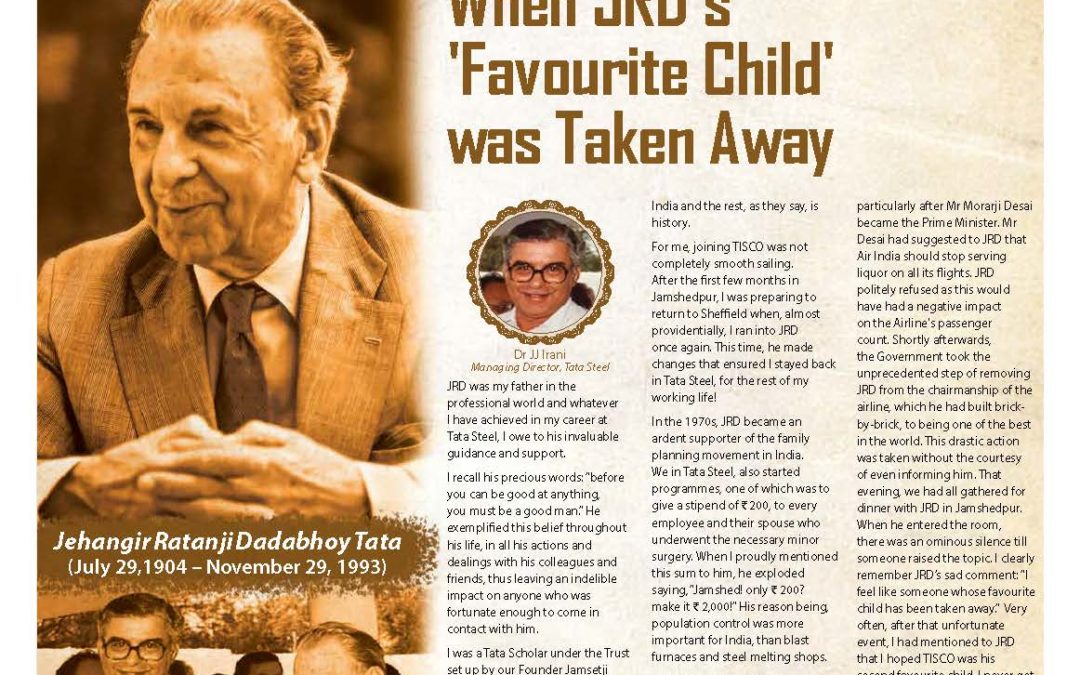
JRD Tata: Man of steely values

   Posted by: Shirin Kumaana-Wadia   in Individuals, Industry

Jehangir Ratanji Dadabhoy Tata is an easy man to write about. With his iconic status and corporate accolades, JRD the businessman could have overshadowed JRD the man and yet the book ‘Forever Jeh’ details the humanitarian side of the astute entrepreneur. Instead of showcasing his by now legendary impact on the country’s commerce, the book picks up strands from his social and public commitments.

A collection of interviews, photographs and quotes, ‘Forever Jeh’ describes a gentleman tycoon who could ‘look beyond labels’. Clarifying that ‘this is not another biography of JRD Tata’ in the preface, author Surekha Tenneti Venugopal pledges the emotive tribute to a subjective analysis of the Bharat Ratna awardee and first airline pioneer of India.

Born on June 29 1904, in a pretty house in Rue de Halevy in Paris to French girl Sooni and Indian Parsi R.D. Tata, JRD was named Jehangir - conqueror of the world.

Read the rest of this entry »

Bookmark this entry: These icons link to social bookmarking sites where readers can share and discover new web pages.
  • del.icio.us
  • digg
  • Reddit
  • Furl