
As the tenancy versus L&L dispute erupts, residents weigh property rights against a vanishing way of life
n Colaba Causeway, the grand yellow stone archway, clay-tiled roof and black wrought-iron gates of Cusrow Baug stand as a formidable threshold. Designed by architect Claude Batley in 1934, its stone entrance bears an uncompromising inscription: “Buildings for Parsees.” This is just one of Mumbai’s historic Parsi baugs — part of a tradition of community housing built through Parsi philanthropy. Bai Jerbai Wadia established Nowroz Baug in Lalbaug in 1908; her work, continued by sons Sir Ness and Sir Cusrow, grew into five Wadia colonies.
Article by Nisrin Saria | Mumbai Mirror
There were other benefactors, too. Behram Panthaki bequeathed the Andheri land on which Panthaky Baug stands, while the Pirojsha Godrej Foundation supported the development of Godrej Baug. Different donations and trusts helped generations of Parsis secure homes in a city where affordable housing was always difficult to find.
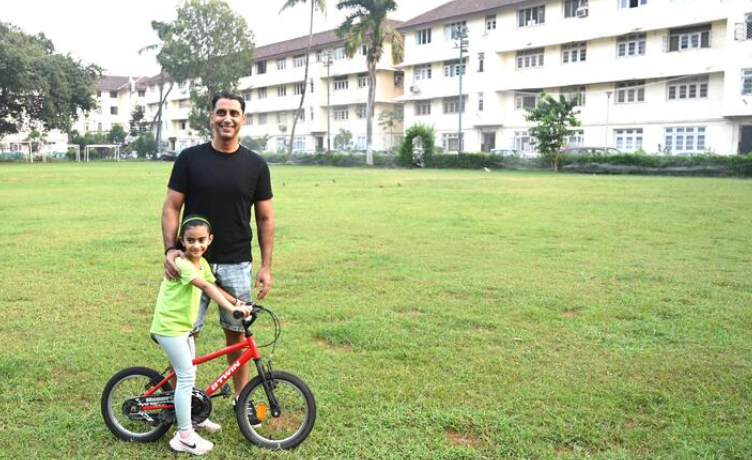
The word baug means garden, and for nearly a century, these enclaves have lived up to their name. Low-rise, art-deco-tinged blocks enclose tree-lined courtyards, sports grounds and shared pavilions, offering an oasis from the metropolis outside their gates. For decades, these colonies have watched the city around them transform into a dense grid of glass skyscrapers and soaring flyovers. Step inside their gates, however, and time slows down. You are instantly transported to an older Bombay, where children cycle along shaded avenues, elderly residents sit on worn benches under ancient banyan trees, and neighbours call out to one another across wide stairwells.
Yet a few weeks ago, those very homes became the flashpoint of a fierce legal battle. In the first week of October, the Bombay Parsi Punchayet (BPP) — the community’s apex trust and one of Mumbai’s largest private landlords —began registering agreements to convert residents’ long-standing leave-and-licence arrangements into permanent tenancies. Three such agreements were registered on 5 October, according to an October 24 report in Parsi Times. Many residents have, until now, lived under leave-and-licence agreements, which allow them to occupy flats without conferring the stronger legal rights of tenancy. The change, approved by four of the BPP’s seven trustees in June, offers those who opt in and can afford the heavy stamp duty a firmer legal claim to their homes.
But reaction to this was swift and nuclear. Dissenting BPP trustees Anahita Desai, Adil Malia and Hoshang Jal approached the Maharashtra Charity Commissioner seeking to halt further conversions. In an open letter reported on October 26, they said 38 questions about the legal, financial and administrative implications remained unanswered. They warned of risks to community assets, donors’ conditions and Parsi-only occupancy safeguards. Chairman Viraf Mehta maintains that the conversions would strengthen residents’ housing security while preserving those protections.
While lawyers and trustees battle over property deeds and trust statutes, a much larger existential question looms over the baugs: as property rights are rewritten, what happens to the multi-generational life built inside them? Across three generations, residents explain what baug life is really like, and why so many in the community feel its worth fighting for.
More than an address
For actress Pervien Irani, 60, the value of living in Cusrow Baug is measured in the childhood her daughters enjoyed and the prospect of growing old among gardens and friends. “You’re not investing in a property. You’re investing in your lifestyle,” she says.
Her husband, actor Shahrukh Irani, 61, recalls how his father-in-law, who came to Mumbai from Valsad, once turned down a larger flat because its monthly rent of Rs 75 seemed too much beside the Rs 35 he was paying. Today, Pervien says, some leave-and-licence arrangements require deposits running into crores, “returned without interest when residents leave”. That’s not what worries her though.
She’s concerned that the new arrangements could change the charitable purpose of homes intended for the community. Fellow resident Sheroy Kolah, 43, is happy with his tenancy. “We’re tenants, and I prefer it that way,” says the Merchant Navy captain, who lives in the same colony with his parents, Cyrus and Kashmira, his wife Arnaz and their daughters, Dinaisha and Kiara. The low buildings and open grounds matter more to him than ownership. “Life in a high-rise would be a culture shock,” he says.
Maintaining the old buildings, of course, presents its own challenge. Sculptor Arzan Khambatta, 60, who lived in Dadar Parsi Colony from 1966 until 2011, points to ageing buildings whose low rents cannot fund substantial repairs. Tenants have traditionally expected landlords to maintain their homes; landlords may lack the money to do so. He believes younger residents are beginning to understand that preservation may require them to contribute financially.
Khambatta believes residents owning their flats could help, provided the buildings’ architectural character is preserved. But ownership alone will not pay the repair bills. If neither landlords nor residents can afford to maintain an old building, redevelopment may become an option, at the risk of losing its gardens, low-rise buildings and familiar surroundings. “It’s a catch-22 situation,” he says of the future of buildings in Dadar Parsi Colony, not the BPP’s proposal to give licensees tenancy rights.
For elderly residents, the difficulty can be more immediate. Shahrukh knows people whose parents rarely come downstairs because they cannot repeatedly manage the steps. Some of the buildings here now have stairlifts, but conventional lifts can be difficult to fit into older layouts and, Khambatta notes, can alter their façades.
At Rustom Baug in Byculla, around 8 km away, Zeenia Wadia remembers her grandfather walking down from the fourth floor even at 85, a routine she believes kept him active.
Keys, curries and chosen family
The 37-year-old communications professional recalls how her father, Aspi, once took a job in Dubai but returned after just one month, hopelessly homesick for the colony.
“My dad said I will only consider shifting if you can uproot Rustom Baug and transport it abroad,” Wadia laughs. Some of her fondest childhood memories revolve around afternoons spent outdoors, which often ended only when her father sounded his distinct summons whistle across the grounds. There are also friendships that have survived adulthood. Wadia and the friends she grew up with in Rustom Baug still drop into one another’s homes, she says. “We continue to turn up unannounced, sometimes for a meal, sometimes just to hang out,” she says. “We keep spare house keys for one another, and you know help is just a phone call away, even in the middle of the night.”
During the Covid-19 pandemic, residents arranged meals and essentials for neighbours who fell ill. “You have the family you’re born into, the family you build and the family you choose,” she says. “For me, the people in Rustom Baug are my chosen family.” The colony also runs Super Silvers, a group for senior citizens that organises chair yoga, birthday celebrations and a mela where residents sell homemade goods to raise money for causes such as old-age homes.
Inter-baug sporting rivalries are legendary. When Rustom Baug faces Godrej Baug in football or volleyball, the atmosphere here approaches that of an international derby. “Sometimes, the rivalry feels like an India-Pakistan match,” Wadia laughs.
This is evident at Godrej Baug, where 23-year-old MBA student Zenia Velati and her 59-year-old father, Neville, explain how a competitive sepak (kick-volleyball) league between the baugs operates, complete with team owners, player auctions and point-based budgets. Ask Neville which is Mumbai’s best Parsi baug and he doesn’t hesitate: “Godrej Baug, obviously!” Neville, who moved to Godrej Baug in 1992, remembers when almost everything came to the door: vendors selling fish, mutton, groceries and utensils, along with knife-sharpeners and cotton-carders who repaired mattresses. For his daughter Zenia, the familiarity is total. “I can’t walk even ten steps without stopping to say hello to at least three people,” she says.
Paradise under pressure
Not all Parsi colonies are enclosed communities. Dadar Parsi Colony has public streets and gardens, with Parsis living alongside people from other communities. In Gamadia Colony in Tardeo, non-Parsi housing was built on land sold within the colony. At Murzban Colony near Bombay Central, Parsi housing forms part of a stretch of Dr Nair Road that also historically housed Bohri and Christian communities.
Children’s author Katie Bagli, who has lived in Dadar Parsi Colony since 1985, and Khambatta, who lived there till 2011 and now lives in Parel, remember a greener neighbourhood where children could cycle freely and building compounds had gardens and not parking spaces, “and you could hear frogs croaking during the monsoon,” says Bagli. “Now, many of the birds have stopped visiting the colony,” she says. Khambatta remembers cycling freely from King’s Circle to Dadar as a teenager in the 1970s, stopping for keema rolls at local eateries. He began his sculpting career in 1982 in a tiny 260-square-foot ground-floor room at his family’s home before moving to a larger workshop after marriage. “You can take the boy out of the colony, but you can’t take the colony out of the boy,” he laughs. His daughter Tianna, 28, now lives in his old flat here. Any young person in Mumbai would tell you a flat of one’s own is a rare privilege; one that offers independence without leaving the family’s circle of neighbours and friends is rarer still. Having the same address, however, does not mean inheriting the same childhood.
Baugs are not immune to changes: in many, cars now take up children’s play spaces, and many colonies are finding new ways to bring younger residents together, from pickleball and Halloween celebrations to roles on community committees. Much of what draws families to baug life still happens outdoors.
The courtyard as sanctuary
At Cusrow Baug, six-year-old Kiara Kolah cycles around the perimeter while an elderly couple sit beneath a tree. Her father, Sheroy, has been organising a table tennis tournament for neighbours. “When I was a child, I used to play with my friends here. Now, our children play together,” he says. Nearly 60 residents participated in the TT tournament, including an 80-year-old regular, with matches spread over weeks to accommodate work commitments. “There’s a little banter and rivalry between participants, but at the end of the day, everyone comes to play and have fun,” Kolah says. Sometimes, a resident sponsors biryani and whoever wishes joins for dinner. New Year’s Eve draws close to
500 people. “The baug is like one big home for us.” For teacher Nicole Mehta, moving here alone meant discovering company she had rarely found in her previous building. The address also reassured her family. “I don’t think there is any other place where my family or I would have been comfortable saying, ‘Okay, cool, go and stay there,’” she says. One night, unwell at 3 am, she looked out and saw lights in neighbouring homes and people at the entrance. “Immediately, I felt a sense of comfort because I knew someone was awake.”
Neighbours, she says, have helped carry suitcases to her third-floor flat and put up curtains. Her parents have become regular visitors now — her father uses the gym and meets friends at the pavilion, her mother attends yoga here. “I’m a sort-of introvert,” Mehta says, “but at community events, I know there’s always a seat for me to sit and observe.”
At 28, Mehta is discovering what older residents have relied on for decades: the freedom to live independently, with someone nearby when needed. The dispute among trustees concerns how these homes should be held and protected. For the people living in them, its resolution must also leave room for those who come next, so that the reassurance Mehta found at her window does not become a privilege another generation can only remember.
So, as the legal battle between BPP trustees and residents plays out before the Charity Commissioner, the people who live within these historic walls return to the same central truth: the real value of a baug cannot be measured in square footage, tenancy certificates, or market valuation. It lies in the rare, irreplaceable comfort of stepping out of your front door directly into a community that knows you.
For Kolah, it is returning from six months at sea to childhood friends who are still there to welcome him. For Wadia, it is knowing help is a doorstep away. And for a community watching its century-old sanctuaries face an uncertain legal future, the challenge is clear: ensuring that as property laws change, the life inside these iron gates does not disappear.


