
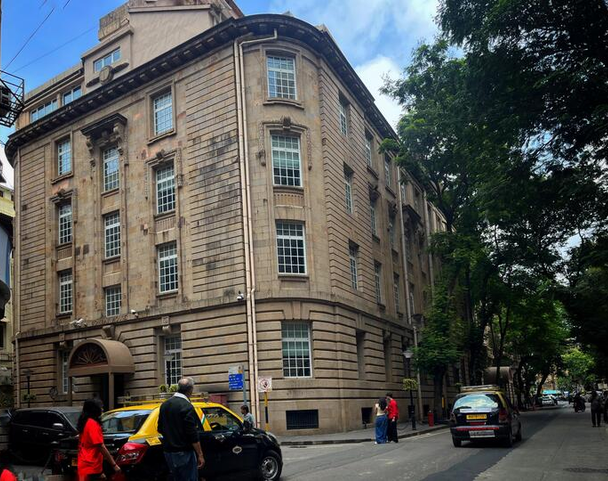
As the Trust contests N Chandrasekaran’s reappointment and Tata Sons weighs listing, the community, largely behind Noel Tata, fear for a charitable legacy they consider their own
In Navsari, a town of sugarcane fields and sapodilla orchards in south Gujarat, there is a lane called Dasturwad. The Tata family served there as priests for more than 25 generations, and on March 3, 1839, Jamsetji Nusserwanji Tata was born in a single-storeyed house, owned by his maternal grandfather. In August, Pervez Avari, 83, stood in that house and prayed. “I asked Jamsetji for divine intervention. And, would you believe it, the next day, came the news about N Chandrasekaran [the chairman of Tata Sons had announced he would not seek another term].” Avari, 83, a former general manager at Tata Motors, spent more than 40 years inside the group. At its Pune plant, as head of corporate planning, “every rupee of the capital budget crossed my desk back then,” he says. His three daughters all built careers in Tata companies, one of them rising to run Taj properties in London. His family roots are in Navsari, and he spent every childhood holiday there. “To us, Tata is as good as our own family,” he says. “On August 11, I asked Jamsetji for divine intervention. And, would you believe it, the next day, came the news about N Chandrasekaran [the chairman of Tata Sons had announced he would not seek another term].” Avari went back to the Atash Behram and to the birthplace “to give thanks”.
Article by Anjana Vaswani | Mumbai Mirror
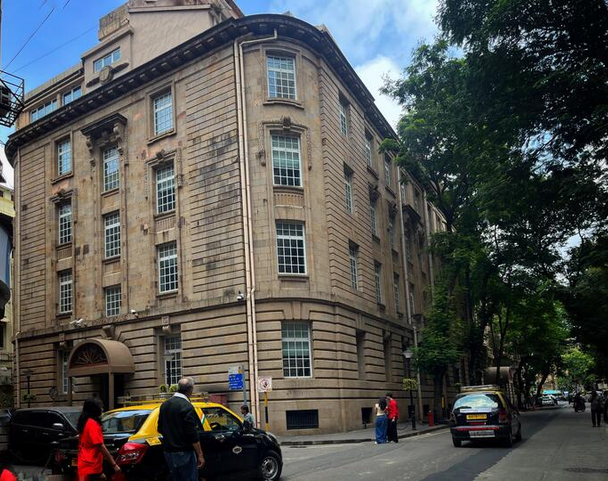
Avari had reason to take the news personally. A former general manager at Tata Motors, he spent more than 40 years with the group; as head of corporate planning at its Pune plant, “every rupee of the capital budget crossed my desk back then,” says the 83-year-old, who lives in Bandra. His three daughters also built careers in Tata companies. “Perinaz worked with the Taj Group before moving to San Francisco. Delna joined the Tata Administrative Service and spent 15 years at Tata Motors before starting her own consultancy. Mehrnavaz spent 23 years with Taj, becoming area director for its UK properties; she is now a vice-president at the Jio World Centre,” says Avari. “To us, Tata is as good as our own family.” After Chandrasekaran’s announcement, he returned to the Atash Behram and Jamsetji’s birthplace “to give thanks”
Then, on September 17, the Tata Sons board reversed course. Directors voted four-to-one to give Chandrasekaran a fresh five-year term from February 21, 2027, and approved steps towards the public listing that the Reserve Bank of India is demanding. Noel Tata cast the only vote against. Within hours, Tata Trusts, the charitable bloc that owns two-thirds of Tata Sons and which
Noel Tata chairs, called the extension “illegal” and a “legal nullity”. In Mumbai’s Zoroastrian homes, phones began to ring.
For most of India, all of this has been a governance story: a regulator, a holding company, a disputed clause in its articles of association. For the country’s Parsis and Zoroastrians, counted together at 57,264 in the 2011 census, the dispute feels more like a family quarrel carried on in public. Speak to them across the city, from the Art Deco blocks of Dadar to the sea-facing flats of Breach Candy, and the thing that hurts most is less who wins than the fact that it has come to a fight like this at all.
A creed built in steel
To understand why a boardroom vote weighs so heavily in a flat in Dadar, one needs to understand the unusual way in which the Tatas arranged their money.
Jamsetji’s father, Nusserwanji, broke with generations of priesthood to become the first of the family to go into trade. His son took that commercial instinct and bent it back towards something close to religious duty, and Jamsetji’s sons, Sir Dorabji and Sir Ratanji Tata, left their fortunes to charitable trusts. A century later, those trusts own about 66 per cent of Tata Sons, the Shapoorji Pallonji family 18.37 per cent, and Tata group companies around 13 per cent. Dividends from TCS, Tata Steel and the rest flow up to Tata Sons, and from there largely on to hospitals, universities and research. In the Trusts’ telling, this lets Tata Sons behave in ways a purely commercial company might not.
Viraf Mehta, chairman of the Bombay Parsi Punchayet, the community’s 350-year-old apex trust, describes it in the vocabulary every Parsi child learns before learning to read—through the Zoroastrian maxim “Humata, Hukhta, Hvarshta” (good thoughts, good words, good deeds).
“Most of us spend our lives trying to live up to that within our own homes,” he says. “The Tatas took that ethos and fashioned them into steel, into hospitals, into universities, and into an entire idea of how wealth ought to answer to conscience. They did not preach our creed to the country; they gave it to the country, brick by brick, for 150 years.” That, he says, is why “when a Parsi speaks of the Tatas, he does not speak merely of a corporate enterprise. He speaks of the very finest of what we hope to be.”
Jimmy Siganporia could not agree more. He is 77 and still cycles around his Lalbaug colony on a bicycle, and at 70, just before the pandemic, he took a scuba course on Havelock Island in the Andamans, he shares with a hint of pride. After taking voluntary retirement from Central Bank of India in 2001 (“got Vitamin M,” he says, meaning money), he rode a 14-year-old Yamaha from Churchgate to Kanyakumari, detouring via Bangalore, Mysore and Madras to see the crocodile bank. Siganporia buys Tata products on principle, he says. “Because whatever profit Tatas make, indirectly 66 per cent is my contribution towards a worthy cause.”
If the charitable trust structure gives even an ordinary purchase a purpose for some Parsis, the Tata reputation is a matter of community pride to others. Feroze Kali Katrak, a 68-year-old Tardeo-based businessman recounts an incident, back in 2002, when the Lions Club member was starting an IT company, and flew to Switzerland to ask a consultant friend for help entering that market. The friend told him the Swiss already knew Tata and, more importantly, trusted Tata, “and that they would, therefore, not allow another company to make in-roads into the market. That conversation made me realise something very profound,” Katrak says, “That the value of the Tata name extends far beyond India.” Unprompted, Katrak recites that Jamsetji topped Hurun and EdelGive’s 2021 ranking of the century’s philanthropists, with estimated giving of $102.4 billion. “Tata means trust,” he says. “We are proud of what the Tata family has given India, and grateful for the institutions and philanthropy that have changed millions of lives. Whatever the outcome of this dispute, we hope the values that earned the Tata name such trust will be protected.”
Katrak may have discovered that Tata goodwill is a private reserve, not a communal pass. But even if the community cannot leverage the brand for themselves, many, like Katrak, still feel that global prestige belongs to the collective—which is why watching the house wash its dirty linen in the town square hurts to the core, as consultant homeopath Dr Viraf Kapadia puts it.
“Washing dirty linen in public”
Kapadia, 71, who lives in Godrej Baug, thinks the disagreement need never have reached this point. “It was unnecessary to put it in the papers,” he says. Farhad Patel, a Dubai shipping businessman who stays in Bandra when he visits Mumbai, is blunter: “Washing dirty linen in public will not help anyone.”
The Tata family’s restraint was part of its reputation. Tehemton B Dalal, a Churchgate-based lawyer, recalls the old saying, “Parsi, thy name is charity.” In his view, Jamsetji, JRD and Ratan Tata built their standing through service without display. To see their successors fight openly while “detractors stand by to watch the tamasha” leaves him feeling let down. Discretion alone, however, cannot settle a dispute over control. A Zoroastrian professional in her 40s, who asked not to be named, says the Trusts’ charitable purpose matters, but shareholders’ interests cannot be dismissed. She wishes the two sides had sought mediation before their differences hardened into legal positions.
Pearl Tirandaz, 46, a PR professional who lives in Dadar Parsi Colony, and is a founder member of ZYNG (Zoroastrian Youth for the Next Generation) says that as a child, she was taught to admire the Tatas for the way they gave back, “quietly, decently”. She trusts Noel Tata to lead with that ethos. “Noel Tata represents that continuity, and he has my support completely,” she says, but hopes the matter can still be settled “with dignity, discretion, and quietly among themselves”.
Discretion has, now, become harder to maintain. Noel Tata, who chairs the Trusts that own most of Tata Sons, opposes both chairman N Chandrasekaran’s reappointment and a public listing. The Shapoorji Pallonji Group, the largest outside shareholder, wants a listing to make its stake easier to sell. Venu Srinivasan, a Trust nominee on the Tata Sons board, voted for Chandrasekaran.
The Trusts have since alleged that Srinivasan failed to tell trustees about a land deal between TVS Motor, where he is chairman emeritus, and a company whose directors include Chandrasekaran’s wife and son. A Tata group source says the venture was private and Srinivasan had no duty to disclose it to the Trusts. Whether this created a conflict of interest is now disputed.
A weapon forged in 2016
Then, there’s the matter that goes back 10 years, to the first great Tata rupture, which many Parsis still discuss as though it happened last month. Khursheed Mistry, a 54-year-old content consultant in Pune, grew up in Cusrow Baug in Colaba on stories of JRD Tata from her maternal grandfather, a self-taught, politically minded travel agent who was close to him. “JRD was the heartbeat of the community, so I grew up with that respect for him and his vision,” she says. She remembers many feeling anxious around the succession as Ratan Tata neared 75, and says there were many doubters and detractors when Cyrus Mistry, scion of the Shapoorji Pallonji family, was given the job in 2012.
On October 24, 2016, the Tata Sons board removed Mistry. “Cyrus was more aggressive in his approach, although the steps he undertook may have been good for the company,” she says. “The discord became public, and once you open the doors to the press, everything becomes everybody’s business. By the time attempts were made to salvage the situation, it was too late.”
The legal battle reached the Supreme Court in 2021. The Mistry side had objected to the special voting rights of directors nominated by the Tata Trusts; the court set aside a tribunal finding that those rights were oppressive. Now Article 121 is at the centre of the argument over N Chandrasekaran’s reappointment. It requires decisions backed by a board majority to have the affirmative vote of a majority of Trust nominees. Of the two nominees, Noel Tata voted against Chandrasekaran and Venu Srinivasan voted for him. The Trusts say one out of two is no majority and a casting vote cannot make it one. Tata Sons maintains the appointment is valid. The 2021 ruling did not decide what happens when the nominees split their vote. Interestingly, the parties have changed positions around the same rule. In the litigation that ended in 2021, Tata Sons defended the Trust nominees’ voting rights when the Mistry side had challenged them; the Trusts now rely on those rights to contest a Tata Sons decision. The ties between the families make the argument more intimate: Noel Tata is Ratan Tata’s half-brother and is married to Aloo Mistry, sister of the late Cyrus and of Shapoor Mistry. So, few of the people at its centre of this dispute are strangers to one another.
For them, Siganporia, who cheerfully admits the finer points of corporate law are “way beyond my comprehension”, has the most Parsi solution of all: if a new name is ever needed, call it the “Tata Mistry Trust”, with Tata first. As for the argument that listing brings “greater disclosure and accountability”, he asks: hasn’t the group been governed perfectly well without outside interference?
Veteran journalist Bachi Karkaria, a Parsi whose column has long made an art of the pointed pun, found one for the fight at Bombay House. “In Tata the nation Trusts, but it couldn’t trust its own. Will it be eclipsed by its Sons? Ask the ‘Moon’,” she tweeted. The Trusts are challenging a vote at Tata Sons; the moon is Chandra, as in Chandrasekaran. Beneath the wordplay is the question at the centre of the dispute: how can an institution built on trust settle a question of authority when its own leaders no longer trust one another?
Farrokh Kamdin, 77, an educator, who lives between Charni Road and Marine Lines railway station, beside the Japanese Garden, sees a harder question beneath the fighting: should Tata Sons remain a closely held private company or become one whose shares trade publicly? But he doesn’t think the community should be shocked that powerful people disagree. “Other Indian business houses have their quarrels, too; theirs simply remain behind closed doors,” he says, adding that this dispute, too, will ultimately be resolved, “with or without the courts”.
The price of staying private
The Reserve Bank of India put a date on a long-running argument. It placed Tata Sons among the large non-bank finance companies required to list within three years, a deadline that passed in September 2025. Tata Sons tried another route: after repaying substantial debt, it applied to surrender its registration as a core investment company. The RBI rejected that application on September 11, 2026. Six days later, the Tata Sons board voted to take steps towards a listing.
The Shapoorji Pallonji Group has its own clock to watch. It owns 18.37 per cent of Tata Sons but faces an estimated Rs 55,000 crore to Rs 60,000 crore in debt. Shares in a private company are difficult to sell or borrow against; a listing could make that stake easier to use. Noel Tata presented the board with an SP Group proposal to raise at least Rs 25,000 crore by selling part of its holding without listing Tata Sons. The plan has yet to be agreed.
Khursheed Mistry sees why the SP Group needs cash, but fears what a listing could mean for the charitable trusts that own most of Tata Sons. “Profit is not the only consideration,” she says. Meanwhile, Filly Bapuna, 61, who is self-employed, lives on Nepean Sea Road and runs an NGO in Udvada, calls the buyback plan practical: settle the Mistrys’ debts without turning Tata Sons into a full public company whose shares could be hammered in a volatile market or quietly accumulated by a bigger rival. He also offers an unexpected defence of the mess itself. The Tata structure, she said, “functions much more like a democracy”. Tightly held, top-down groups rarely show public turmoil because dissent is rarely heard; at Tata, power, he points out, has been spread among trustees and professional managers. “That free democratic expression comes with its own volatility,” she said. “It is unfortunate, and nobody likes to see it happen, but it is part and parcel of open institutional governance.”
And, from her home in Dadar Parsi Colony, Dinaz Wadia, 79, who makes topli nu paneer and salads to order, worries that shareholders in a listed Tata Sons could press the company to reduce the amount of philanthropy it is engaged in.
On a Saturday evening, the colony Wadia lives in shows what an earlier generation built for the community, and what a shrinking one fears it may lose. Civil engineer Mancherji Edulji Joshi secured more than a 100 plots for middle-class Parsis and laid out the Five Gardens. Yellow blossoms from the copper-pod trees scatter across the roads; winged Faravahars watch over low Art Deco bungalows. Freddie Mercury walked here as a schoolboy. The colony remains beautiful and orderly, but its residents are ageing and there are fewer young Parsis to follow them.
The case for opening up
One man, who insisted on complete anonymity, made the case investors make. He believes the group is becoming a systemic risk, with Air India’s losses mounting while TCS contends with slowing growth in the age of AI, and he fears losses at the weaker companies could soon outrun the profits of the strong ones. For years, he said, there have been governance problems at both the Trusts and Tata Sons, and listing is the only real remedy. He offered a back-of-the-envelope calculation by way of reason. By his estimate, the group’s listed value and brand together come to about $314 billion, while annual giving is about Rs 3,500 crore, around 0.12 per cent of that. “A listed Tata Sons could give more [to charity], not less,” he said, while a friend of his fumed, “In fact, the Tatas have given zero charity in 50 years to any Parsi institutions. They have been giving money to madrassas and Harvard and Cornell.”
Not everyone wants the doors kept shut. Dubai-based Patel refuses to cast either Noel Tata or Chandrasekaran as the villain and has no settled view on listing. But he warns against treating tradition as an end in itself. “Transparency, accountability and strong corporate governance are the most essential tools for any institution of this scale,” he said. “Between tradition and transparency, I hope a balanced solution can preserve both. Tradition survives best when it is capable of adapting without losing its core principles. The exact same thing happens in families.”
Kapadia, however, feels Chandrasekaran, “stepped down, and, as a gentleman, should stick to his word, rather than have matters turned into turmoil again”. For him the measure is what is good for the country. He points to the Tata Colony in Bandra, with its handsome old architecture, and to the Godrejs, Petits, Wadias, Pallonjis and Jejeebhoys. “These families have contributed so much to the country. That is the larger legacy we should remember.”
There is, also, a deeper irony. Parsis take pride in the Tata legacy precisely because its institutions serve all of India. Tata Memorial Hospital, founded by the Sir Dorabji Tata Trust in 1941, treats patients from across the country; the Indian Institute of Science was never meant for Parsis alone. The question now is whether pride in that legacy requires Parsis to defend their place within Tata Sons, or to defend the values that made its work possible.
Hormuz Mehta, a Breach Candy resident who works with The Wall Street Journal and lives mostly in Singapore, sees the argument about money as missing the point. “I believe I speak for many Parsis when I say that what has transpired over the past few days hurts us deeply. The Tata name has never represented merely a business enterprise. It has come to embody trust, integrity, probity, philanthropy and a deep sense of responsibility towards the nation. What we are witnessing today does not appear to be in the spirit or ethos of the institution’s founder, Jamsetji Nusserwanji Tata. His vision was never simply about building a great business; it was about creating institutions that would contribute to the advancement of India. The Tata Group describes its enduring mission as ‘Leadership with Trust’. The directors of Tata Sons are temporary custodians of an institution that is far greater than any one individual, any one board, or any one generation. Its responsibility is not merely to the businesses it represents, but to the millions of Indians who depend upon them, and to the countless Indians who look upon the Tata name as a rare symbol of trust.”
Firms and foundations
A listing need not end charitable control. In Denmark, the listed drugmaker Novo Nordisk is controlled through Novo Holdings by a foundation that owned 28.1% of its shares but 77.3% of its votes at the end of 2025. The Carlsberg Foundation likewise holds about 30% of the brewer’s capital and 78% of its votes; its charter requires it to keep a voting majority. Germany’s Bosch offers a different, unlisted model: its charitable foundation owns about 94% of the company, while a separate industrial trust exercises most voting rights.
These structures show that outside shareholders and a foundation’s long-term purpose can coexist. They do not, however, remove arguments about control. After a boardroom upheaval, the Novo Nordisk Foundation set out governance principles in 2025 to clarify the roles of its foundation, holding company and operating businesses. Tata Sons also has written rules. Its present dispute turns on what those rules mean when the two directors nominated by the Trusts vote on opposite sides. Piruz Khambatta, chairman of the Rasna Group, who begins by clarifying, “I have no relation whatsoever with the Tata family,” says, “ I am a proud Parsi, like the Tatas.” The founders’ decision to vest ownership in trusts, Khambatta says, “was intended to ensure that the group was guided not merely by commercial considerations, but by moral responsibility, ethical values and a sense of purpose. When capitalism becomes excessively driven by short-term interests, personal ambitions or narrow commercial considerations, it can have consequences far beyond business.” What he calls Tata’s “social capitalism, rooted in trusteeship” is exactly what the Danish foundations have preserved inside listed companies. On this reading, the quarrel in Mumbai is less about who owns the house than about the rules for running it.
Whispers of ‘Chennai House’
There is another way some Parsis read the boardroom fight, though few will discuss it on the record. Pervez Avari says that during his four decades with the group he saw Parsis become less prominent in senior roles. At the Pune plant, he recalls working alongside more than 60 Parsis; today, he believes, there are only one or two in comparable positions. Colleagues joked that Bombay House might become “Chennai House”.
Avari sees more than a change in recruitment. He suspects that appointments from the late 1990s onwards formed part of an effort to shift influence within the group, and views the September 17 vote through that history. He also questions why the Shapoorji Pallonji Group favours a listing when a proposal to raise Rs 25,000 crore against part of its stake was under discussion. “My own guess is that there is a broader geopolitical play at hand, including investors from USA influencing aimed at political shifts in India,” says Avari. Bapuna, too, speaks, more generally, of a growing belief that Parsi institutions and interests are being sidelined.
These are suspicions, not findings. The SP Group has a documented reason to seek a listing: it owns shares in a private company while it faces substantial debt, and the proposed partial sale has not been agreed. Nor do the lines in this dispute divide neatly by community. Cyrus Mistry, whom Tata Sons removed in 2016, was Parsi. So is his brother Shapoor, whose group now favours listing. Venu Srinivasan, who voted for Chandrasekaran’s reappointment, sits on the Tata Sons board as a Trust nominee. But Avari’s account reveals how the dispute feels to some Parsis.
“Parsis will fight Parsis”
Bakhtyar Irani, the 46-year-old actor, is not surprised by any of this, and his explanation has little to do with Bombay House. “We are such a tiny community,” he says, “yet we never hesitate to pull another Parsi down.”
In 2005 he bought his home in Malcolm Baug, the Jogeshwari colony, for about Rs 5 lakh, courtesy of the community’s housing system. “Where else would you get that?” he says, highlighting the philanthropy that the community has benefitted from. Such privilege, he, however, says, is too often taken for granted: flats meant for Parsis in need sit locked while their affluent allottees spend most of the year abroad.
He sees something of the larger quarrel in a dispute over a parking space at Malcolm Baug. Twenty-one years ago, a neighbour claimed a spot in the colony’s common parking area, and Irani moved his car. “That couple still doesn’t speak to me,” he says. “His wife still turns her face away when she sees us. They have grown old, but they still hold onto the grudge.”
“We are so few that one day we may be outnumbered by tigers and lions,” Irani says, “and still, we fight over houses, parking, dogs, everything. You enter Malcolm Baug and think, ‘Wow, how lucky am I to live here?’ It is almost an Eden. And even in Eden, we find little things to fight about.” His verdict is affectionate and exasperated. “It is a lovely community, but we hate the hell out of each other sometimes. That really needs to stop.” The quarrels are hardly alike in scale, but Irani’s exasperation comes from the same closeness that makes the Tata dispute feel personal. Filmmaker Nozzer Pardiwala, who hosts the Bun Maska – Untold Parsi Stories podcast, notes that while corporate developments don’t impact his day-to-day life directly, anything affecting the community’s standing hits home. “The Tatas are among the flag-bearers of our community,” Pardiwala explains. He cautions, however, against knee-jerk provincialism. Recalling similar initial skepticism when Ratan Tata assumed leadership—and pointing to recent internal debates surrounding the Bombay Parsi Punchayet. “Immediately judging a new person may be a rather narrow-minded approach,” he says. “The larger idea is more important.” Khurshed Mistry thinks that pride is already fraying. “When a few establishments represent the community so prominently, what happens within them affects how the community feels about itself.”
The missing umpire
The most persuasive explanation for how the Tatas got here involves someone no longer at the table. Ratan Tata passed away in October 2024. For two decades he had been the arrangement’s unwritten clause, able to reconcile the Trusts and Tata Sons without a vote, because nobody on either side would outvote him. With him gone, questions once settled by his authority now go to articles of association, lawyers and regulators.
“The Tata name is far larger than any single chairman,” says Viraf Mehta of the Bombay Parsi Punchayet. He hopes the family and board will resolve the dispute “among themselves, with grace and dignity”. Parsi history offers an example of something precious kept intact through disagreement. At Udvada, the community’s holiest place, priests tend the Iranshah fire, which tradition dates to 721 CE. Its keepers moved it from Sanjan to the Bahrot caves, then to Navsari and, after a dispute among priests, to Udvada. They quarrelled over its care, but kept it alight. Jimmy Siganporia hopes the Tatas can come through this dispute with their reputation intact, similarly. “I am confident Tatas will ride over this tsunami also,” he says. “Ahura Mazda willing. May it be so.”


