

Served at the Delicious Dining Awards, this fizzy pink soda stirred up nostalgia, and proved why some classics never lose their fizz.
Article by Rooplekha Das | Travel and Leisure Asia
At this year’s Delicious Dining Awards 2025, the guests were greeted with an unexpected but welcome refreshment: glass bottles of Pallonji’s Raspberry Soda—bright red, fizzy, and unapologetically sweet. Amid wine pairings and artisanal cocktails, it was this old-school soft drink that sparked the most conversation. For many, it brought back memories of Irani cafés, long summer afternoons, and family celebrations. For others, it was a quirky discovery—something retro, intriguing, and irresistibly Instagrammable.
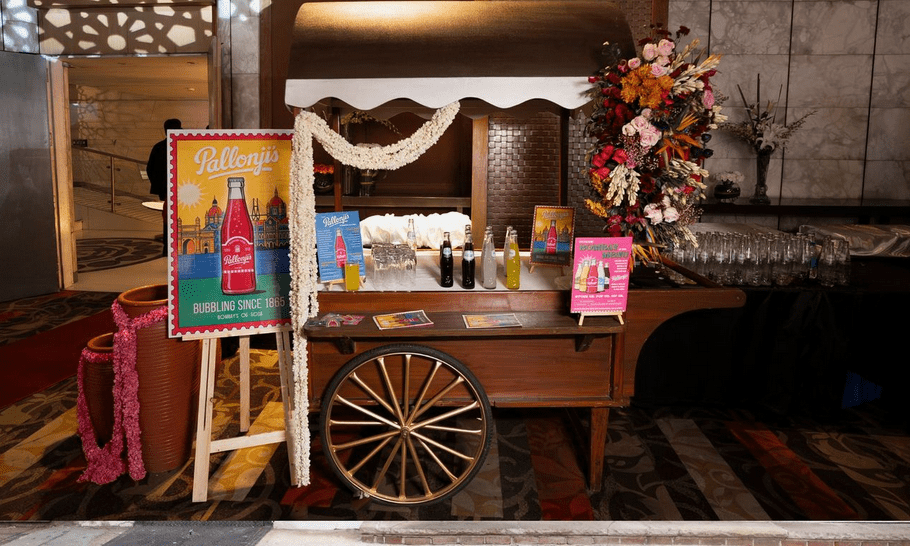
Pallonji’s is not just a soda; it’s a cultural keepsake.
A Homegrown Sparkle Since 1865
Founded in 1865, Pallonji’s is one of India’s oldest soft drink brands—older than Coca-Cola, older than Pepsi. It was born in Bombay at a time when carbonated water was still a novelty in the subcontinent, mostly consumed by the British elite and sold in chemist shops as a digestive tonic.
But it didn’t take long for enterprising members of the city’s Parsi community to see the potential in these fizzy beverages. Soda, once considered a colonial indulgence, soon became a staple in local establishments. And as tastes evolved, so did the recipes. Flavoured variants began to emerge, and among them, the vivid raspberry soda stood out—delighting palates with its neon hue and syrupy sweetness.
Pallonji’s quickly carved out its space, particularly in Mumbai’s Irani cafés, where it became the go-to companion for hearty Parsi fare like keema pav and dhansak. Decades before global beverage giants entered the scene, Pallonji’s was already bottling a legacy.
A Soft Drink With A Fan Following
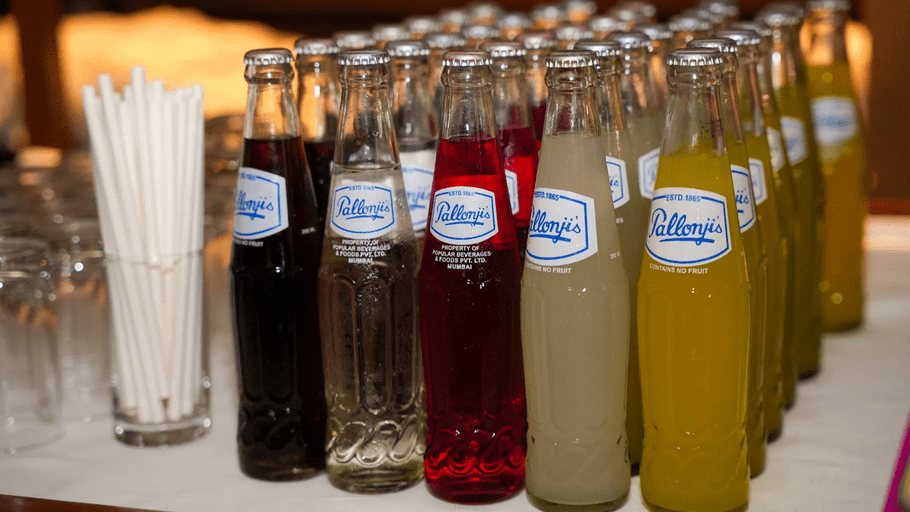
The raspberry soda, in particular, has earned a loyal fanbase. The label famously declares “Contains no fruit,” a wry and honest admission that somehow adds to its charm. It’s the kind of detail that makes it endearing to loyalists and ironic enough to delight a new generation of drinkers.
While the brand also offers ginger, lime, cola, and “ice cream soda,” raspberry remains the hero. It’s what generations of Parsi families have served at weddings and Navjotes. It’s what café regulars still reach for, decades after first trying it as kids.
And even in our digital age, where brand awareness is built on hashtags and influencer tie-ups, Pallonji’s continues to thrive without any formal marketing. No website, no social media campaigns—just word-of-mouth, nostalgia, and sheer flavour.
As one Reddit user wrote after tasting it at Ideal Corner in Fort, Mumbai: “I had the Pallonji Raspberry soda once and absolutely loved the drink.” That simple, spontaneous review sums up what even decades of advertising can’t buy: authenticity.
Thriving In A Cola-Dominated Market
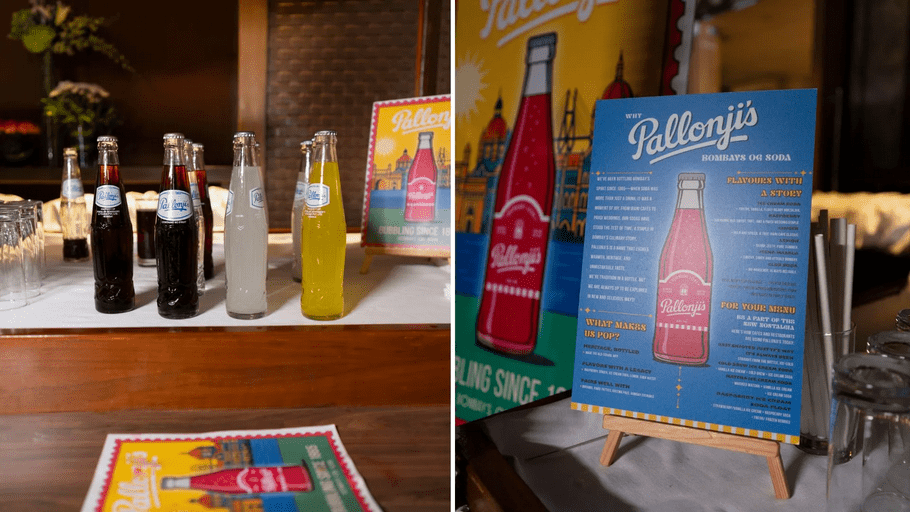
What’s remarkable is how Pallonji’s has managed to hold its ground in a fiercely competitive industry. When the cola wars swept through India in the 1990s, many regional soda brands were wiped out or absorbed into multinational portfolios. In the meantime, another beloved Parsi soda brand was eventually acquired and faded into memory.
But Pallonji’s stayed small, local, and rooted. Under the stewardship of PV Solanki, who took over the brand in 1979 through Popular Beverages & Foods Pvt. Ltd., the company resisted the temptation to scale aggressively. Instead, it focused on a modest distribution network—primarily within a 100-kilometre radius of Mumbai—and relied on loyal customers and small retailers to keep the fizz alive.
Solanki’s hyperlocal strategy worked. Today, Pallonji’s is still bottled in Mankhurd, a suburb of Mumbai, and sold at select Irani cafés, petrol pumps, and neighbourhood stores. You won’t find it at every supermarket, and that’s part of its charm. Scarcity has made it desirable.
The Future Of Fizzy Nostalgia
Pallonji’s has also found a surprising global audience. In London, trendy restaurants like Dishoom now serve the raspberry soda alongside their Bombay-inspired menus. What was once a colonial throwback has come full circle, this time embraced not as a health tonic, but as a cultural artefact.
Yet the brand’s future remains delicately poised. With the Parsi population in India shrinking and Irani cafés becoming rare, the community that once sustained Pallonji’s is no longer what it was. Solanki has expressed the hope of finding a successor to carry the brand forward—someone who respects the legacy and resists the urge to “modernise” what doesn’t need fixing.
For now, though, Pallonji’s remains exactly what it’s always been: fizzy, flavourful, and full of feeling. Whether it’s served in a five-star setting or cracked open at a local eatery, the soda has a way of bringing people together—and transporting them to a different time.
As the last few sips disappear and the fizz fades, what lingers is more than just the taste. It’s memory. It’s heritage. And it’s hope that some classics never go flat.


