
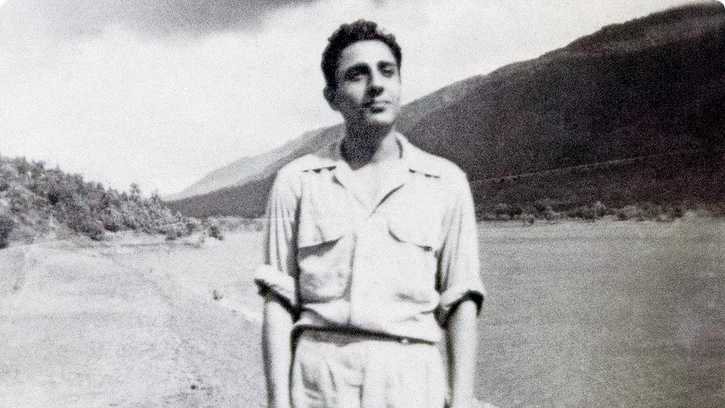
It is easy to see why Joyona Medhi turns to cinema to describe her latest photobook and exhibition, Sparseeing. The launch of the book at the Cymroza Art Gallery last Friday marked the second leg of an archival work that was sparked by an incidental meeting of friends in 2016. “The book is part fiction, part truth. We had to put together bits and pieces from conversations with family, archival letters, and reports to contextualise the world around him,” the researcher adds.
Article by Shriram Iyengar | Mid-Day
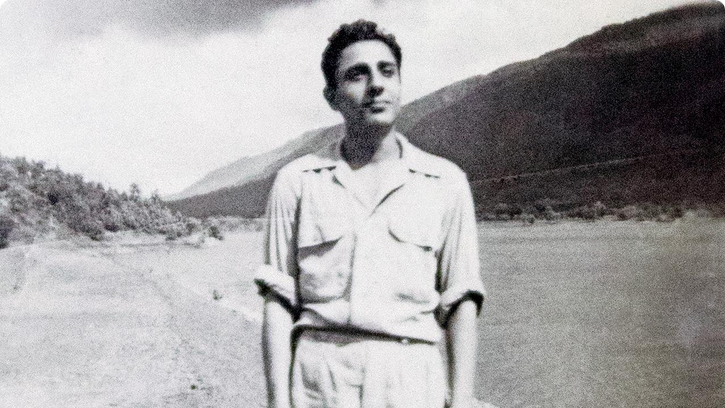
The archives belong to the Gazdar-Bharucha family of Jamshedpur, told through the life of Keki Gazdar. Keki’s grandson, Varun, was the first source. “Varun was Abhishek [Basu, Medhi’s collaborator] senior in school at Jamshedpur. During Abhishek’s visit in 2016, he asked for help to restore some photographs,” Medhi shares.
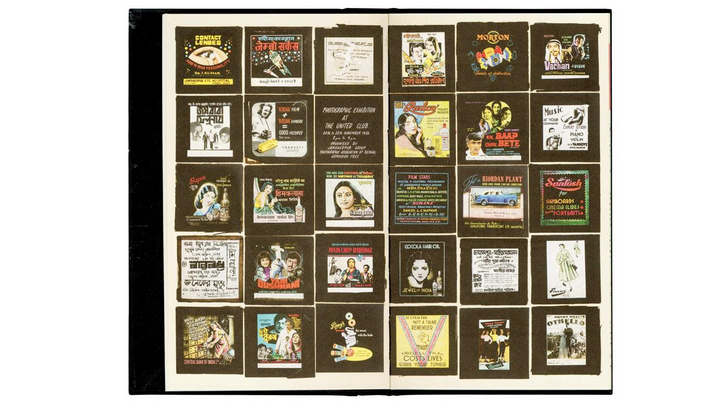
Vintage advertisement slides from the archives
What began as a family’s effort to restore personal archives would soon evolve into a witness of one of the last Parsi families in the steel town. Medhi and Basu’s background as researchers led them deeper into the history. “The family traces its roots to two branches. One, led by Khurshed Bharucha [Keki’s father-in-law], the first Indian cashier at Tata Steel, moved to Jamshedpur when the township was first set up.
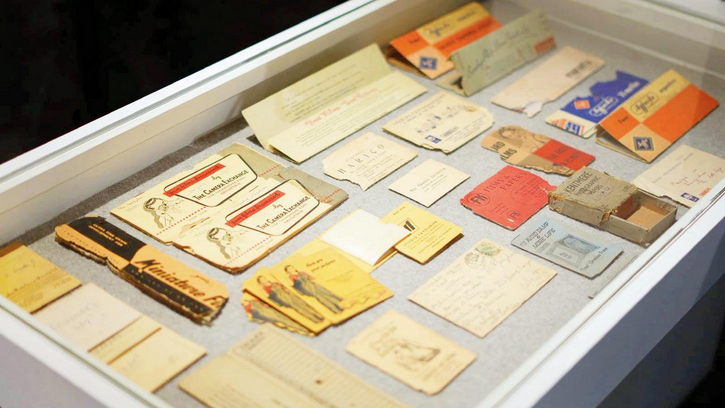
Envelopes and memorabilia on display a panel from the photobook
“He received a loan of Rs 3.5 lakhs from a friend who ‘owned an island near Bombay’ to set up a mansion,” reveals Medhi. The other side of the family belonged to Homi C Engineer, Bharucha’s father-in-law, who led another notable family in Jamshedpur. This complex history traverses through port cities of Navsari, Surat, Bombay, and leading up to the steel town.
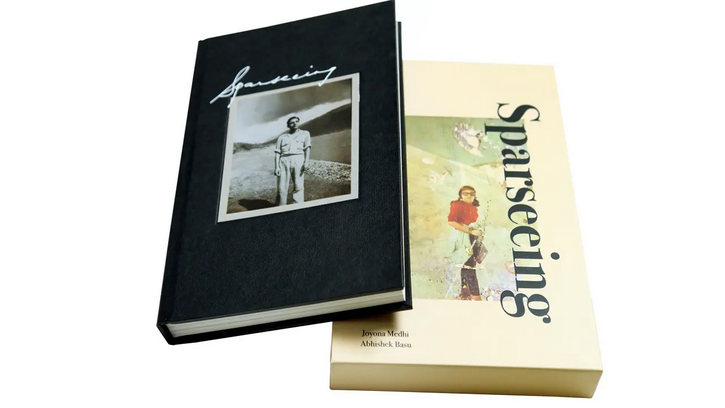
The photobook
This mansion would become the centre of the family’s story. “The photographs were proof that this individual took photography very seriously, even in that era. Then, we found his diaries,” the researcher says.
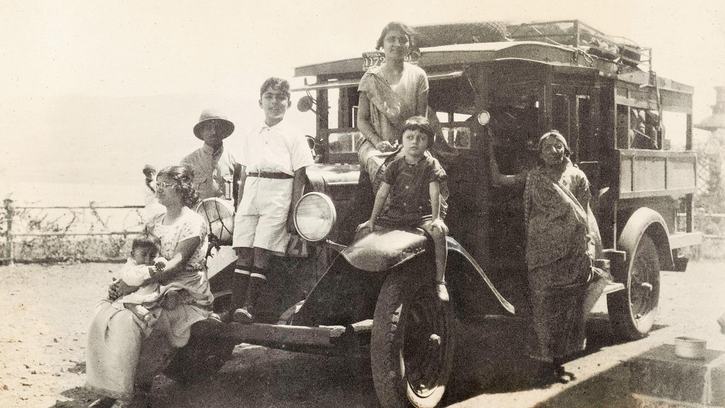
A photograph from a family outing
From dinner parties, music, and movies he watched during his travels, Keki would document his journey as a mechanical engineer in words as well. “One entry was about how he lost his camera lens in Waterloo, and found it again after eight days. This became our starting point,” Medhi explains.
“We got to know him through his diary. However, we wanted the photographs to lead the narrative,” she says, adding that it felt like the theme of the Jim Carrey-starrer The Truman Show (1998) — building a world around a living person.
There are also letters, envelopes and photographs sent from the third Indo-Afghan War that family members were part of. “Many of the photographs date further back from Keki’s birth. There are also the film slides of advertisements like Goldspot and Murphy Radio that were often screened at the single screen theatre at the mansion,” Medhi adds.
The Alkazi Photobook Grant in 2022 allowed the duo to host their first exhibition in Delhi last year. “We had to come to Mumbai, knowing the family’s historical connection. It is said that Khurshed Bharucha once worked at the Taj Hotel,” she reveals, adding, “But the final leg has to be in Jamshedpur, at the mansion.” Family always comes home.
Till June 20; 11 am to 7 pm (Monday to Saturday)
At Cymroza Art Gallery, Bhulabhai Desai Marg, Breach Candy, Cumballa Hill.


