
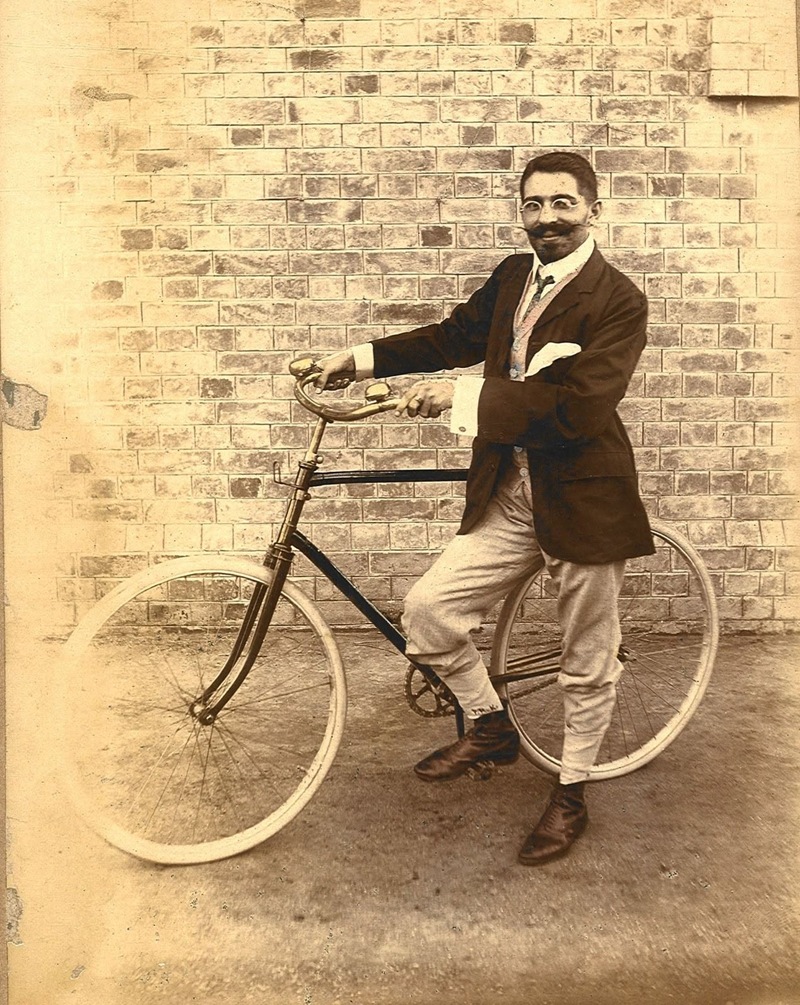
On World Bicycle Day, we look back at a charming chapter from Indore’s civic and commercial history, one in which the humble bicycle was not merely a mode of transport, but a symbol of aspiration, mobility, enterprise, and everyday life.
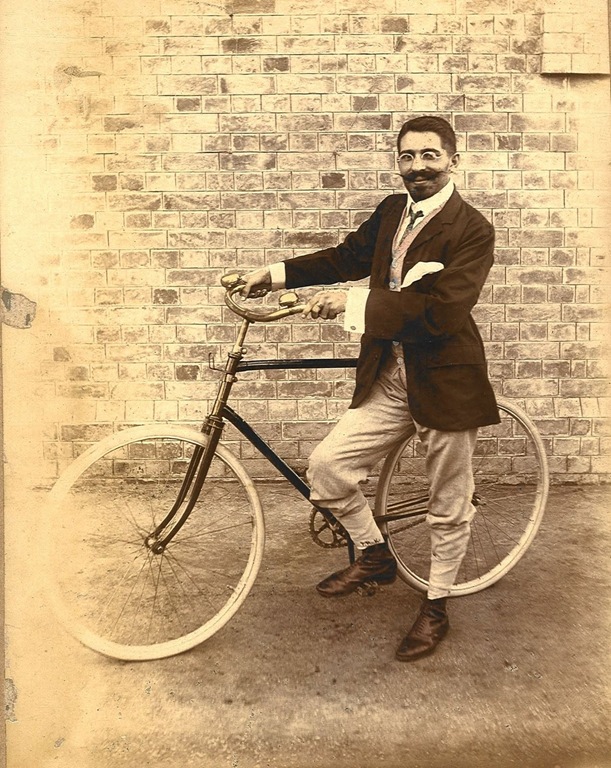
At the heart of this story is N.C. Anklesaria & Company, which, in 1918, started what is remembered as Indore’s first bicycle showroom in the cantonment area. The firm became part of the city’s cycling culture at a time when bicycles were still rare, expensive, and admired objects.
In 1930, when many members of the Parsi community were migrating to Pune and Mumbai, Maharaja Yashwant Rao Holkar II is said to have encouraged Anklesaria & Company to remain in Indore. He gave the company a plot on Maharani Road, asking them to continue their business in the city. That gesture helped anchor a Parsi enterprise within the commercial life of Indore and placed Anklesaria & Company on a road that would become synonymous with bicycles.
In those early decades, owning a bicycle was a matter of prestige. Imported brands such as Raleigh and Humber were considered expensive, costing around ₹14 and ₹15 respectively. Other well-known makes such as Philips and Hercules BSA were available for ₹8 to ₹12. These amounts may sound modest today, but at the time, they represented a significant purchase. A new bicycle in a village or neighbourhood would draw a crowd, with people gathering simply to admire the machine.
Over time, Maharani Road became the centre of Indore’s bicycle trade. Several showrooms and shops operated there, including New Standard Cycle, S.K. Chopra & Company, Gujarat Cycle, Krishna Cycle Store, and others. Between the 1950s and 1960s, bicycle manufacturing in India gathered momentum with companies such as Atlas, Hero, and Avon entering the market. By the 1970s, heavy-duty bicycles were also being made for milk delivery in the city. These cycles, fitted with thick spokes and heavy rims, cost around ₹200 to ₹300.
The bicycle was central to working-class life in Indore. More than 32,000 mill workers, employed in various mills and working across three shifts, used bicycles as their primary means of transport. Until the 1960s and 1970s, Indore was often called the “City of Bicycles.” The widespread use of bicycles helped keep the city’s environment cleaner and allowed traffic to flow more smoothly.
There was even a time when the Indore Municipality levied a tax on bicycles. Many workers were unable to afford this tax. In protest, labour leader Homi Daji is remembered for stopping a train at the Siaganj Railway Crossing, drawing attention to the burden placed on ordinary workers. The bicycle tax was later abolished.
For many families and children, bicycles were not always owned; they were rented. Bicycle rental shops could be found in almost every street and neighbourhood of Indore. During summer vacations, children’s cycles were available on rent, giving young riders the joy of movement and independence. Adult cycles were rented for about ₹0.10 per hour, while children’s cycles cost about ₹0.05 per hour. A sharp stopper was often fitted on the mudguard above the rear wheel so that double riding would not be possible. Hundreds of such rental shops once operated across the city.
The bicycle also had its moments of glamour and entertainment. In the Badwali Chowki area, Bollywood comedian Johnny Walker inaugurated Babbu Mistri’s bicycle shop by performing stunts on a cycle. A photograph from that memorable event reportedly remained hanging in the shop for years.
Young people from Indore would often ride their bicycles to Mhow to watch films. Students would cycle from Indore to Ujjain twice a week to attend Urdu classes. Such stories remind us of an era when distance was measured not only in miles, but in stamina, enthusiasm, and the steady rhythm of pedals.
The history of bicycles in Indore also reflects the administrative systems of the Holkar State. Licenses were issued for bullock carts, bicycles, bicycle taxis, tangas, horse carriages, and other forms of transport. Original metal license badges and related documents are preserved in the Zafar Ansari Museum of Indore, offering a rare glimpse into the city’s transport heritage.
During the Holkar era, proper trials were conducted before licenses were issued. Instructions printed on the back of bicycle licenses stated that the metal number plate had to remain on the bicycle at all times. A brass number plate was to be fitted under the seat. If the plate was lost, it could be remade for four annas by the Indore Municipality, issued through the Tax Superintendent.
The Holkar State also issued licenses for bicycle taxis, showing how deeply the bicycle was embedded in the urban life of the time.
In the 1970s and 1980s, cycling displays and stunt events were popular in neighbourhoods and school grounds. A ring would be created for a week, and all kinds of activities would be performed on bicycles. These included bathing while riding, balancing acts, and other stunts that delighted crowds and captured the imagination of children and adults alike.
On World Bicycle Day, this story reminds us that bicycles were once at the centre of Indore’s civic, commercial, and cultural life. They connected workers to mills, students to classrooms, families to markets, and young people to adventure. They also tell the story of a Parsi enterprise, N.C. Anklesaria & Company, whose presence in Indore was encouraged by Maharaja Yashwant Rao Holkar II and whose legacy remains part of the city’s cycling memory.
In remembering Indore as the “City of Bicycles,” we remember a slower, cleaner, and more intimate urban world — one where a bicycle was not just transport, but freedom on two wheels.
Source / Collection Credit:
From the collection and historical notes of the Zafar Ansari Museum of Indore.


