
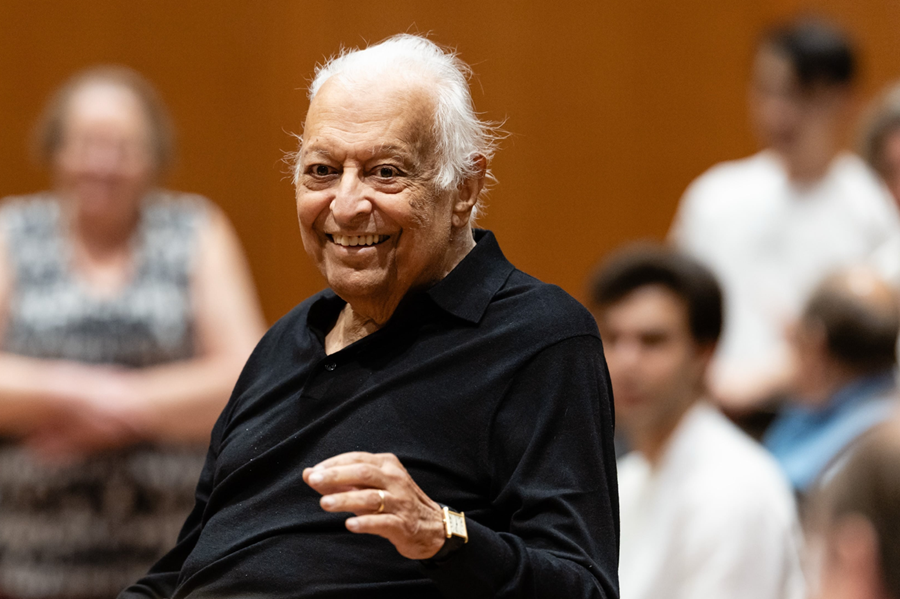
On 23 October 2026, Maestro Zubin Mehta returned to the podium of the Belgrade Philharmonic Orchestra, the ensemble that gave him his first conducting engagement in 1958. It was his 19th concert with the orchestra, and it came after recent cancellations in Florence, Vienna, Munich and Israel due to poor health.
Mehta, who was born into a Parsi family in Bombay in 1936 and celebrated his 90th birthday this year, had been determined to keep this commitment. None of the orchestra’s current players had been born when he first stood before it.
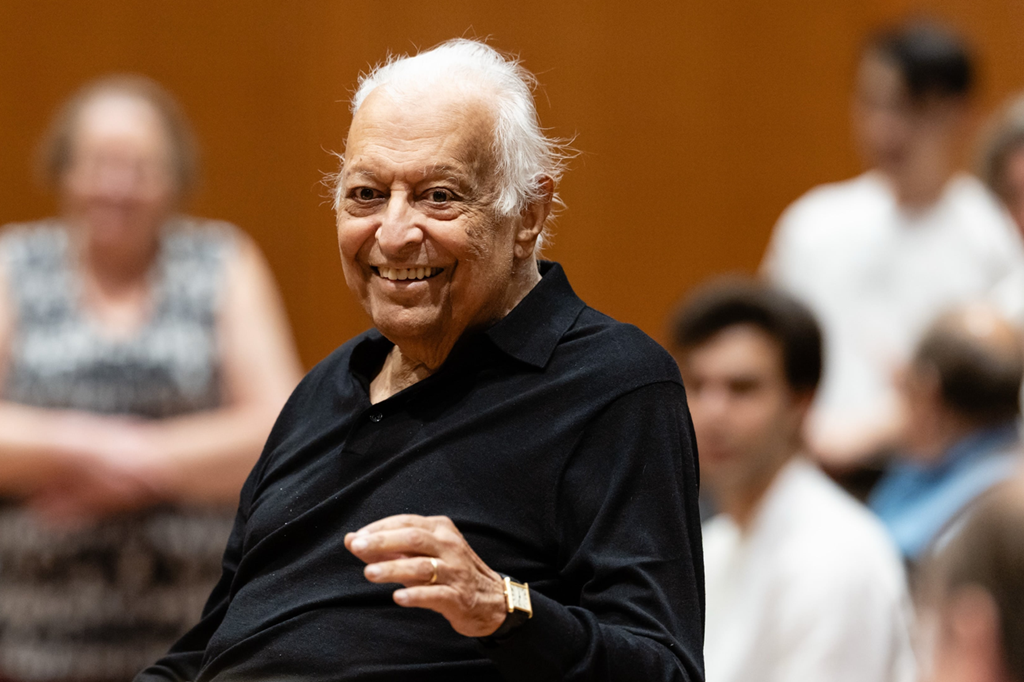
File Photo of Zubin Mehta.
A full house at Kolarac
The Kolarac Grand Concert Hall was sold out, with listeners seated on the floor and along the stairways. Many had come knowing this might be one of the last chances to see Mehta with an orchestra he has known for nearly seven decades.
The two years since his previous Belgrade appearance had taken a visible toll. Mehta was wheeled onto the stage, and two helpers assisted him onto the podium. He needed support to stand, even briefly, for the ovations.
Seated throughout, he conducted with small, restrained baton movements. For most of the evening his gaze stayed fixed ahead on the cellos; only in the poco adagio of the Dvořák did he turn slightly towards the first and second violins. Yet the orchestra responded to every gesture, and the music that emerged was assured and deeply felt.
Schubert, Wagner and Dvořák
The evening opened with Schubert’s Symphony No. 3. After a weighty introduction it settled into the light, sparkling character the work is known for. Clarinettist Veljko Klenkovski led the woodwinds, and the lilting tempi of the Allegretto and Menuetto reflected Mehta’s lifelong feel for Viennese dance rhythms, rooted in his student years in Vienna.
Wagner’s Rienzi overture followed. First trumpet Jovan Savić gave a clear, confident line in the opening crescendo and diminuendo. With minimal gestures, Mehta held the large orchestra and its brass section firmly together, and the loudest passages kept the precision the overture’s military march demands.
The second half was Dvořák’s Symphony No. 7 in D minor. Dvořák felt the work needed a conductor of Wagnerian stature, such as Hans von Bülow, to do it justice. The first two movements featured fine playing from first horn Nikola Ćirić and first flute Marina Nenadović. The long string passages brought back the rich string sound the Belgrade orchestra is known for. The Scherzo’s Czech furiant rhythms were sharply defined, with crisp, dotted interjections from the brass.
As the symphony reached its closing D major chords, many in the audience sensed they were witnessing more than the end of a symphony. It felt like a chapter closing on a partnership between orchestra and conductor that began 68 years ago.
A bond that began in 1958
For the Parsi community, Zubin Mehta has long been a source of pride: a son of Bombay, and of violinist and conductor Mehli Mehta, who carried his musical gifts to the world’s great concert halls. Belgrade was where that journey on the podium began.
On 23 October, the orchestra and the city gave him a full hall and a warm welcome. He gave them, once again, his music.


