
A London-based Mobed and technology entrepreneur has launched a free web app that brings together all three Zoroastrian calendars alongside daily prayers with audio and English translations, gaining over 200 installs in its first four days without any advertising spend.
Varun Balsara, who serves as a practising Mobed in London and co-founded the technology company Voltik, built the app after noticing there was no single place where Zoroastrians could find the Shahenshahi, Kadmi and Fasli calendars together with prayer audio and translations. The app, called Roj, is available at www.getroj.com and runs directly in a browser on both phones and laptops, requiring no download.
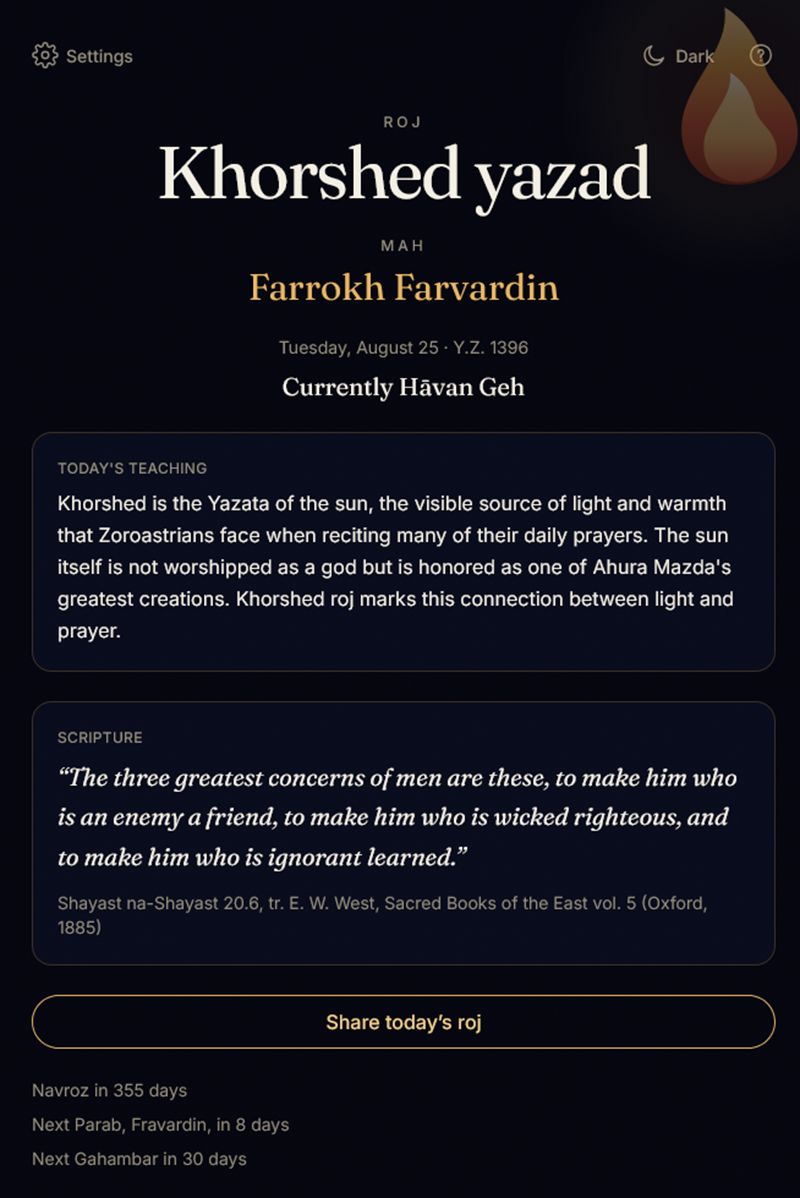
Roj is built around three core functions. A daily view shows the current roj and mah across the calendar system a user selects, paired with a short teaching for the day. A calendar and conversion tool displays the full year on one screen and works in both directions — a user can select a date to find the corresponding roj, or select a roj and mah to work out the date of a salgreh or anniversary. A prayers section offers daily prayers with accompanying audio and English translations, allowing users to listen, read along, and understand the meaning of what they are reciting.
That combination is aimed particularly at children preparing for their navjote, who can use the app to learn their prayers, as well as adults who may not have had the opportunity to learn them earlier or who want to refresh their practice.
Balsara has spent several years building technology products before turning his attention to this project, and has previously hosted a podcast that reached the Apple Top 20. He was named the 2024 Outstanding Zarathushtri Young Entrepreneur of the Year. Roj is offered free of charge, with an optional donation option available through a Support tab on the site, and Balsara has said he welcomes feedback from users as the app develops.
The early uptake — more than 200 installs in the first 72 hours through word of mouth alone — suggests a real appetite within the community for a simple, consolidated digital tool for calendar and prayer practice, an area that has traditionally relied on printed calendars, standalone prayer books, and separate audio recordings.


