
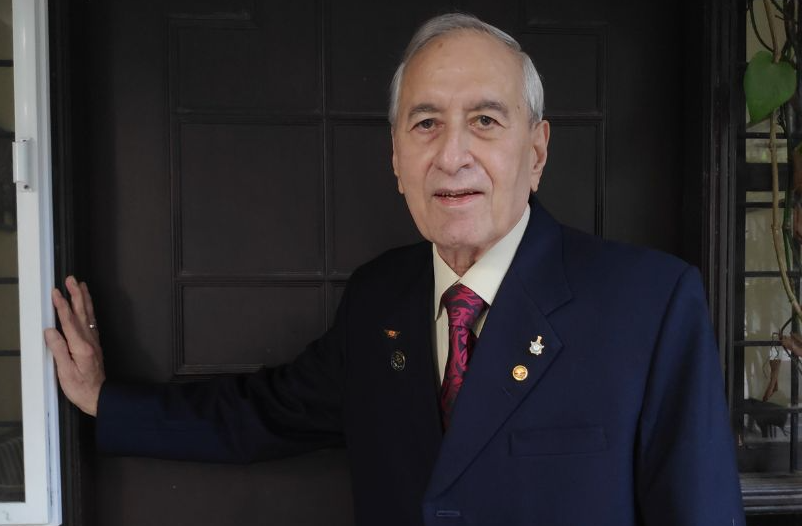
The Parsi community has lost one of its most distinguished sons. Group Captain Dara Phiroze Chinoy, VSM, a retired Indian Air Force fighter pilot best known for evading capture behind enemy lines during the 1965 Indo-Pakistani War, passed away on the night of July 21, 2026, at the age of 82. His death was announced by defence writer Anchit Gupta on X, who described him as "best remembered for one of the IAF's most remarkable wartime escapes."
Early Life
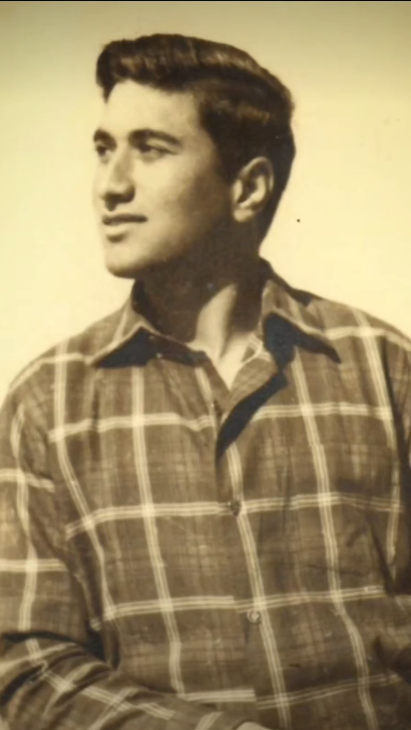
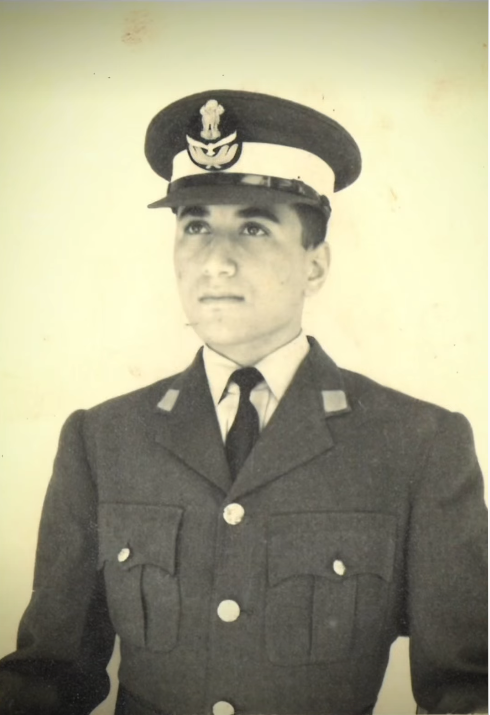
Dara Phiroze Chinoy was born in 1944 in Vijayawada, Andhra Pradesh, to a Parsi family. He studied at Loyola College, where he joined the Air Wing of the National Cadet Corps — an experience that set him on the path toward flying. Family members were reportedly not in favour of the idea at first, but Chinoy enrolled in the 83rd Pilots Course in 1961 and was commissioned as a Flying Officer on March 9, 1963, earning his wings two years later.
September 10, 1965
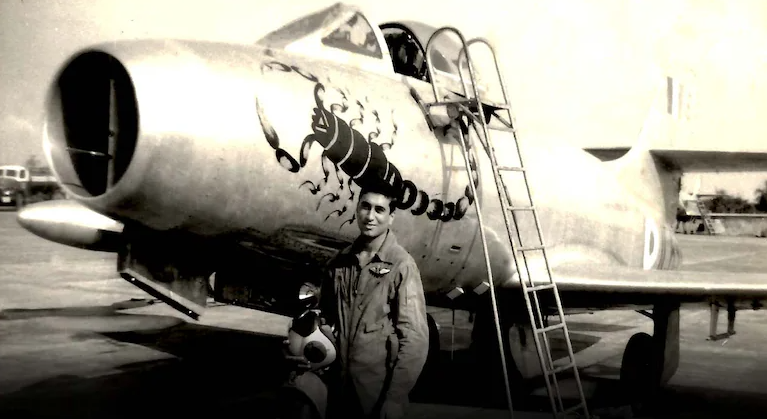
Chinoy was 20 years old and had been commissioned for barely two years when, on September 10, 1965, he flew a low-level strike mission in a French-built Dassault Mystère IVA of No. 32 Squadron out of Adampur air base in Punjab. The target was a Pakistani artillery position near the Ichhogil Canal in the Lahore sector that had been holding down Indian troops.
As his aircraft pulled up over the target, it was hit by anti-aircraft fire. "An anti-aircraft shell had exploded into my engine and the engine flamed out. The aircraft was on fire and there was smoke and flames in the cockpit. I couldn't see anything," Chinoy recalled in a 2015 interview with NDTV's Vishnu Som. With no option left, he ejected over Pakistani territory.
Descending by parachute, he came under rifle fire from the ground and could hear shouts to kill him as he landed in a sugarcane field. What followed was more than five hours of evasion. Chinoy moved north rather than the more obvious eastward route, reasoning that his pursuers would expect him to head straight for the border. He hid in tall sugarcane and grass, dodging jeeps and men on foot, and waited for nightfall before attempting to cross back into India, navigating by the rising moon. Along the way he destroyed his authentication sheets and maps and discarded anything reflective that might give away his position.
Having eaten and drunk nothing before the mission, dehydration became a serious threat over the following hours. He later said his greatest fear was collapsing from thirst and being killed before anyone could identify him. He found a well partway through the journey and drank before continuing, swimming across canals and avoiding villages and stray dogs, until he reached what he believed was the Amritsar-Batala highway at dawn.
Even then, the danger was not over. Approaching Indian soldiers, he called out to identify himself but had no identification to show, having destroyed it earlier. He was held at gunpoint until his identity could be confirmed, after which he was released and returned to his unit at Adampur, where he was welcomed back by his squadron mates. Within days, he was flying combat sorties again and went on to complete ten operational missions during the war.
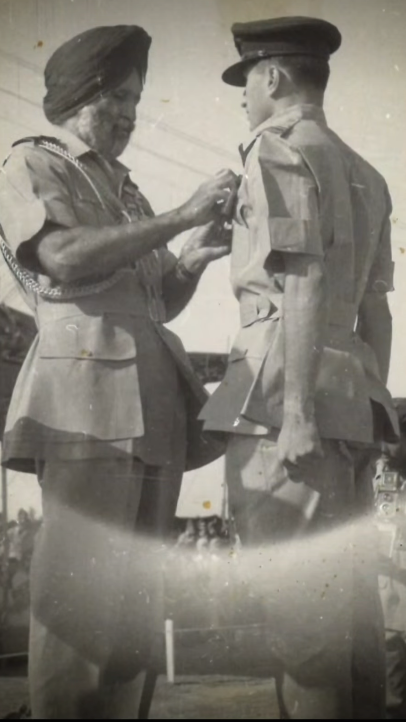
Chinoy is recorded as the only Indian officer known to have successfully evaded capture after ejecting over Pakistani territory in the 1965 war. For his conduct, he was awarded the Vishisht Seva Medal in January 1966.
A Career of Close Calls
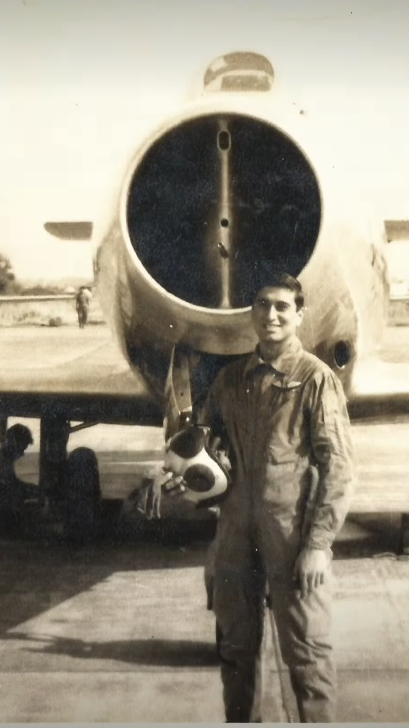
The 1965 ejection was not the only one Chinoy survived. In 1964, while still a trainee pilot with No. 29 Squadron, he had ejected from an Ouragan fighter over the Brahmaputra river after a runaway electric trimmer caused a serious control malfunction. Then, in 1987, he ejected a third time — from a MiG-21, after the aircraft suffered a bird strike. Remarkably, he continued flying after each incident.
Over 27 years in the Indian Air Force, Chinoy held a range of postings: instructor and later Chief Flying Instructor at the Flying Instructors School in Tambaram (1973–76 and 1979–80); trainer to the Iraqi Air Force in Tikrit (1977–79); Commanding Officer of No. 30 Squadron at Tezpur (1983–84); and Joint Director (Offensive Operations) at Air Headquarters in Delhi. He rose to the rank of Group Captain by 1985 and retired voluntarily from the IAF on January 31, 1990.
Life After the Air Force
Retirement from service did not mean retirement from flying. Chinoy went on to fly as a civilian pilot for corporate clients, including the Tata Group and, later, Anil Ambani's company, logging thousands of additional hours before stepping away from professional flying around 2011 — a flying career that spanned nearly five decades in total. By his family's account, he had hoped to keep flying until he reached 50,000 hours in the air.
In his later years, Chinoy lived with Parkinson's disease, which, according to his nephew Darius, gradually affected his physical abilities while leaving his memory and mental sharpness untouched.
Chinoy had long thought about setting down his experiences in writing, and was prompted in part by his 2015 NDTV interview with Vishnu Som. Working together with Darius, he spent roughly seven years turning his account into the memoir Escape from Pakistan: A War Hero's Chronicle (Om Books International, 2023). By Darius's account, the project eventually led to the story's film rights being optioned for a Bollywood adaptation that was never made. In the memoir, Chinoy also wrote candidly about difficult personal chapters of his life, including his wife's health struggles and his elder son's struggle with addiction — reflections that added depth and honesty to a life otherwise defined, in public memory, by wartime heroism.
Personal Life
Chinoy was married to Margaret "Margie" Chinoy, and the couple had two sons. In recent years, he lived a quieter life in retirement near Bengaluru with his wife and extended family.
A Life Remembered
News of Chinoy's passing drew tributes from across the defence community. Anchit Gupta's tribute on X called his escape "one of the IAF's most remarkable wartime escapes" and noted that Chinoy's own narration of the events of September 1965, recorded in an NDTV interview, "remains worth hearing." Gupta extended condolences to Chinoy's family, friends, and "the wider Indian Air Force fraternity."
Among the most personal tributes came from his nephew, Darius Chinoy, who co-authored Escape from Pakistan with him and shared a eulogy on Instagram. Writing of the name they share, Darius said: "Every time someone calls me Darius, I am reminded of the extraordinary man whose legacy I hope to honour." Of his uncle's final years, he wrote that Parkinson's "slowly imprisoned his body while leaving his razor-sharp mind and incredible memory untouched," calling it "one of life's greatest heartbreaks" to witness. He closed with: "Some men leave footprints on earth. Legends leave contrails across the sky. The sky was never your destination—it was your home. Blue skies, Uncle. Until we fly together again."
For the Parsi community, Dara Phiroze Chinoy's life is a reminder of the community's long and disproportionate contribution to India's armed forces — a story of quiet courage, discipline, and endurance under extraordinary pressure, followed by decades of steady service in the air. He is survived by his wife, Margaret, and their two sons.
Sources: Wikipedia; NDTV (Vishnu Som, "In '65 War, His Plane Crashed in Pak. Then, a Great Escape," August 31, 2015); Frontlist; a tribute posted on X by Anchit Gupta (@AnchitGupta9), July 22, 2026; and a eulogy by Darius Chinoy posted on Instagram: https://www.instagram.com/reel/DbFU2gMzoMs/