

Zoroastrianism is one of the smallest religions in the world in terms of adherents. In Sri Lanka, the faithful number only around 40 to 60 people. Yet this tiny community has left an outsized mark on the country’s commercial landscape.
The Parsis, as the Zoroastrians who settled in India came to be known, have played a significant role in South Asian business and philanthropy. In Sri Lanka, names such as Abans and Tata Group are widely recognised, while families such as the Captains, Jillas and Choksys are well known in commercial and legal circles.
Article by Gayan Abeykoon | Daily News Lanka

Interest in Iran has increased in recent months amid tensions involving the United States and Israel. Yet the country’s significance extends far beyond contemporary geopolitics. Iran possesses a civilisational history stretching back more than three millennia, including its era as ancient Persia, one of the great centres of power and culture in antiquity.
For centuries, the religion of Zoroastrianism formed the spiritual foundation of this civilisation.
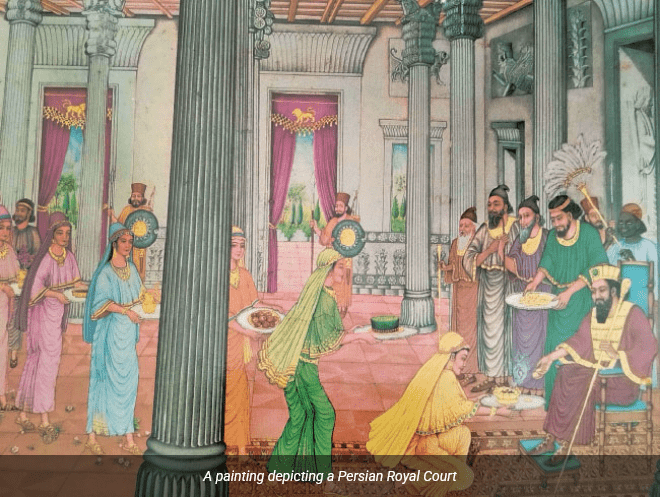
Religion of Ancient Persia
Zoroastrianism is among the world’s oldest surviving religions, founded by the Persian prophet Zoroaster, believed to have lived more than three thousand years ago.
Zoroaster taught devotion to a single supreme god, Ahura Mazda, and framed existence as a moral struggle between truth and falsehood. Human beings, he taught, play an active role in this cosmic contest through ethical choices.
The religion’s central moral maxim “good thoughts, good words, good deeds” reflects this emphasis on personal responsibility.

Sarosh Sidhwa
Zoroaster’s teachings are preserved in sacred hymns known as the Gathas, which form part of the Zoroastrian scripture, the Avesta.
For centuries, Zoroastrianism shaped the spiritual life of ancient Persia and served as the state religion of powerful empires including the Achaemenid Empire and later the Sasanian Empire.
Although today the religion has only a few hundred thousand adherents worldwide, its philosophical influence continues to attract scholarly interest.
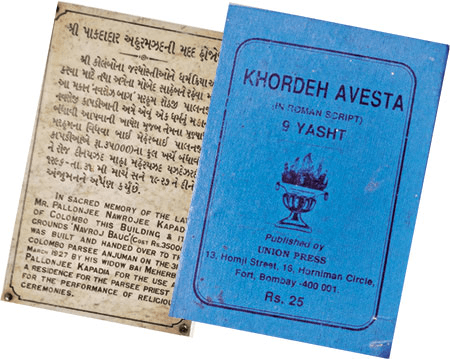
Inside Navroz Baug
To understand more about Zoroastrianism in Sri Lanka, we visited Colombo’s Navroz Baug.
Sarosh Sidwa, a young Zoroastrian priest known as a Dastur, explained the religious life of the small community. The Navroz Baug, meaning “New Year,” is not a full temple but a prayer hall where Sri Lanka’s Parsis gather for religious observances.
The main place of worship in Zoroastrianism is the Agiary, or Fire Temple, where a sacred flame is maintained continuously. Sri Lanka does not have an Agiary, and Navroz Baug therefore fulfils the religious needs of the local community.
Zoroastrians pray several times a day, Sidwa explains.
“We pray towards the East at sunrise, then towards the South at noon, and towards the West at sunset. At night we pray towards any source of light — but never towards the North.”
In traditional Zoroastrian cosmology, the north is associated with darkness and destructive forces linked to Angra Mainyu.
Prayers may also be offered in honour of natural forces such as the Sun, Moon and Water.
The religion also reveres the classical elements Earth, Air, Fire and Water. Historically, this led outsiders to mistakenly label Zoroastrians as “fire-worshippers.”
In reality, the elements are not worshipped as deities but respected as sacred symbols of divine creation.
In temples, priests cover their mouths when tending the holy flame known as Atash Behram to ensure that breath does not contaminate it. Followers are similarly careful not to spit or behave irreverently near the sacred fire.
“So Zoroastrians can’t blow out birthday candles?” we asked.
Sidwa smiled.
“We normally fan them out.”
Religious Parallels
Zoroastrian traditions sometimes reveal surprising parallels with other faiths.
The sacred hymns of the religion, the Gathas, resemble short poetic verses, a structure comparable to the gathas found in Pali Buddhist literature.
Fire, too, appears as a sacred symbol across many traditions. The Hindu scripture Rigveda begins with an invocation to the fire deity Agni, and sacred flames in Hindu temples are maintained continuously by priests.
Zoroastrians also wear a ritual undershirt called the Sudreh, tied with a sacred cord known as the Kusti, which is used during prayer. Some observers note similarities with the Jewish garment known as the Tzitzit.
The Zoroastrian faith also includes ritual purification ceremonies known as Nahn, which are performed during major life events such as weddings. Another important rite is Navjote, a coming-of-age initiation ceremony through which young Parsis formally enter the faith. They are close to Baptism and Confirmation ceremonies in the Christian religion.
Traditional Nahn rituals involve symbolic purification substances including pomegranate juice and the urine of a fully white ox, an animal considered sacred in Zoroastrian cosmology.
Similar to Hindu practice, many Zoroastrians avoid consuming beef due to the sanctity attached to cattle.
No Converts
Unlike many religions, Parsi Zoroastrians do not accept converts.
The practice is rooted in historical tradition. When Zoroastrian refugees arrived in India centuries ago, they reportedly promised local rulers that they would preserve their religious identity without actively seeking converts.
Over time, this pledge evolved into a strict communal custom linking the religion closely with ethnic identity.
The Parsis arrived in India between the 7th and 10th centuries CE, fleeing religious persecution following the Muslim conquest of Persia.
After temporary refuge in regions such as Khorasan and Hormuz, they eventually sailed to India and settled in Sanjan in Gujarat.
According to Parsi tradition, the community’s leaders met the local ruler, Jadi Rana. To indicate that his kingdom was already full, the king presented a bowl filled to the brim with milk.
A Parsi priest gently stirred sugar into the milk without causing it to overflow symbolising that the newcomers would blend into society while adding sweetness without displacing others.
“Zoroastrians remain nostalgic about Iran because it is the birthplace of their religion,” the priest explained.
“The faith once played a powerful role in ancient Persia as the state religion. But people followed it out of love and respect for the philosophy, not because they were forced to.”
We asked Sidwa what non-Zoroastrians might learn from the religion.
“Good thoughts, good words and good deeds,” he said.
“It sounds simple, but it’s powerful. If people follow those principles, evil is eliminated at the very beginning.”
Tower of Silence
One of the most distinctive Zoroastrian funeral practices is sky burial.
Traditionally, the dead are placed in circular structures known as the Tower of Silence, where bodies decompose naturally under the sun and are consumed by scavenging birds.
The practice is intended to avoid contaminating the sacred elements of earth and fire.
Sri Lanka, however, has no Tower of Silence. As a result, the island’s small Parsi community conducts burials instead.