

The release of Made In India: A Titan Story has brought renewed attention to one of the most remarkable business journeys in modern India: the creation of Titan, the company that transformed the country’s watch market and became one of India’s most trusted consumer brands.
At the heart of that story is Xerxes Desai, the founding managing director of Titan, whose vision helped shift India from an era of scarcity and waiting lists to one of design, choice, precision, and aspiration.
The six-part series, now streaming on Amazon MX Player, features Jim Sarbh as Xerxes Desai and Naseeruddin Shah as J.R.D. Tata. Based on Vinay Kamath’s book Titan: Inside India’s Most Successful Consumer Brand, the series revisits the risks, resistance, and resolve behind the birth of Titan. But beyond the story of a company, it also offers a portrait of a kind of Indian institution-building that feels especially relevant today.
Born in 1937 into a Parsi family, Xerxes Desai studied at Elphinstone College in Mumbai before pursuing higher studies at Oxford University, where he read philosophy, economics, and politics. He joined the Tata Group in 1961 through the Tata Administrative Service and worked across several Tata businesses, including chemicals, hotels, and steel.
That range of experience gave Desai a broad understanding of Indian industry at a time when the country was still shaped by the licence raj. Production quotas, government controls, and shortages defined much of the consumer economy. Watches were no exception. The state-run HMT dominated the market, and buying a watch could involve waiting, booking, and compromise. Good watches were often hard to find, and many superior timepieces entered the country through informal or smuggled channels.
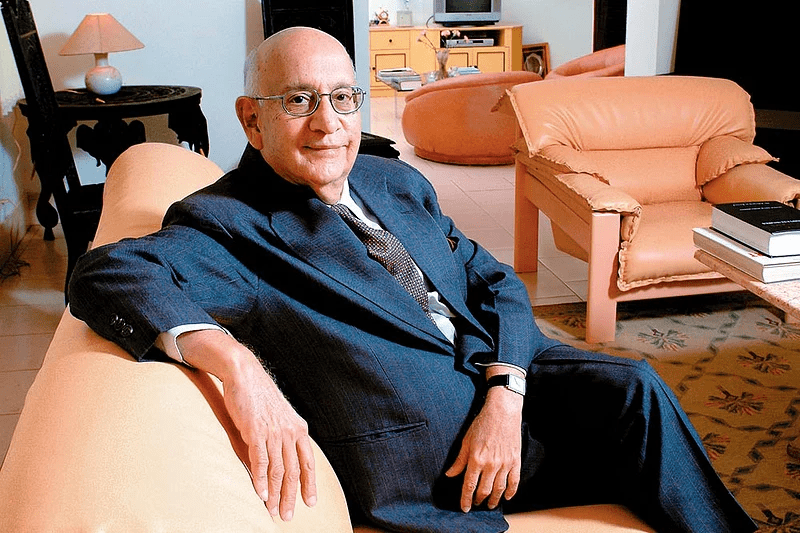
It was in this context that Desai saw an opportunity. India did not merely need more watches. It needed a new idea of what an Indian watch could be.
Desai believed that the country could produce modern quartz watches that were reliable, elegant, and globally competitive. Quartz technology offered Indian consumers a respite from mechanical watches that had to be wound and set regularly. More importantly, it represented a leap into modern design and precision manufacturing.
J.R.D. Tata, whose instinct for bold but purposeful enterprise shaped so much of the Tata Group’s history, responded positively to Desai’s idea. It was not, however, an easy road. The existing order was resistant. The idea of a new entrant challenging the established watch market was ambitious, and the economic environment of the time did not make such ventures simple.
Setting up Titan took persistence. The manufacturing facility at Hosur in Tamil Nadu was established in 1986, with the support of the Tamil Nadu government through the Tamil Nadu Industrial Development Corporation. Titan was formed as a joint venture between the Tata Group and TIDCO. What emerged from Hosur would soon become a household name across India.
Titan changed the watch from a scarce utility item into a product of design, emotion, and aspiration. Its watches became gifts for birthdays, graduations, weddings, promotions, and milestones. A Titan watch was not merely something worn on the wrist. It became part of the ritual of achievement and affection in Indian homes.
Desai’s ambition did not stop at building a successful domestic brand. He wanted Titan to stand with the best watchmakers in the world. Under his leadership, the company pushed itself toward innovation and technical excellence. One of the finest examples of this ambition was the Titan Edge, unveiled in 2002, with a movement just 1.15 mm thick and an overall case thickness of 3.5 mm. Its movement was tested and certified by Switzerland-based Chronofiable SA, giving the Indian-made innovation international recognition.
This was a statement larger than watchmaking. It said that India could design, engineer, manufacture, and compete at a world-class level.
Desai also helped guide Titan into another transformative category: jewellery. The launch of Tanishq was initially difficult, but over time it reshaped India’s jewellery retail landscape. In a market long defined by family jewellers and inherited trust, Tanishq introduced a new language of transparency, design, purity, branding, and national scale. Today, it is hard to imagine Indian jewellery retail without the change that Tanishq helped bring about.
But Xerxes Desai was not only a business leader. Outlook India noted another important dimension of his life: his deep interest in cities. Desai cared about urban spaces that were livable, green, and humane. He was associated with the New Bombay project alongside renowned architect Charles Correa, and thought about urban planning and civic life long before “smart cities” became a national slogan. His concern for cities reflected a wider imagination — that industry, design, environment, and everyday life were all connected.
Those who worked with him remembered him as a man ahead of his time. Bijou Kurien, former chief operating officer of Titan, offered perhaps the most fitting tribute when he described Desai in precisely those words.
For the Parsi community, Xerxes Desai’s story belongs within a larger tradition of institution-building. Parsis have played an outsized role in India’s industrial, civic, philanthropic, and cultural life, often creating institutions that carried values beyond profit alone. Desai’s work at Titan reflects that tradition. He helped build a company that combined trust, design, discipline, manufacturing excellence, and social imagination.
He retired in 2002 after more than four decades with the Tata Group and was succeeded by Bhaskar Bhat. By then, Titan had already become a model for Indian consumer enterprise. Over time, the company expanded into watches, jewellery, eyewear, fashion accessories, and other categories, while retaining the trust that marked its earliest years.
Xerxes Desai passed away on June 27, 2016, at the age of 79. Bengaluru had been his home for decades, but Hosur remained central to his professional legacy. It was there that Titan built its manufacturing base, and there that thousands of employees, residents, and admirers gathered to pay their respects after his passing.
Today, as Made In India: A Titan Story introduces a new generation to the birth of Titan, it also reminds us of the power of patient, values-led enterprise. Desai’s life was not simply the story of a man who made watches. It was the story of someone who understood that time itself was changing in India — and that Indian industry had to change with it.
In giving India its first great modern watch brand, Xerxes Desai gave the country more than timepieces. He gave it confidence.