

Farah Madon AM: Australia Day Honours 2026
Farah Madon’s AM honour this Australia Day recognises a career that has quietly but deeply reshaped how Australians think about architecture, accessibility, and inclusion.
Quite early in her career, Madon began to see how the built environment often sent a powerful, unspoken message about who belonged – and who did not.
“I came to architecture first drawn by the idea that good design could improve people’s lives,” she tells Indian Link. “In my early years, I was focused on aesthetics, functionality, and the technical aspects of the craft, but it was through people with disabilities that my perspective changed on the true meaning and impact of the built environment.”
Article by Prutha Chakraborty | Indian Link

What followed was a fundamental shift in how she viewed her profession.
“Suddenly, I wasn’t just noticing what looked good or worked efficiently; I was acutely aware of what excluded people. The steps that couldn’t be navigated, the doorways that were too narrow, the spaces that essentially told people that they don’t belong.”
Architecture stopped being just about creating beautiful or innovative spaces. “It became about creating access, dignity, and independence. It became about designing spaces that work for everyone,” she says.
ACCESS TO ALL
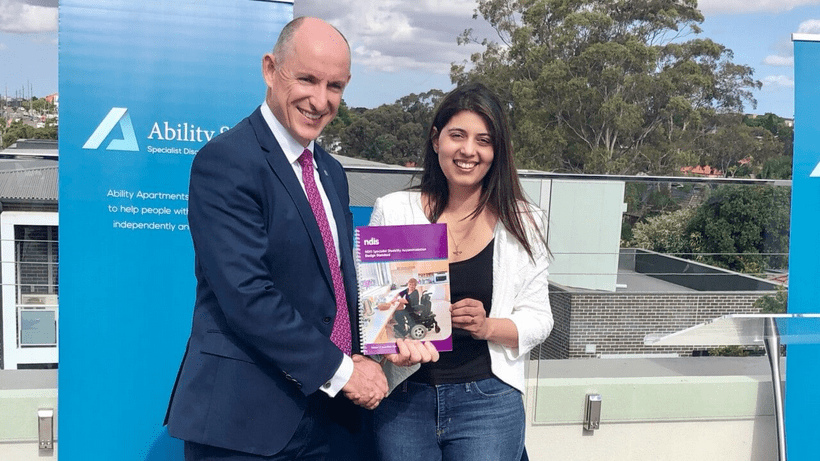
Farah Percy Madon has worked as lead author for the National Disability Insurance Scheme’s Specialist Disability Accommodation (SDA) Design Standard. This key document sets minimum building requirements for new SDA housing for people with extreme functional impairment.
But translating lived experience into national guidelines was complex.
“One of the most profound challenges was honouring specific individual needs while creating standards broad enough to serve a diverse range of people with disabilities,” she notes.
Another challenge was shifting entrenched thinking. “How do we move beyond the medical model mindset that has historically dominated accessible design,” she says. “My hope is that the conversation around enablement and participation will focus on ‘Does this design support someone to live the life they choose?’”
National policy work has shown her what is required to scale impact. “I’ve learned that inclusive design isn’t just about the physical environment – it’s about the regulatory frameworks, procurement processes, and accountability measures that either enable or obstruct good design at scale.”
Madon has also spent more than 15 years volunteering as a community representative on Penrith City Council’s Access Committee, grounding her work in lived reality.
“Over the years, thanks to the work of the Access Committee, Penrith has made extraordinary strides in improving accessibility and inclusion,” she says. “We have seen infrastructure such as pathways, bus stops, play areas improved and attitudes shift toward genuine inclusion.”
Photo of (from left) Hon Stuart Robert MP, Minister for the National Disability Insurance Scheme and Farah Madon (Source: VAA)
That grassroots experience, she says, is essential. “Grassroots work keeps you honest. It reminds you that design isn’t about elegance on paper – it’s about being fit for purpose.”
WHAT LIES AHEAD
Despite progress, Madon believes Australia continues to fall short, particularly in housing.
“The biggest shortfall I would say is the hesitation from the building industry to create adaptable residential dwellings,” she says. “It ends up costing more money for all concerned because adaptability is not considered in design from the very beginning.”
The statistics reinforce the urgency. “Currently over 4.4 million people in Australia have some form of disability. Around 5.75 million Australians will have mobility limitations by 2060. Only 5% of the new homes built over the past decade have complied with any accessibility standards.”
Through leadership roles with the Access Consultants Association and Livable Housing Australia, Madon has focused on lifting professional standards and shifting industry norms.
“We were often brought in too late, treated as box-tickers rather than design collaborators,” she says. “Through the Association, we’ve worked to change that narrative.”
She believes access consultants are now increasingly part of early design conversations, and inclusive housing features – once considered radical – are slowly becoming mainstream.
A COLLECTIVE HONOUR
Receiving the Member of the Order of Australia, she says, is deeply humbling and collective.
“This recognition is incredibly meaningful to me,” she says. “Any spotlight on these issues therefore potentially opens doors, creates conversations, and signals to younger practitioners that this career path is valued and viable.”
Farah Madon is clear the honour belongs to many. “Every outcome I’ve been part of, has involved people with lived experience who shared their stories and expertise. All these people who’ve shaped my journey this honour is also dedicated to them.”