SUKKUR: The Sukkur bench of the Sindh High Court has granted a stay order restraining the potential demolition of a century-old Zoroastrian Agiary belonging to the Parsi community, in a rare legal win for one of Pakistan’s most fragile pieces of Parsi heritage.
Locally known as the “Mama Parsi Temple,” the site sits opposite the fire brigade station near Dua Chowk in Sukkur, on what was once known as Wallace Road. The court’s intervention follows a constitutional petition seeking the immediate protection and restoration of the site, which dates back to 1923.
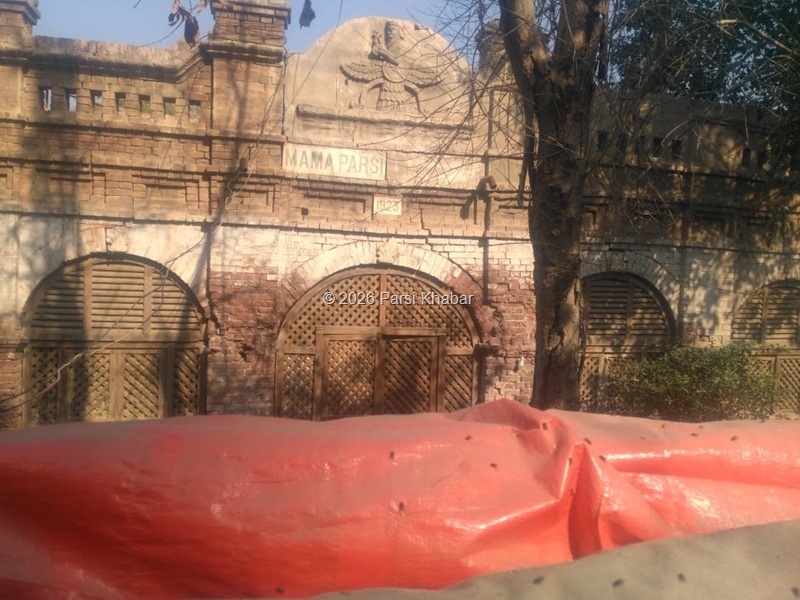
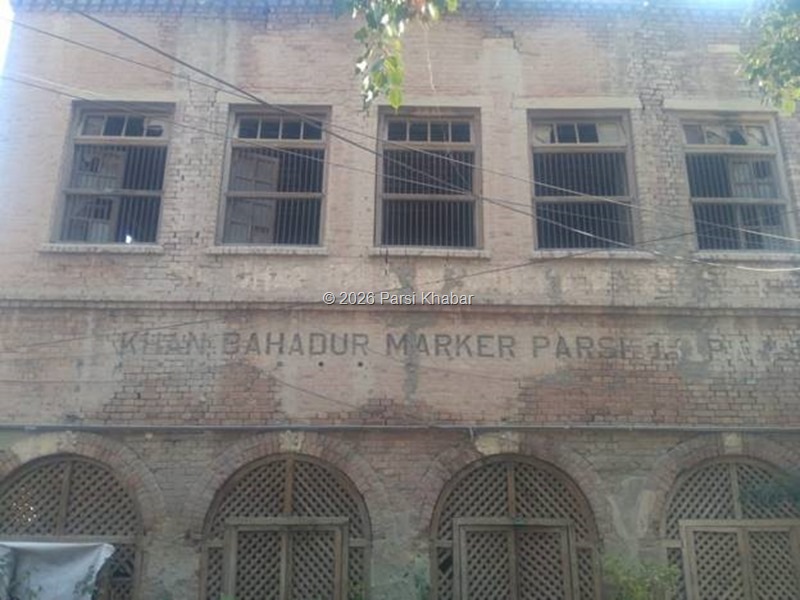
The petitioner, Shokat Ali Mahar, approached the court to address the severe deterioration of the temple compound, which also houses the Khan Bahadur Marker Parsi Dharamshala and an old school building — together forming what was historically called the Parsi Compound. The petition states that while the site once stood as a testament to the Parsi community’s contributions to Sukkur’s trade, commerce, and social development, it now faces an existential threat from neglect and illegal occupation.
The petition contends that after the Parsi community migrated from Sukkur, the abandoned premises were illegally occupied by private individuals for residential use. The site has fallen into ruin — cracked walls, broken windowpanes, locked sections — despite still bearing evidence of its original architectural beauty. It further alleges that land grabbers are attempting to encroach upon and potentially demolish the historic structure, and that relevant government departments have failed to fulfil their statutory, constitutional, and moral obligations to protect the heritage site, despite a formal application submitted on April 24, 2025.
The petitioner has asked the court to direct authorities to inspect the site and remove illegal occupants through due legal process, to declare the temple a protected heritage monument if it has not already been notified, to initiate restoration and security measures, to restrain any further encroachment or demolition, and to take legal action against those responsible for the illegal occupation and damage. The petition frames the Mama Parsi Temple as a symbol of interfaith harmony and a matter of public interest, given the region’s shared cultural history.
The owners of the property now live in Quetta, and the site is currently looked after by a single watchman, without any formal security or protection.
A Compound Built by One of Sukkur’s Most Prominent Parsi Families
The compound was built in 1923 by the trader Kekobad Ardeshir Marker, whose son, Jamsheed Marker, went on to serve as Pakistan’s permanent representative to the United Nations for over four decades. An old memorial stone at the site inscribes it as the “Mama Parsi Worship Place.” Besides the Agiary itself, the compound comprised the Khan Bahadur Marker Parsi Dharamshala, the Mama Parsi School, family residences, servant quarters, and a large play area — a self-contained hub for what was once an active Zoroastrian community on the banks of the Indus.
After Partition, two Parsi brothers, Jahangir and Homy Caranjee, and their families were among the last Zoroastrian residents of the compound, with their children attending Saint Mary’s High School nearby. Longtime Sukkur residents have recalled the brothers as private people who largely kept to themselves; one worked at the National Bank of Pakistan, the other at WAPDA. Both families left Sukkur by the early 1970s or 1980s, and are believed to be among the last Zoroastrians to live in the city.
In the decades since, the compound has been maintained — after a fashion — by a gardener named Habib Ahmed, whose father worked for the property’s owners before him. Ahmed has described spending over 40 years unofficially safeguarding the compound from encroachment, without pay, while several families with historic ties to former staff continued to live in the servant quarters. The only member of the owning family said to visit periodically was a woman named Roshan Baroshaw, who came roughly once every two to three years.
The Afarganyu That Made It to Houston
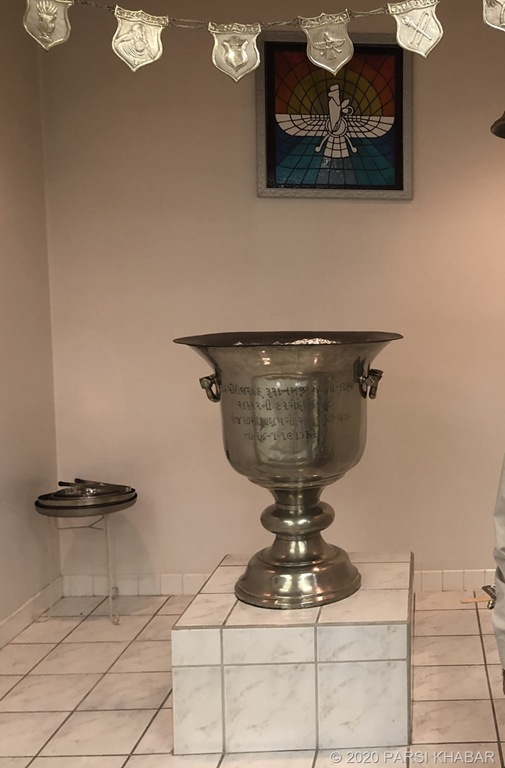
Long before this legal battle, one piece of the Sukkur Agiary’s history had already found safe passage abroad. The Agiary’s silver afarganyu — donated in 1917 by a railway engineer, Seth Phirojshaw Rustomji Mehta — sat unused in the abandoned fire temple for decades after Sukkur’s Zoroastrians departed. In the late 1990s, with the permission of its legal guardian, the Parsi Anjuman of Quetta, and after clearing hurdles with the Pakistani government (which initially balked at letting a recognized antique leave the country), the afarganyu was transported from Sukkur to Karachi, polished back to its original shine, and shipped to Houston, Texas, where it was installed in the prayer room of the newly built Zarathushti Heritage and Cultural Center in 1998. It remains there today, a small but tangible link between a vanished Sukkur community and the diaspora that carries its memory forward.
Why This Case Matters
Sukkur’s Mama Parsi Temple is one of a dwindling number of physical markers of Zoroastrian life in Pakistan’s Sindh province, a community that once played a visible role in the region’s trade and civic life but has now all but disappeared from the city. With the site’s owners living in Quetta and its only protection a single unpaid watchman, the stay order does not resolve the underlying issues of illegal occupation, disrepair, and heritage status that the petition raises — but it does, for now, buy the compound time. Whether that translates into restoration, formal heritage protection, or simply a longer stretch of managed neglect will depend on what the Sindh High Court, and Sindh’s heritage authorities, do next.