Archive for the ‘India’ Category

10
Jul

The Last Parsis: Tales of Survival and Extinction

   Posted by: arzan sam wadia   in Heritage, History, India

Kaevan Umrigar, a filmmaker, and good friend of Parsi Khabar runs his own blog.

His latest article in on Uran

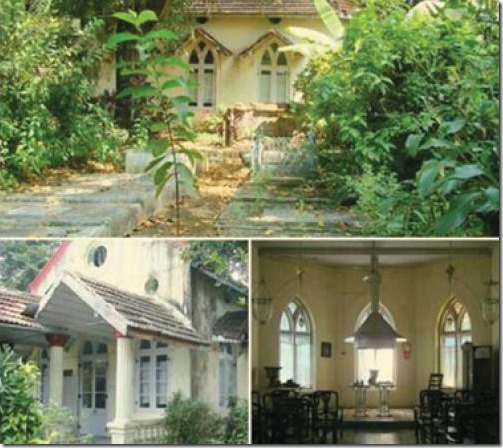
Next on my itinerary was Mora Bunder at Uran, a small fishing village across the harbour from Bombay. The agiary wasn’t far from the jetty, and as I walked towards it I saw a couple of houses that looked unmistakably Parsi. Again, I found the agiary locked. Going around to the back, in one of the buildings in the complex, I met Kersi Sui.

Kersi Sui was the only Parsi left in Uran. He looked after the agiary, though he was not a priest. He told me how he came about this. His parents had come to Uran from Navsari to manage the sanatorium in the agiary complex. The agiary fire was a dadgah, and therefore laymen could tend it too. So whenever the priest had to go to his home-town, he entrusted the fire in their care. The trustees didn’t have enough funds, and neither the Suis nor the priest drew much of a salary. When the priest quit, no one was ready to work for the pittance offered. Rather than let the fire die out, Kersi began to look after it.

Continue reading the entire article here.

Bookmark this entry: These icons link to social bookmarking sites where readers can share and discover new web pages.
  • del.icio.us
  • digg
  • Reddit
  • Furl
  • Facebook
5
May

Tata, the headiest brew in the world

   Posted by: Mehernaaz Sam Wadia   in India, Individuals, Industry

An Indian Giant

Tea, cars, steel, IT… Tata, the headiest brew in the world

India’s extraordinary conglomerate has found unique solutions to many of its problems. But it’s still unclear what will happen when the boss retires

The favourite boast of executives of the Tata Group is that it accompanies the average Indian throughout the day. They wake to the alarm of its Titan clocks, drink its tea or coffee for breakfast, wear clothes bought from its Westside shopping centres, take a Tata car or bus to work on a computer set up by Tata Consultancy Services, lunch in a Tata hotel, arrange their evening appointments on a Tata mobile phone and use Tata power to light their homes.

These days, the influence of the Indian conglomerate is spreading beyond its home country. Back in 2000, it made the first major acquisition by an Indian group when it acquired the Tetley tea company; last year, that was trumped when it bought steelmaker Corus for £6.2bn, while in March it was confirmed as the purchaser of British icons Jaguar and Land-Rover from Ford. Next month, it will make its first foray into UK financial services when New Star launches an Indian investment fund that will be managed by Tata Asset Management.

That spending spree, together with less high profile acquisitions like chemicals company Brunner Mond, US business General Chemical Industrial Products and the truck-making business of South Korea’s Daewoo, means that India now represents just a quarter of the group’s interests, a smaller proportion than the UK; and it means that Tata can count itself among the world leaders in industries as various as tea, steel, consultancy services and soda ash, the key ingredient in washing soda.

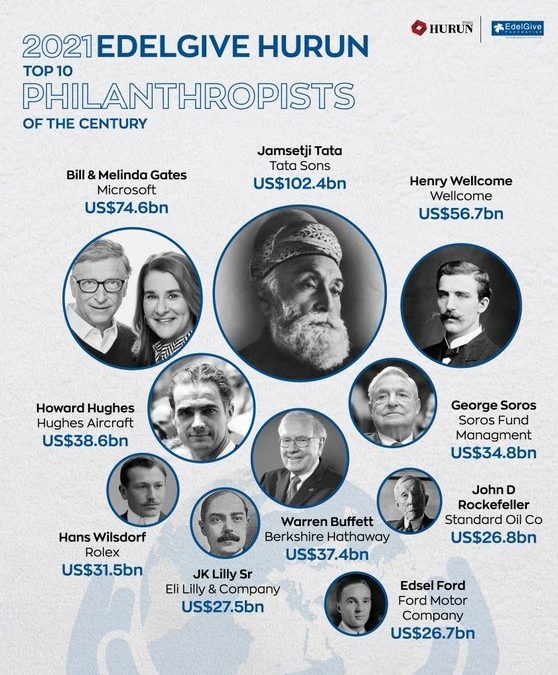
Much of the credit for the transformation goes to the reclusive Ratan Tata, who has chaired the group since 1991. While he does not even get a walk-on part in Keepers of the Flame, the film that reverently charts the group’s 140-year history, when the history of his chairmanship is finally written, he will be credited as being at least as influential as group pioneers such as founder Jamsetji Tata or JRD Tata, Ratan’s predecessor who led the group for a marathon 51 years.

Read the rest of this entry »

Bookmark this entry: These icons link to social bookmarking sites where readers can share and discover new web pages.
  • del.icio.us
  • digg
  • Reddit
  • Furl
  • Facebook

Vadodara, April 18 One of the three men was a Barodian; almost 80 years after it was first published, his son will release a new edition of the book today

Just in their twenties and living off a shoestring budget, three young Parsis, one from Baroda, ventured on the first ever trip around the world on bicycles on October 15, 1923. The trio covered 44,000 miles in three years and three months across 27 countries and four continents. On their return, Adi Hakim from Vadodara, Jal Bapasola from Mumbai and Rustom Bhumgara from Pune, who later became a freedom fighter, wrote a book of their memoirs from the epic journey, of which but a few copies still exist. The original book includes a foreword by Jawarharlal Nehru and comments from leaders around the world like Benito Mussolini and Calvin Coolidge.”

Now, after five years of labour and commitment, Hakim’s son Daryous will release a new edition of the book in Vadodara on Saturday, almost 80 years after it was first published.

Says Daryous, who is fondly called Dara: “The original line-up of cyclists was six, but only three completed the tour, with three others returning to India for various reasons. In their book, the trio believed they wanted to take India to the world, even as they were caught up in the fervour of the freedom movement.” He says the three were left with not much money and did odd jobs while travelling, for meeting their expenses for food, clothing and shelter. They decided on the trip after meeting at the Mumbai Weightlifting Club, he says.

Read the rest of this entry »

Bookmark this entry: These icons link to social bookmarking sites where readers can share and discover new web pages.
  • del.icio.us
  • digg
  • Reddit
  • Furl
  • Facebook
18
Apr

Around the World in 53 months

   Posted by: Shirin Kumaana-Wadia   in Heritage, History, India, Individuals

Recently we reported about the launching of the book that chronicles the bicycle trip around the world by Parsi cyclists. Below is an article by Ervad Marzban Hathiram, a good friend of the Parsi Khabar, which appeared in the TOI in 2002.

Around the World in 53 months

by Ervad Marzban Hathiram


TIMES NEWS NETWORK [ FRIDAY, NOVEMBER 15, 2002 11:14:10 PM ]


MUMBAI: The three men knelt before Pope Pius XI, thanking God for their luck so far and seeking the pontiff ’s blessings for their onward journey. The date was October 15, 1924. Dressed in khakis, Gustad Hathiram, Keki Pochkhanawala and Adi Hakim were in the midst of an adventure that had commenced exactly a year ago when six young men set out from the dusty streets of Gowalia Tank in Mumbai on an unbelievable expedition—one which involved circumnavigating the globe on bicycle.

After weaving an intricate web of lies to avoid their parents’ ire, holding secret conclaves and making brave attempts to gather money, these three, along with their friends Jal Bapasola, Rustam Bhumgara and Nariman Kapadia had set off with a few clothes, a second-hand compass and crude copies of the map of the world. They chose a route that ensured that they would pass through terribly inhospitable terrains, for their objective was to show the world that, although the British ruled them, Indians were capable of much.

From Mumbai the cyclists headed to Delhi, passing through central India. After meeting the Viceroy, Lord Reading, they cycled through the Punjab and on to Baluchistan, crossing the Duki pass at 11,000 ft. They ploughed through three feet of snow and battled temperatures of minus 13 degrees C before finally reaching Varechhah—the last outpost of colonial India on January 20, 1924. From there, the youngsters sent their first postcards to their parents, revealing the details of their journey (which they had somehow managed to keep secret).

Crossing into their ancient motherland, Iran, the young Parsis reached Tehran, where they met Reza Shah Pahlavi. There, Nariman chose to return back to India and his fiance, while the rest proceeded to Baghdad. Despite dire warnings, they set a new record—crossing the Mesopotamian desert from Baghdad to Aleppo in 23 days. During these 956 kilometers they struggled through shifting sands, temperatures that crossed 55 degrees C and sand-fly-fever- induced delirium, and it was only thanks to a group of Bedouins that they escaped certain death.

Read the rest of this entry »

Bookmark this entry: These icons link to social bookmarking sites where readers can share and discover new web pages.
  • del.icio.us
  • digg
  • Reddit
  • Furl
  • Facebook
10
Apr

Marry, live in joint families: Minority panel to Parsis

   Posted by: Mehernaaz Sam Wadia   in Current Affairs, India, Issues

The clock is ticking away fast and furious for India’s Parsi community. Alarmed by their dwindling numbers - as per the last census the Parsi population was less than 70,000 - the National Commission for Minorities (NCM) has swung into action. The NCM intends to encourage timely marriages and the joint family spirit among Parsis as non-marriage, falling fertility and separation are some of the leading causes behind the decline in their population.

“We want to help them in checking the decreasing numbers,” NCM chairperson Mohammad Shafi Qureshi told IANS. He said Mehroo Dhunjisha Bengalee, a Parsi commission member, was coordinating with community leaders.

The panel took this mission upon itself after its survey found that only 99 childbirths took place in the community last year till August 2007. In 2002, 206 births were reported across the country and the figure came down to 174 in 2006.

Read the rest of this entry »

Bookmark this entry: These icons link to social bookmarking sites where readers can share and discover new web pages.
  • del.icio.us
  • digg
  • Reddit
  • Furl
  • Facebook
25
Mar

Global warming may douse Iranshah fire at Udvada

   Posted by: Mehernaaz Sam Wadia   in Current Affairs, History, India

UDWADA (VALSAD): If there is one place the Parsi community considers holiest of holy in India, it is the small town of Udwada on the Gujarat coast. For two-and-a-half centuries, it has been home to the ‘holy fire’ that they brought from Iran more than 1,300 years ago.

But, just as Parsi numbers are dwindling, the Iran Shah, where the fire is kept, too is threatened by the forces of mother nature. Because of global warming, the rising Arabian Sea is threatening to drown the Iran Shah.

The waves, which rise as high as 12 metres in the monsoon, have already damaged some houses and hotels on the beach. Today, the distance between the damaged houses and Iran-Shah is barely 200 metres.

Read the rest of this entry »

Bookmark this entry: These icons link to social bookmarking sites where readers can share and discover new web pages.
  • del.icio.us
  • digg
  • Reddit
  • Furl
  • Facebook
14
Mar

Who are they talking to?

   Posted by: Mehernaaz Sam Wadia   in Bombay, Current Affairs, Events, India, Issues

Dr. Kersey Antia was in the Zoroastrian news recently, for better or for worse. In fact, the officers at the Colaba Police Station will also tell you who he is. Dr. Antia came to Mumbai to proliferate and zealously canvass for conversion into the Zoroastrian faith. He purportedly has his degrees and his knowledge. He also claims to have profound wisdom; wisdom that has enabled him to interpret the prayers and books of our religion in a manner that no erudite scholar of our past has had.

He gave a talk at the Jamshed Bhahbha Auditorium which I did not attend. The Parsiana this month has him on their cover and writes a very balanced and candid article on the man. All said and done, he came, he spoke but I don’t know how much he conquered. I’m not here to write about Dr. Antia. I don’t want to waste space on him… enough has already been wasted. What I’m concerned about is one of the counter-actions to Dr. Antia’s radical and progressive message.

As a retaliatory gesture, a public meeting was organised to oppose and educate the masses (as small as our masses are!) about the ‘absolute rubbish’ that Dr. Antia was talking about. It was well organised, with about 8 Dasturji Sahebs on the panel. I recognised only Dasturji Ramyar Karanjia sitting up there (nobody’s fault but mine. I’m ignorant about the luminaries we possess). A commendable effort. But that’s where it stopped. No offence to anybody here. I do think it was a laudable effort and in fact it was heartening to see that the community, which I believe has the “let it be… what can we do?” attitude actually rallied around to stand up against what they thought was very wrong. I am practical about our religion. Moreover, I cant blame any Mr. Joseph Peterson for being fascinated enough with Zoroastrianism to want to convert. Can you? We have a kick ass and beautiful religion. Nevertheless, I’m not willing to open my heart, home and life to some person who is not born of atleast 1 Zoroastrian parent, has not grown and is not inherently Zoroastrian.

Read the rest of this entry »

Bookmark this entry: These icons link to social bookmarking sites where readers can share and discover new web pages.
  • del.icio.us
  • digg
  • Reddit
  • Furl
  • Facebook
21
Feb

Vultures on the brink

   Posted by: arzan sam wadia   in India, Issues

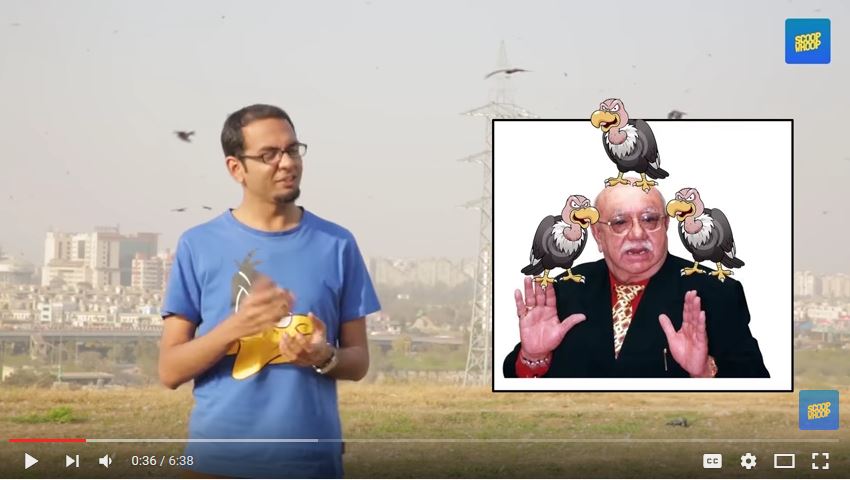
The Indian government has a big job on its hands. It is accused today of ‘overseeing’ the decline of tigers. Another iconic creature, the vulture, is also on the brink of extinction and the government is now under pressure to do more to help.

Three species of vulture have crashed in number by 99 per cent in the last 15 years. Yes, 99 per cent – they are close to oblivion. A paper being published soon will detail even greater declines more recently. India is a hair’s breadth away from a national catastrophe. These birds are crucial to the health and wellbeing of millions of its people.

Vultures clean carcasses quicker and better than anything else. That used to mean that farmers could leave the bodies of dead livestock on carcass dumps knowing they would be cleared within hours, assured that there was no risk of disease from the remnants of putrid flesh, confident that the bone collectors and leather tanners dependent on those carcasses for their livelihoods were safe.

It doesn’t mean that any more. Too few vultures mean carcass cleaning is being left to dogs and rats, both of which have soared in number. The risk of rabies and other disease has vastly increased. Those who used to rely on clean bones and sparkling hides can do so no more.

The Parsi community, which uses sky burials to dispose of its dead, is in trouble too. Vultures would consume bodies placed for that purpose on top of Towers of Silence. Those bodies fester now because the vultures don’t come. Other means of disposal are out of the question because the Parsis believe those methods pollute sacred land and water.

Read the rest of this entry »

Bookmark this entry: These icons link to social bookmarking sites where readers can share and discover new web pages.
  • del.icio.us
  • digg
  • Reddit
  • Furl
  • Facebook
25
Jan

Ratam Tata Awarded the Padma Vibhushan

   Posted by: arzan sam wadia   in India, Industry

Ratan Tata was one of the 13 people who have been conferred with the nation’s second highest civilian award, the Padma Vibhushan.

It is a testament to the Tata House of Industry that successive chairmen have gone on to get the nation’s highest awards. J R D Tata was awarded the Bharat Ratna in 1992 and his successor has been awarded the Padma Vibhushan.

Parsi Khabar on behalf of all its authors and readers takes this opportunity to congratulate Ratan and the entire Tata Group.

Bookmark this entry: These icons link to social bookmarking sites where readers can share and discover new web pages.
  • del.icio.us
  • digg
  • Reddit
  • Furl
  • Facebook
28
Dec

Ratan Tata turns 70 today

   Posted by: Mehernaaz Sam Wadia   in India, Individuals, Industry, Institutions

Tata Group chairman Ratan Tata turns 70 today (December 28, 2007).

Among Asia’s business titans, Ratan N. Tata stands out for his modesty. The chairman of the Tata Group - India’s biggest conglomerate, with businesses ranging from software, cars, and steel to phone service, tea bags, and wristwatches - usually drives himself to the office in his $12,500 Tata Indigo Marina wagon.

He prefers to spend weekends in solitude with his two dogs at a beachfront home he designed himself. And disdainful of pretense, he travels alone even on long business trips, eschewing the retinues of aides who typically coddle corporate chieftains.

But Tata also has a daredevil streak. An avid aviator, he often flies his own Falcon 2000 business jet around India. And in February he caused a sensation at the Aero India 2007 air show by co-piloting Lockheed F-16 and Boeing F-18 fighter jets.

Tata’s business dealings reflect the bolder side of his personality. In the past four years he has embarked on an investment binge that is building his group from a once-stodgy regional player into a global heavyweight. Since 2003, Tata has bought the truck unit of South Korea’s Daewoo [Get Quote] Motors, a stake in one of Indonesia’s biggest coal mines, and steel mills in Singapore, Thailand, and Vietnam.

Read the rest of this entry »

Bookmark this entry: These icons link to social bookmarking sites where readers can share and discover new web pages.
  • del.icio.us
  • digg
  • Reddit
  • Furl
  • Facebook

HYDERABAD: In a bid to understand the genetic factors, which are apparently leading to high incidence of various kinds of ailments among members of the Parsi community, a project named ‘Avesthagenome’ was launched in the twin cities recently.

Bangalore based bio-tech firm Avesthagene will collect blood samples to study the genetic make-up and prepare a data of genealogical and medical database of the Parsi community of Hyderabad. Simultaneously, another effort is being taken up to find out the reasons for the large number of breast cancer cases among women of the community.

Inbreeding

The community consists largely of an inbred population whose numbers are dwindling due to self-imposed discouragement of intercommunity marriages. Members of the community from Hyderabad point out that by rough estimates there are just 70,000 Parsis in the country and 1,200 in Hyderabad.

Read the rest of this entry »

Bookmark this entry: These icons link to social bookmarking sites where readers can share and discover new web pages.
  • del.icio.us
  • digg
  • Reddit
  • Furl
  • Facebook
22
Aug

Trueroots: TATA Launches Long Distance Calling Service to India

   Posted by: arzan sam wadia   in India

The TATA’s bought over VSNL a while ago and the first big change in added services was launched on August 21, 2007 in terms of a long distance calling service to India. They are not the first to offer such a service and am sure not the last.

Reliance India Call and Airtel India Home are two services that have been on for a while. Reliance has been around for close to three years. I remember getting invited to join Reliance India as a beta tester way back in April 2004. The first two months of calls were absolutely free and since then they pegged it at about 12.9 cents per minute. However after a couple of harrowing incidents with Reliance in late 2005 I swore never to use them again.

Airtel India Call is another great service and Shirrin and I use thate extensively. Now with Tata’s product launch I am sure we are going to jump on to their service and become regulars.

It was high time the Tata’s came out with this service. Early in 2005 Tata’s bought the world wide fibre optic cable network that the defunct giant TYCO had laid out. This is a physical cable network of fibre optic cables circling the globe. At the dot come height, the network was valued at 30 billion US$. When Tata’s picked it up, they paid a paltry 135 million US$. The total length of the network is about 65,000 km touching all 5 continents.

I personally like TATA’s website design and its much more faster and responsive as compared to Reliance or Airtel.

In terms of rates, I think it is the cheapest one just now at 7.2 cents a minute.

So give trueroots a trial run. I used it for a few calls and the call quality and clarity are very good. Of course the real test will come in a few months when their customer base and their volume increases.

Bookmark this entry: These icons link to social bookmarking sites where readers can share and discover new web pages.
  • del.icio.us
  • digg
  • Reddit
  • Furl
  • Facebook
19
Aug

Parsis Remembered in Hong Kong On Independance Day

   Posted by: arzan sam wadia   in India, Individuals

As the tricolour is hoisted to mark the 60th anniversary of India’s independence, it is well worth acknowledging the contributions of the Indian diaspora across the world in keeping the tiranga aflutter in far-off lands.

Take Hong Kong, for instance. Strikingly, Indians and persons of Indian origin do not account for a large critical mass of Hong Kong’s population today.

At an estimated 50,000 or so, Indians and PIOs make up less than 1% of the population of this erstwhile British colony.

Nevertheless, Indians make up with their industry and business acumen for what they lack in absolute numbers, and it can be said, without risk of exaggeration, that even as far back as in the 19th century, persons of Indian origin had begun to make a distinctive mark in the emerging landscape of the “Pearl of the Orient”.

Among the earliest Indians to establish themselves in Hong Kong were those who were characterised as “turbans and traders”.

In the late 19th century, the British colonial government of Hong Kong drew on Pathans, Sikhs and Bengalis from the Indian subcontinent for the Hong Kong Regiment, and for civil administration functions.

Burly, fiercely-mustachioed Sikhs were also sought out for security and constabulary duties.

Equally significant was the large number of traders who set up a robust commerce network that took in southern China and Hong Kong.

In fact, stone Tamil inscriptions that were discovered in Guangzhou in southern China in the mid-1950s point to a flourishing trade relationship involving merchants from south India and southern China that can be traced as far back as the 13th century!

Indians and PIOs are also associated with the founding of some of Hong Kong’s distinguished institutions — such as the iconic Star Ferry (which operates across the Victoria Harbour to this day) and the University of Hong Kong, one of the top centres of learning in the world today.

In 1880, it was Dorabjee Naorojee, a Parsi businessman from India, who began operating the ferry service between the main Hong Kong island and Kowloon; that service later metamorphosed into the Star Ferry of today, which Likewise, it was a HK$180,000 (Rs 9 lakh at today’s exchange rate) donation from Sir Hormusjee Naoroji Mody, a Mumbai-born Parsi merchant, that helped start up the University of Hong Kong in 1911.

To this day, a bronze bust of Mody at the university commemorates the “distinguished Parsi businessman, renowned philanthropist and benefactor of Hong Kong for over fifty years.”

Bookmark this entry: These icons link to social bookmarking sites where readers can share and discover new web pages.
  • del.icio.us
  • digg
  • Reddit
  • Furl
  • Facebook
18
Aug

Of Parsi and modern Hindi theatre

   Posted by: arzan sam wadia   in Art, India, Theater

PATNA: When it comes to setting standards in theatre, every Bihari Hindi theatre artist or director invokes the lessons learnt at the National School of Drama (NSD), New Delhi. Ironically, contemporary practitioners of Bihari theatre have reservations about NSD performing plays based on Parsi theatre tradition.

Why and how has it happened? “To say the least, the attitude of every Hindi language critic and scholar towards Parsi theatre has been reprehensible,” said senior theatre artist Ajatshatru, adding: “They consider Parsi theatre tradition ‘heya’ and ‘heen’ (low and demeaning). This attitude of the Hindi critics destroyed the Parsi theatre tradition in Bihar.”

Speaking about the contemporary Bihari theatre scene, he said: “Today, the Bihari theatre scene is barren. There isn’t much creativity involved. They talk about ‘nukkad’ theatre. What creativity is that? Overall, there is no discipline, no dedication, no punctuality and no rehearsals,” Ajatshatru said.

The local playwright, actor and director Suman Kumar picked up the gauntlet. He referred to the experimentation and improvisation being done on the Patna theatre scene, which had led to resurgent staging of modern plays, frequent performance of short stories in the Proscenium theatre, sophisticated presentation of plays from the folk theatre tradition and even the nukkad plays, since the late 1970s. “I can only say that Ajatshatru is not aware of it. Nor has he seen perfectly crafted street plays,” Suman said.

Probably, this — a fitting debate on the Parsi theatre tradition and what followed in Hindi language in Bihar thereafter — was what the organisers of Magadh Artists had planned while celebrating its 55th foundation day here on Sunday. The topic of the seminar was: ‘Parsi natak aur adhunik Hindi natak’.

The exhilarating part of the seminar was that the speakers confined themselves to their own contribution to building the Bihari theatre tradition rather than indulging in meaningless talk about what was happening in Delhi, Mumbai or other metros. The other participants were doyens of Parsi theatre tradition in Bihar, Chaturbhuj and Akhileshwar Prasad Sinha, while Vijay Amaresh, Paresh Sinha, Navneet Sharma and Madhukar Singh represented the later Hindi theatre tradition.

Curiously, every speaker pointed that the Parsi theatre style of Chaturbhuj (now 80) had inspired him to practice theatre activities. They called him “Gurudeo”. Chaturbhuj had started his career in theatre around World War II(1945). In due course, having founded his group Magadh Artists in 1952, he emerged as an institution: actor, director, playwright (specialising in historical and mythological dramas) and worker.

Significantly, the frequent complaint of the modernist actors and directors was that “we neither have good plays to perform nor encouraging audience.”

This distinguished those belonging to the Parsi theatre tradition from them. For, they wrote their plays, gained perfection and audience, and showed commitment.

Original article here

Bookmark this entry: These icons link to social bookmarking sites where readers can share and discover new web pages.
  • del.icio.us
  • digg
  • Reddit
  • Furl
  • Facebook
6
Aug

Bound by a handbook

   Posted by: arzan sam wadia   in India, News

In Deepa Mehta’s 1947: Earth, actress Kittu Gidwani, in the role of a Parsee, says how Parsees in India are like dissolved sugar in milk, not conspicuous, but noticeable because of their “sweetening” presence. And like dissolved sugar, they cling together.

Sixty years later, in Calcutta, there are only an estimated 650-odd Parsees. The community records a marriage a year on an average. The need to keep the community from dissolving has never been stronger.

A small device has been trying to do this for generations. Started at least three decades ago (nobody is sure of the exact year), the Calcutta Parsee Directory has just been updated.

The directory, published by the Parsee Trust Office, is a handbook for the community for all occasions. “It used to be published by The Parsi Zoroastrian Association before the job fell to the Parsee Trust Office. We’ve been bringing it out for about a decade now,” says Darius F. Panthaki, a member of the trust office.

Read the rest of this entry »

Bookmark this entry: These icons link to social bookmarking sites where readers can share and discover new web pages.
  • del.icio.us
  • digg
  • Reddit
  • Furl
  • Facebook
26
Jul

Pakistan Will Break Up: Ardeshir Cowasjee

   Posted by: arzan sam wadia   in Current Affairs, India

Pakistan Will Break Up, Get Out When You Can: Columnist Cowasjee

Saturday 21st of July 2007 Pakistan ‘is going to break up in the years to come and everyone who can, should pack up their bags and leave’, celebrated columnist and writer Ardeshir Cowasjee has advised.

‘Pack up and leave if you can. There’s no hope for this country. Jinnah said, ‘Each successive government in this country would be worse than the previous one’, and his prediction is coming true,’ Cowasjee said Friday at a get-together in Karachi.

‘In the very first article that I wrote after the entire judicial crisis started in March, I told Musharraf: ‘A good soldier always knows when to retreat.’ Retreat, damn you, the time has come!’

Cowasjee, a Parsi (Zoroastrian), from a renowned family of shipbuilders and businessmen, is among the few families practising that faith who chose to remain in Pakistan after India’s partition in 1947.

Read the rest of this entry »

Bookmark this entry: These icons link to social bookmarking sites where readers can share and discover new web pages.
  • del.icio.us
  • digg
  • Reddit
  • Furl
  • Facebook
27
Jun

Save the Tehmulji Nursing Home

   Posted by: arzan sam wadia   in Bombay, Current Affairs, India, Issues, Mumbai

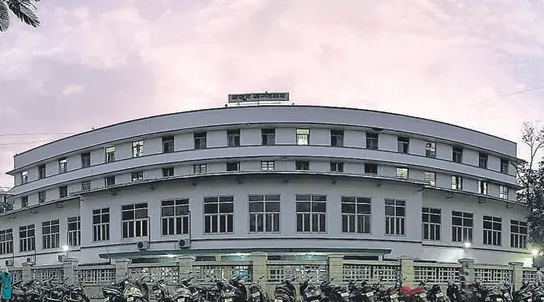
In the recent weeks, there has been news about the selling off of a very important Parsi heritage building. The Temulji Lying In hospice has for generations been the first point of entry into the world for many a Parsi. Most of our parents and grandparents in the 60+ age group were born there. However in recent years, the hospital has come under disues and hardly any occupancy. More modern hospitals and facilities have drawn people away from this Nursing home.

However the selling off of this prime real estate by the Parsi Panchayat is myopic and not in line with common sense and logic. The building and the site can be rehabilitated and with a combination of commercial use and community usage, a balance can be struck to keep it financially viable.

A very viable solution is to convert it to an Old Person’s home for the aging parsi population. The groundfloor could be used for commercial ventures that would pay for the upkeep of the entire property. All said and done this is in the Fort area and therefore one of the most important real estate neighborhoods in the city.

Please take a moment to sign the Online Petition to save the Tehmulji Nursing Home. We will collect these online signatures and forward them to the Parsi Panchayat, in the hope that something good comes out of it.

Below is a plea forwarded to us by email. The actual author is unknown, however the message makes perfect sense.

Parsi Khabar has started an online petition for the same. If you agree with it please go to PetitionOnline and sign it. After 30 days we will deliver the petition to the Parsi Panchayat, and hopefully something will come out of it. If you have suggestions, please express them in the comments section.

Read the rest of this entry »

Bookmark this entry: These icons link to social bookmarking sites where readers can share and discover new web pages.
  • del.icio.us
  • digg
  • Reddit
  • Furl
  • Facebook
22
Jun

Numbers down, but not their spirit

   Posted by: arzan sam wadia   in Culture, Current Affairs, India, Issues

Numbers down, but not their spirit

Family planning, migration, restrictions on conversion are reasons behind decline in Parsi population.

Kolkata, June 21: Some thirty years ago, they were 4,000. Now, the count has dropped to a measly 750. However, that does not discourage the spirited Parsi community in Kolkata.

The close-knit Zoroastrian community comprises people whose ancestors had migrated from Persia and settled in various parts of India. The decline in their numbers has become more pronounced in the past 20 years but the community, firmly rooted in its religious and cultural beliefs, feels there is nothing to lose.

Read the rest of this entry »

Bookmark this entry: These icons link to social bookmarking sites where readers can share and discover new web pages.
  • del.icio.us
  • digg
  • Reddit
  • Furl
  • Facebook
28
May

WAPIZ celebrates Second Anniversary

   Posted by: arzan sam wadia   in Bombay, Current Affairs, Events, India, Institutions, News

When 2,500 Parsis gathered at the Mahalaxmi racecourse on Saturday evening, the main topic of discussion was the birth and death rates of the community, whose population has been on the decline.

The community, which gathered to celebrate the second anniversary of the World Association of the Parsi Irani Zarthostis (WAPIZ), thanked ‘this earth, this land of India’, which has given them succour for fourteen hundred years.

WAPIZ committee member Jamshed Mota said, “No other country in the world would have given us this sammaan (honour), izzat (respect) and liberty .”

The gathering, including 300 clergymen and four high priests, discussed issues that plagued the community and their solutions.

Khojeste Mistri, chairman of WAPIZ said, “The solution to dwindling numbers lies not in conversion (a concept which is unknown to a ‘classic’ religion as opposed to a ‘romantic ‘ religion), but in increasing numbers by procreation.” So far, 85 couples received help and thirty babies, including eight sets of twins and a set of triplets, were born through a fertility programme introduced by the Parsi Panchayat two years ago.

Read the rest of this entry »

Bookmark this entry: These icons link to social bookmarking sites where readers can share and discover new web pages.
  • del.icio.us
  • digg
  • Reddit
  • Furl
  • Facebook
17
May

Concern Over Delhi’s Dwindling Parsi Population

   Posted by: arzan sam wadia   in Current Affairs, India, Issues

Delhi Minorities Panel plans to meet Parsi families

New Delhi, May. 17 (PTI): Concerned over the declining population of Parsi community in the Capital, Delhi Minorities Commission is planning to meet the Parsi families here to assess their alround growth.

“We would soon meet each Parsi family in the city and try to resolve the problems they are facing,” newly appointed DMC Chairman Kamal Faruqui told PTI here.

Quoting the Census 2001, Faruqui said there were merely 23 Parsi families residing in the capital. This shows that like in the country, they are on the verge of decline in the city too.

Read the rest of this entry »

Bookmark this entry: These icons link to social bookmarking sites where readers can share and discover new web pages.
  • del.icio.us
  • digg
  • Reddit
  • Furl
  • Facebook
14
May

Lose the vultures, and lose the soul

   Posted by: arzan sam wadia   in Culture, Current Affairs, India, Issues, Opinion

By Bachi Karkaria

As an Indian Parsi Zoroastrian, I’m proud to belong to a tiny minority widely admired for its material success and its philanthropy.

But I feel a closing sense of siege. The vicissitudes of modern life are threatening our group’s ethnic identity and ancient ways.

The vulture, our main accomplice in death for nearly 4,000 years, excites a largely morbid curiosity about our sect. Parsis are descended from Zoroastrians who, 1,200 years ago, fled religious persecution in Persia after the Muslim conquest and emigrated to the Indian subcontinent. Zoroastrianism reveres all elements, especially fire, so we don’t cremate our dead, or pollute the earth with burial.

Read the rest of this entry »

Bookmark this entry: These icons link to social bookmarking sites where readers can share and discover new web pages.
  • del.icio.us
  • digg
  • Reddit
  • Furl
  • Facebook
5
Apr

The Islamization of Europe

   Posted by: arzan sam wadia   in Heritage, History, India, Iran, Issues, Opinion

Excerpt from a longer article here

Mary Boyce, Emeritus Professor of Iranian Studies at the University of London, has confirmed the external validity of Bat Ye’or’s analytical approach in her description of how jihad and dhimmitude (without the latter being specifically identified as such) transformed Zoroastrian society in an analogous manner. Boyce has written definitive assessments of those Zoroastrian communities which survived the devastating jihad conquests of the mid 7th through early 8th centuries 20. The Zoroastrians experienced an ongoing, inexorable decline over the next millennium due to constant sociopolitical and economic pressures exerted by their Muslim rulers, and neighbor. Boyce describes these complementary phenomena based on an historical analysis, and her personal observations living in the (central Iranian) Yezd area during the 1960s:

“Either a few Moslems settled on the outskirts of a Zoroastrian village, or one or two Zoroastrian families adopted Islam. Once the dominant faith had made a breach, it pressed in remorselessly, like a rising tide. More Moslems came, and soon a small mosque was built, which attracted yet others. As long as Zoroastrians remained in the majority, their lives were tolerable; but once the Moslems became the more numerous, a petty but pervasive harassment was apt to develop. This was partly verbal, with taunts about fire-worship, and comments on how few Zoroastrians there were in the world, and how many Moslems, who must therefore posses the truth; and also on how many material advantages lay with Islam. The harassment was often also physical; boys fought, and gangs of youth waylaid and bullied individual Zoroastrians.

Read the rest of this entry »

Bookmark this entry: These icons link to social bookmarking sites where readers can share and discover new web pages.
  • del.icio.us
  • digg
  • Reddit
  • Furl
  • Facebook
4
Apr

The King of Cobra is in town

   Posted by: arzan sam wadia   in India, Individuals, News

HYDERABAD: It’s not exactly the return of the prodigal, because Karan Billimoria has been coming home to Hyderabad every year from London, the city that he has made his own for the past two decades. But this trip was special for reasons more than one.

He wanted his two sons to have their Navjot (the Parsi rites of initiation) in the same place where he had it and “run round the dharamasala in the same way I did.”

Then this is the first time that the accountant who became a billionaire by selling beer, came home after he became a Lord (and by implication a member of the British House of Lords) last year.

“I am the first Parsi to become a member of House of Lords,” the man who studied in Hyderabad Public School (HPS) tells you proudly. “The other three members starting with Dadabhai Naoroji were at the House of Commons,” he says adding that his great grandfather D D Italia was a Rajya Sabha member in the fifties.

Read the rest of this entry »

Bookmark this entry: These icons link to social bookmarking sites where readers can share and discover new web pages.
  • del.icio.us
  • digg
  • Reddit
  • Furl
  • Facebook
2
Apr

Avesthagen launches AVESTAGENOME

   Posted by: arzan sam wadia   in Current Affairs, India, Individuals, Institutions

Avestha Gengraine Technologies Pvt. Ltd., (Avesthagen) a leading biotechnology company today announced the launch of the AVESTAGENOME TM project, a unique project to build a complete genetic, genealogical and medical database of the Parsis.

In today’s biotechnology driven medical care, the quest for new, more effective therapies and diagnostic tools have become essential to understand linkages between genes, diseases and environmental factors. The comprehensive database arising out of this project will provide invaluable information on these linkages for all of humanity and not just for the Parsi community alone. The project results will find application in disease prediction and accelerate the development of new therapies and diagnostics. Parsis have been known to contribute towards the good of society at large and, once again, they are poised to make a momentous contribution.

Parsi Zoroastrians, who now number about 69,000 in India, are an in-bred population resulting from the discouragement of inter-community marriages. Such in-bred populations are required to more accurately implicate inherited genes for diseases.

Read the rest of this entry »

Bookmark this entry: These icons link to social bookmarking sites where readers can share and discover new web pages.
  • del.icio.us
  • digg
  • Reddit
  • Furl
  • Facebook

He was one of the most illustrious kings of ancient Iran (then called Persia)

On 21st March, Parsis and Iranis the world over celebrate Jamshedi Navroze named after the Persian king Jamsheed of the Peshdadian dynasty who ascended the throne centuries ago on the day of the spring equinox. This day was deliberately chosen since on an equinox, day and night stand equal upon the scales of time and space. A day when the planetary positions and cosmic-energies (Pran-Shakti) fecilitate humans along the upward energy-spiral of spiritual evolution. Chaldean, Egyptian and Persian astronomy confirm this occult fact. This day also heralds springtime when nature regenerates herself hence, it was named Navroze by the Persians, Nav meaning new and Roze meaning day. But who was this King Jamsheed and why is he remembered year after year every year, even today, after centuries????

Read the rest of this entry »

Bookmark this entry: These icons link to social bookmarking sites where readers can share and discover new web pages.
  • del.icio.us
  • digg
  • Reddit
  • Furl
  • Facebook
21
Mar

Navroze Celebrations

   Posted by: Mehernaaz Sam Wadia   in Culture, India

Navruz: An evening crammed with joy

For Zorastrians, Navruz is a time to eat, drink and celebrate. But in recent times, the festival has lost its zest as people leave celebrating to those precious few hours ‘after work’

It’s the day before Navruz, and the city’s Zoroastrian community is preparing for a day of eating, drinking and making merry.

However, Navruz celebrations have come a long way since the days when Persian kings — wearing crowns with image of the annual solar cycle on their heads — led divine mass at Fire Temples and donated gifts to citizens. This spring festival, which signals the beginning of the New Year for a large section of the Zoroastrian community, has slowly been reduced in India to a mere evening of joy. It is no longer a public holiday and consequently, celebrations are reserved only for the time ‘after work’.

Read the rest of this entry »

Bookmark this entry: These icons link to social bookmarking sites where readers can share and discover new web pages.
  • del.icio.us
  • digg
  • Reddit
  • Furl
  • Facebook
21
Mar

Jamshedi Navroze Mubarak

   Posted by: arzan sam wadia   in Blog News, Current Affairs, Events, India, Iran

On the occasion of Navroze, we wish all our readers worldwide, a very happy, healthy and prosperous Jamshedi Navroze. We would like to take this opportunity to thank all our readers for their loyal readership.

Bookmark this entry: These icons link to social bookmarking sites where readers can share and discover new web pages.
  • del.icio.us
  • digg
  • Reddit
  • Furl
  • Facebook
20
Mar

Parsi Demographic Statistics

   Posted by: Shirin Kumaana-Wadia   in Bombay, India, Issues, Mu