
As the city prepares for the 9th World Zoroastrian Youth Congress in 2027, a new generation is shaping the conversation
In the shaded lanes of Dadar Parsi Colony, the tight-knit buildings of Rustom Baug, the courtyards of Khareghat Colony and the Zoroastrian blocks of Tardeo, something in the air has shifted. The conversations here are no longer just about nostalgia or “old Bombay”. They’re now about belonging. Mental health. Migration. Representation. Identity in a globalised world.
Article by Gaurav Sarkar | Mumbai Mirror
In December 2027, these conversations will take centre stage when Mumbai hosts the 9th World Zoroastrian Youth Congress for the very first time. Organised by ZYNG 2.0 (Zoroastrian Youth for the Next Generation) under the auspices of the Bombay Parsi Punchayet (BPP), the Youth Congress will bring together young Zoroastrians from India and overseas.
But at its heart, this is a Mumbai story, led by four city-based youth who grew up in these colonies and are now shaping how their generation wants to be seen.
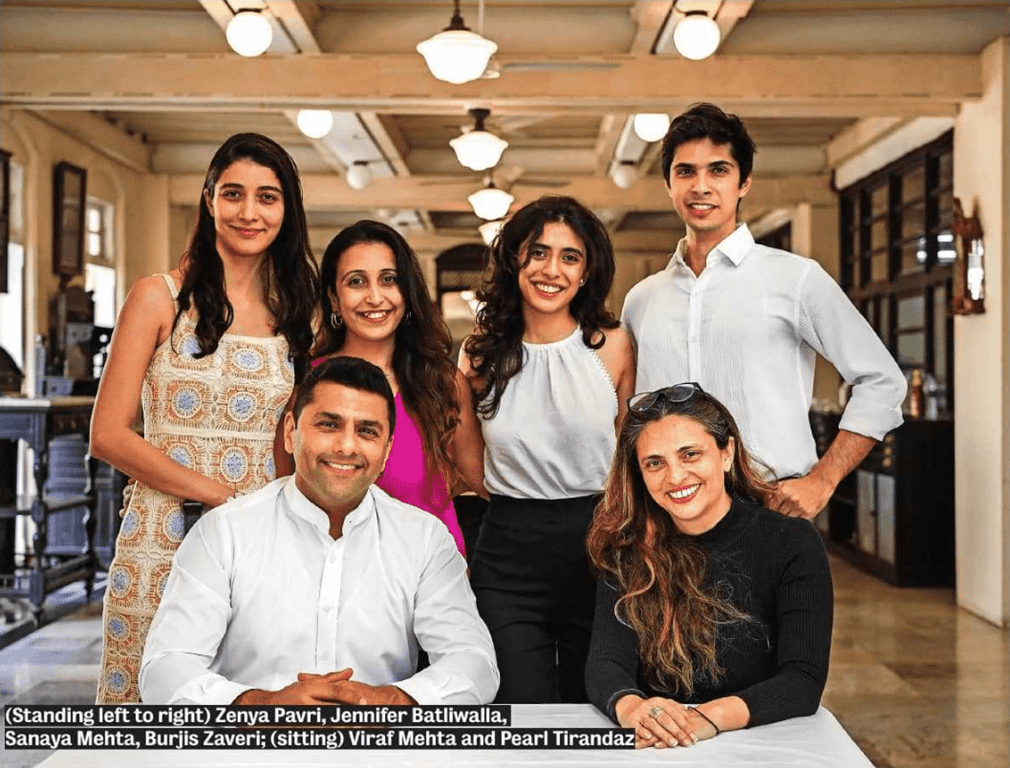
Sanaya Z Mehta, 25, from Dadar Parsi Colony, and Zenya Pavri, 35, from Tardeo, are co-chairpersons. Burjis Zaveri, 26, from Rustom Baug, and Jennifer Batliwalla, 29, from Khareghat Colony, serve as vice-chairpersons. Together, they are designing a shift in tone.
Beyond the stereotype
“When people think of Parsis, they still picture something frozen in time,” says Pavri. “We’re not a sepia-toned postcard of old Bombay. We’re very much part of present-day Mumbai. We work in startups, law firms, creative industries, finance. Being modern doesn’t make us less Parsi. We care deeply about our heritage… but identity has to evolve if it’s going to survive.”
Mehta agrees, while acknowledging history. “I understand where the stereotype comes from. We’re not denying that past. But it doesn’t define all of us anymore. We’ve grown up in a very different world. We’re more open, more questioning, more engaged.”
Zaveri sees no contradiction between tradition and progress. “Yes, we value our culture. You might see us winding vintage watches or restoring old cars. But Parsis have always been progressive; from embracing formal education to educating women to travelling abroad for trade. We’ve always been rooted and forward-looking at the same time.”
Batliwalla adds: “Tradition and evolution can coexist. Our generation is building startups, working in creative industries, exploring new ideas, and still, holding on to our religion. We want to show that both can exist together.”
A question of belonging
All four acknowledge that there is a perception gap.
“From the outside, Parsis are seen as charmingly old-world,” says Pavri. “Internally, we’re having serious conversations about inclusion, intermarriage, migration, institutional reform and mental health. That gap motivates us.”
For Zaveri, geography also matters. “In western India, people know us. But go further out and many haven’t met a Parsi. Some see us as a fading community.”
The word “fading” is precisely what this upcoming edition of the Youth Congress hopes to confront. For Pavri, the single biggest concern facing Parsi youth today is belonging. “When belonging feels conditional, people disengage. When it feels secure, they invest. Community survival is more about emotional inclusion that it is about just numbers.
Not ceremonial but structural
All four of them are clear that the 9th World Zoroastrian Youth Congress on home turf will not be symbolic. “We’re not trying to rebrand the community,” says Pavri. “We’re trying to reflect it honestly. The fact that this is youth-led already shifts perception. The language we use, the panels we curate, the topics we address… all of this signals that our approach isn’t ceremonial. It’s structural.”
Discussions are expected to cover identity in a globalised world, migration decisions, entrepreneurship, cross-border education, mental health and youth representation in decision-making spaces.
Mehta emphasises tone. “It has to feel safe, respectful and participative. We don’t want to lecture. We want honest dialogue.”
Some topics, they admit, have historically remained private. “Avoiding difficult conversations doesn’t preserve harmony,” Pavri says. “It postpones clarity.”
A collaborative and flat model
Interestingly, the structure of the organising team mirrors its message.
“There isn’t a single figurehead,” Pavri explains. “Each of us leads in our area of strength, but major decisions are debated collectively. Four strong voices in a room means real discussion but it also means real accountability.”
Mehta adds that years of working together through ZYNG have built trust. “We weigh pros and cons, divide responsibilities and move forward. And if we’re stuck, we have mentors for perspective.”
Batliwalla describes it simply: “We put everyone’s suggestions together and turn it into one mutual decision.”
Supporting the youth team as mentors are ZYNG founders Pearl Tirandaz and Viraf Mehta. The latter is also the chairman of BPP.
Tirandaz believes one of the key challenges is bridging generational experiences. “We’re bringing together youth raised very differently… those who grew up in India’s baug culture and those from overseas. Our values remain the same, but our lived experiences are different. That difference has to be spoken about openly.”
She sees today’s youth as more outspoken, and welcomes it. “They want answers, but in their language. In today’s world, force won’t work. If we don’t engage honestly, they (youth) will distance themselves.”
Viraf Mehta agrees that the Youth Congress must not shy away from difficult topics. “We’ll be opening the floor to varied voices, from entrepreneurship to more traditional discussions. It can’t be either preservation or connection. It has to be both.”
For him, success would mean alignment. “One community. One voice. One direction.”
Continuity, not rupture
Despite the bold agenda, Tirandaz insists this is not rebellion. “This is continuity. They carry forward the same values and ethics, but they also have individual voices. They won’t bow down just because we’re mentors. They’ll make sure they’re heard. That’s leadership.”
She is clear about what must define the Congress: “Don’t be afraid to have the hard talks. If we as elders can’t speak in one voice, we will lose the next generation completely.”
Back in Dadar, Sanaya Mehta reflects on what progress might look like five years later. “More openness. More honest conversations. Youth representation in decision-making bodies. Stronger global connections.”