

Built in 1882 by Bomanjee Hormarjee Wadia, this clock tower was a gift of service and foresight. Today, its legacy stands complete once more.
Standing tall in Fort since 1882, the Bomanjee Hormarjee Wadia Clock Tower has quietly witnessed Mumbai’s transformation — from colonial-era streets to the thriving financial and cultural capital it is today. Conceived as both fountain and clock tower, its cruciform plan ensured visibility from all directions, while its Persian-Zoroastrian symbolism — the sacred flame and Assyrian-style winged bulls — embedded community identity into public architecture.
More than a monument, it was infrastructure. Built not merely to impress, but to endure.
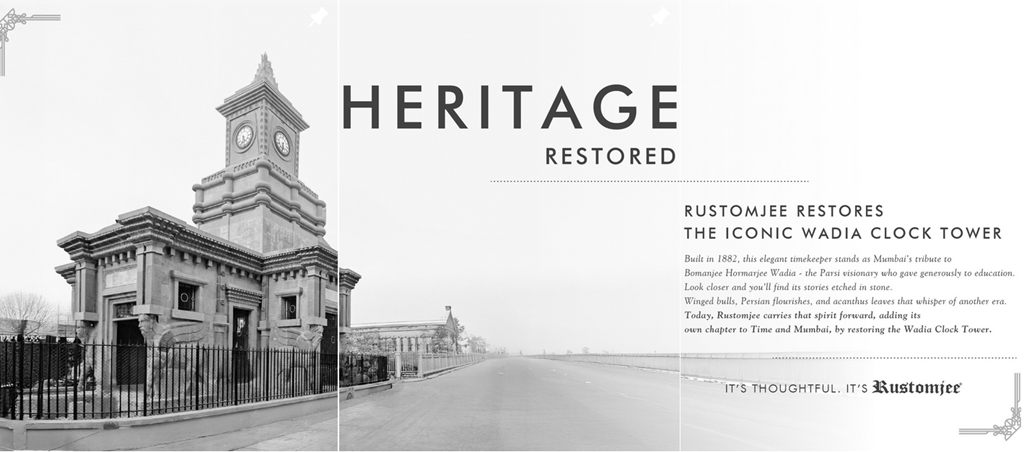
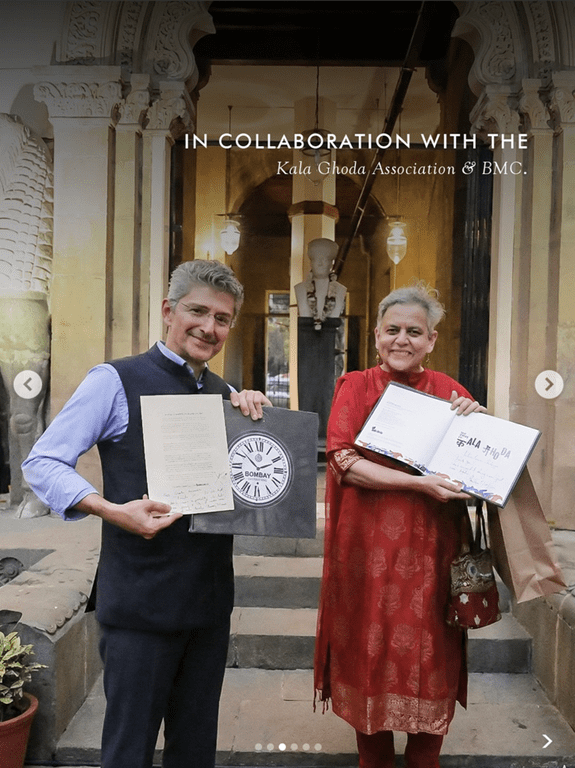
Now, through a collaborative restoration led by the Rustomjee Group in partnership with the Brihanmumbai Municipal Corporation and the Kala Ghoda Association, the tower stands renewed — strengthened, cleaned, repaired, and sensitively illuminated.
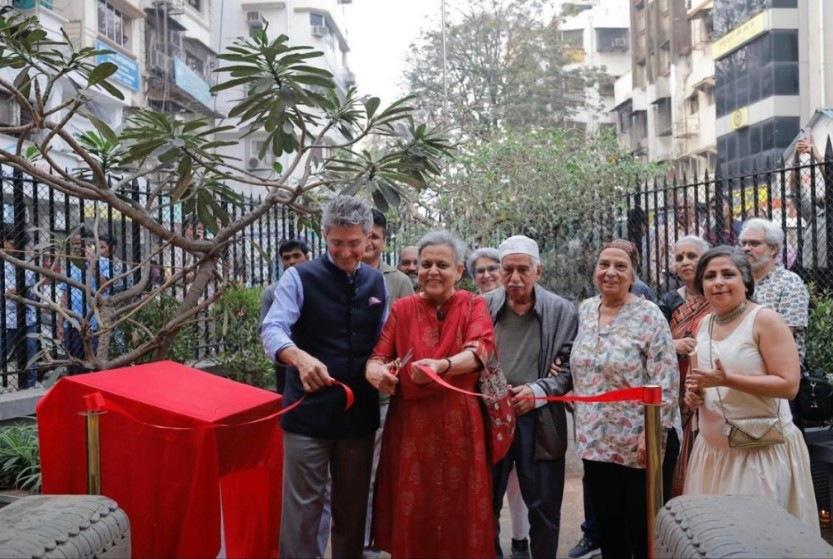
The restored landmark was unveiled on 9 February 2026.
Boman Rustom Irani: Redefining Development
At the heart of this effort is Boman Rustom Irani, Chairman and Managing Director of Rustomjee Group — one of Mumbai’s leading real estate developers. Founded in 1995, Rustomjee has grown into a major force in residential and township development across the Mumbai Metropolitan Region. Under Mr. Irani’s leadership — he also served as National President of CREDAI — the company has championed quality urban environments that prioritise community life and long-term value.
In a wide-ranging reflection at the unveiling, Mr. Irani observed:
“As Indian cities continue to densify and transform, I believe the definition of development itself is expanding. It is no longer sufficient to create built space; we are called upon to shape environments that honour continuity, culture and community. In that context, the expectation that private developers engage with non-revenue urban assets, whether heritage structures, public landmarks or civic spaces is both natural and necessary. These are not peripheral to growth; they are what give growth meaning.
The restoration of the Bomanjee Hormarjee Wadia Clock Tower was a reminder that urban stewardship is not an act of charity, nor a symbolic gesture. It demands the same engineering discipline, patient craftsmanship and collaborative governance that any complex construction project requires, often more. Conservation is intricate work, it asks us to respect original materials, reinterpret legacy techniques, and align with multiple stakeholders, all while ensuring structural integrity for the future. When approached with sincerity and technical rigour, it becomes a deeply constructive exercise, one that strengthens institutional capability and public trust.
The responsibility, therefore, should be defined not by visibility, but by intent and integration. If heritage conservation is embedded into a developer’s long-term philosophy, supported by transparent partnerships with civic bodies, conservation specialists and local communities, it ceases to be a branding exercise and becomes part of a larger commitment to responsible city-building. Our cities deserve growth that is confident yet considerate, progressive yet rooted. When the private sector embraces that balance, we move closer to creating urban ecosystems that are economically vibrant, culturally resonant and built to endure.
Equally important is the need to institutionalise this approach within our industry. Conservation must be supported by structured collaboration models, clear accountability frameworks and the willingness to invest in specialised expertise. When developers work alongside government authorities, conservation architects, structural engineers and skilled artisans in a coordinated manner, restoration projects can achieve both technical excellence and public value. Over time, such partnerships can set new benchmarks for how private enterprise contributes to shared urban assets, not as an obligation but as an integral dimension of responsible, future-ready development.”
He also added a more personal note:
“Mumbai’s heritage has always moved me because it reflects the soul of the city and the stories that shape who we are. The Wadia Clock Tower is not just a relic of the past; it is a living part of everyday Mumbai, belonging to everyone who passes it. Our endeavour is to restore the pride and dignity this landmark once held within the community. At Rustomjee, we believe that when we build homes, we shape families, and when we conserve heritage, we deepen the bond between a city and its people. It is a privilege to restore a monument built in honour of Bomanjee Hormarjee Wadia, a visionary philanthropist whose commitment to education and public welfare continues to inspire us. By reviving the Wadia Clock Tower, we honour his legacy while reaffirming our own commitment to preserving civic pride and investing in the city’s future through education.”
Vikas Dilawari: Reviving Craftsmanship and Structure
Leading the conservation effort was renowned architect Vikas Dilawari, who has been responsible for restoring numerous heritage landmarks across Mumbai.
Reflecting on Bombay’s historic culture of philanthropy and planning, he shared:
“Our city which was often described in 19th cent as Best of East of Suez was due to the efforts of able administrators /governors then like Bartle Frere, Elphinstone etc who thought of improving the city by adding public institutes and good planning that was the need of the hour and in this efforts a lot of philanthropy was seen my the leading merchants who made their fortunes in Cotton, Opimum and other trade.
In the last few decades with growing urban pressures of development, lack of maintenance and care the city’s architecture has started deteriorating with absence of good planning. Our city is always fortunate that its citizens come to its rescue in its hour of need like KGA an NGO who care for the city’s culture and heritage and got it repaired in 2016 and now Rustomjee who was the sponsor for this phase which ensures that time of the clock of the watch tower is ever ticking with regular maintenance.”
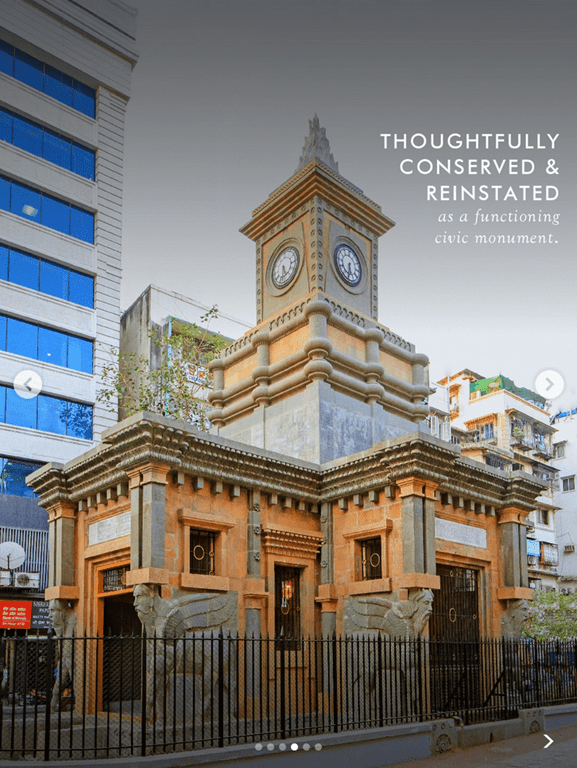
The restoration included strengthening the basalt stone structure, repairing architectural elements, cleaning surfaces, reinstating intricate detailing, repairing the historic clock mechanism, and introducing sensitive night-time lighting — allowing the tower to glow once more without compromising its historic character.
Kayomi Engineer: Legacy Guardianship
Project ideator and facilitator Kayomi Engineer traced the initiative’s journey:
“The restoration of the B H Wadia Clock tower was tabled as a restoration project to undertake, first in 2016, whilst in my then employ with the Kalaghoda Association, that alongside two other iconic city land marks, further reaffirmed the mandate of the not for profit KGA, despite the structures being geographically located outside the colloquial borders of what we call Kalaghoda, Fort. The KGA philanthropically restored the clock tower which was in a state of unkeptness sadly due to sheer neglect as a structure under the care of the MCGM A Ward offices, the KGA offered to be it’s legacy guardian to the city to restore maintain & upkeep the clock tower since then.
Fast forward to 2025, passing by I observed that the structure may now be in need of a replenishment of the restoration given 10 years would soon come to pass. The KGA & I spoke as did the Rustomjee Group & I to whom I tabled the project to review in a philanthropic mindset. Asking a real estate company to take on such an ask as a collaborator, was a novel proposal that was met with enthusiasm & likemindedness by Percy Chaudhry as director at Rustomjee. Their key ask as its new benefactors being that the structure be made open to more public visits via heritage tours & it be used as an educational medium so that the resplendent Persian – Zoroastrian architecture can be appreciated by the citizens who would visit it. We had the pleasure of having Vikas Dilawari as the conservation architect who had previously restored it & having it credited with a UNESCO Asia Pacific Conservation Award accreditation, work with us again for this round.
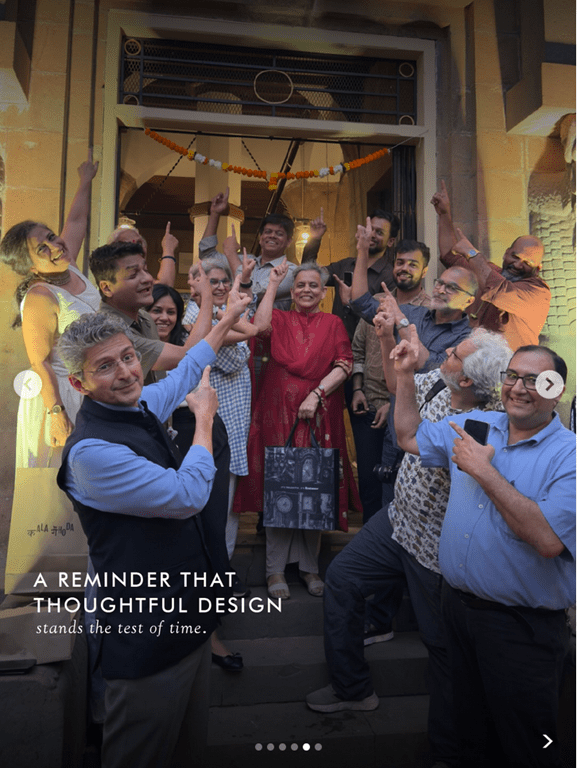
It was unveiled on Monday 09 February by Boman Rustom Irani as Chairman & MD Rustomjee Group alongside Brinda Miller as Hon Chairlady KGA, with much enthusiasm by all who were present. Conservation of intangible cultural & architectural heritage of city landmarks, are successful when a group of citizens who understand the vision of being inspired like we are by the generations before us, to pass down to the next generation of Mumbaikars the tradition of legacy guardianship. That’s how we worked in unison on this project, now being publicly re – appreciated , a noteworthy collaboration between MCGM city officials, the KGA & the Rustomjee Group, the kind of history we thankful to have had the opportunity to pen in our day. “
Her emphasis on “legacy guardianship” frames conservation as a civic responsibility passed from one generation to the next.
Brinda Miller: Culture at the Heart of the City
Brinda Miller, Chairperson of the Kala Ghoda Association and long-time head of the internationally renowned Kala Ghoda Arts Festival — Mumbai’s premier annual celebration of art, culture, and heritage — underscored the collaborative dimension of the project.
She highlighted the importance of partnership in safeguarding Mumbai’s historic identity and noted the meticulous conservation work that revived the tower’s original craftsmanship and clock mechanism. The restoration included strengthening the basalt stone structure, repairing architectural elements, cleaning surfaces, and adding sensitive night-time lighting.
Through the Kala Ghoda Festival and the Association’s heritage initiatives, Miller has long championed the preservation of South Mumbai’s architectural legacy — ensuring that cultural vibrancy and conservation move hand in hand.
Every Hour, Remembered
For over a century, the Wadia Clock Tower has done more than mark time.
It has watched the city change. Served quietly. Stood with purpose.
Some landmarks don’t demand attention.
They earn it — through decades of service, memory, and generosity.
Now restored, strengthened, and illuminated once more, the clock resumes its steady rhythm.