

For a few weeks each year, in parts of Karachi and Quetta, you can hear Avestan prayers in the Parsi fire temples rising above traffic and generator hum. It is a small sound now, almost silent as the years go by, but it carries two thousand years inside it.
Article by Kiva Malick | The Friday Times
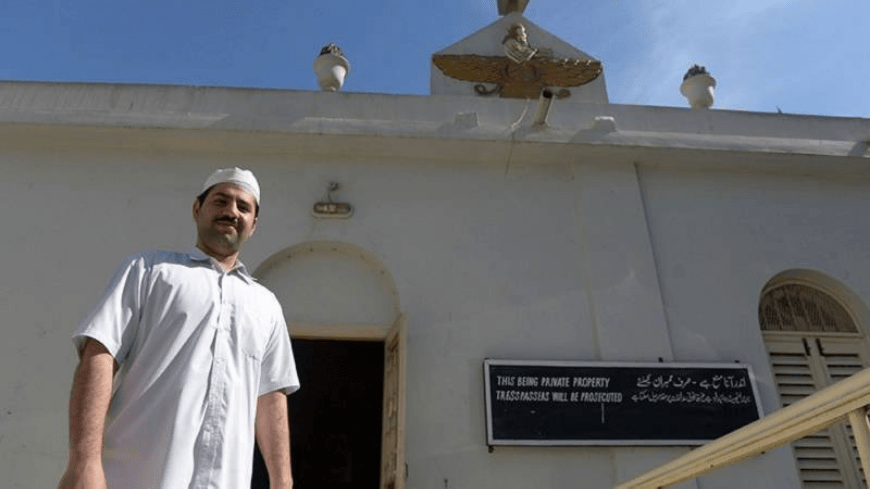
Parsis are the South Asian descendants of Zoroastrians who left Persia after the 7th-century Arab conquest, preserving a faith that predates Islam by centuries. Zoroastrianism, associated with the prophet Zoroaster, shaped much of pre-Islamic Persian cosmology; ideas about judgement, heaven and hell, and moral dualism; that later circulated across Abrahamic traditions. When Parsis arrived on the western coast of India, likely between the 8th and 10th centuries, they negotiated survival through adaptation, not confrontation.
The Persian account Qissa-i Sanjan captures their arrival quite well: dissolve like sugar in milk. When the refugees arrived, the local ruler presented a bowl of milk, full to the brim, signalling that the land was already complete. The Zoroastrian priest added sugar without overflowing it, showing a gesture that promised integration without displacement.
By the 19th century, many had moved to Karachi, then an expanding colonial port. They were never numerically large, but they were disproportionately visible in civic life. Philanthropy became their public language: schools, dispensaries, housing schemes. In Karachi, NED University traces its name to Nadirshaw Edulji Dinshaw, whose endowment helped establish the institution.
Members of the community served as lawyers, doctors, and civil servants. In Quetta, Parsis were part of the cantonment-era urban fabric before the 1935 earthquake reshaped the city.
And that is precisely what makes their fading uncomfortable. If a community that was integrated so well across two provinces can dwindle to statistical fragility, then surely the story cannot be reduced to victimhood, right? It forces a harder question: whether very small minorities survive in ideological nation-states even when they are not actively persecuted? Or does survival require numbers, noise, and political bargaining power?
And also, why exactly are they disappearing?
Demography first. Parsis have one of the lowest fertility rates of any community in South Asia. Late marriages, small families, and a strong norm against conversion mean the population contracts quietly. Furthermore, migration added to it, and after 1947, some left for India, the UK, and North America. Later waves followed episodes of national uncertainty, Islamisation policies in the 1980s, and economic decline. None of this was unique to Parsis, but small communities feel tremors more acutely.
Parsis once promised to sweeten the milk without overflowing it. The milk remains; the sweetness is thinning
The topic of discrimination immediately comes to mind about a minority, and it exists, but it is not always loud. Parsis are not typically the primary targets of sectarian violence in Pakistan; they are too few and too discreet. Yet structural exclusion matters where the state is constitutionally Islamic, and personal law regimes privilege certain identities. Public religious vocabulary narrows over time. When a community is tiny, even ambient othering can feel existential.
Karachi’s ‘nostalgics’ know the story well: the city rewarded discipline, institutional loyalty, and competence. These factors aligned perfectly with the Parsi temperament. They were a minority, but they were urban in a way the city understood. As Karachi’s political economy shifted towards patronage networks and ethnic bloc politics, that alignment frayed.
There is also internal pressure. Zoroastrian orthodoxy historically resists accepting converts and, in many interpretations, does not recognise children of Parsi women who marry outside the faith. We all know Ruttie and Quaid-e-Azam’s tragic love story and how her family never approved of her converting to Islam.
And yet, commonalities with Islam are often overlooked. Zoroastrianism is uncompromisingly monotheistic in its worship of Ahura Mazda. Concepts of moral accountability, judgement after death, and an ethical life grounded in truth resonate with Islamic theology.
Classical Muslim jurists debated whether Zoroastrians should be treated analogously to People of the Book; in practice, they often were. Persianate culture, which profoundly shaped Muslim South Asia, carried Zoroastrian residues long after conversion, especially in poetry and metaphors of light and fire.
In Karachi today, the Parsi population is a fraction of what it was a century ago. Quetta’s community is even smaller. Fire temples remain, but with ageing congregations. Properties are carefully managed through trusts. The philanthropy continues, quietly. But the question is no longer how to integrate but how to remain.
Perhaps the more uncomfortable question is this: what does it say about a society when its smallest, oldest minorities fade not through expulsion, but through demographic exhaustion and polite indifference?
Parsis once promised to sweeten the milk without overflowing it. The milk remains; the sweetness is thinning.