
Our first author in the Everyday Parsi 2025 is Zarin Amrolia
My first memory of the Muktad ceremony goes back decades—when my wardrobe for auspicious occasions consisted of pastel frocks with bows. As the monsoon thundered across the first-floor terrace of the Anjuman Atash Behram, we kids stood just within the covered corridor. We weren’t allowed into the rain, so when a gust of wind blew in a fine drizzle, our giggles had to be suppressed. We had gathered for the Muktad prayers, a tradition observed for years alongside a large extended family of grandaunts, uncles, and cousins.
When summoned into the spacious prayer hall, we dutifully sat through the Jashan, reciting simple prayers. This was the era when many women draped their saree pallus over their heads, and familiar family priests led the ceremonies.
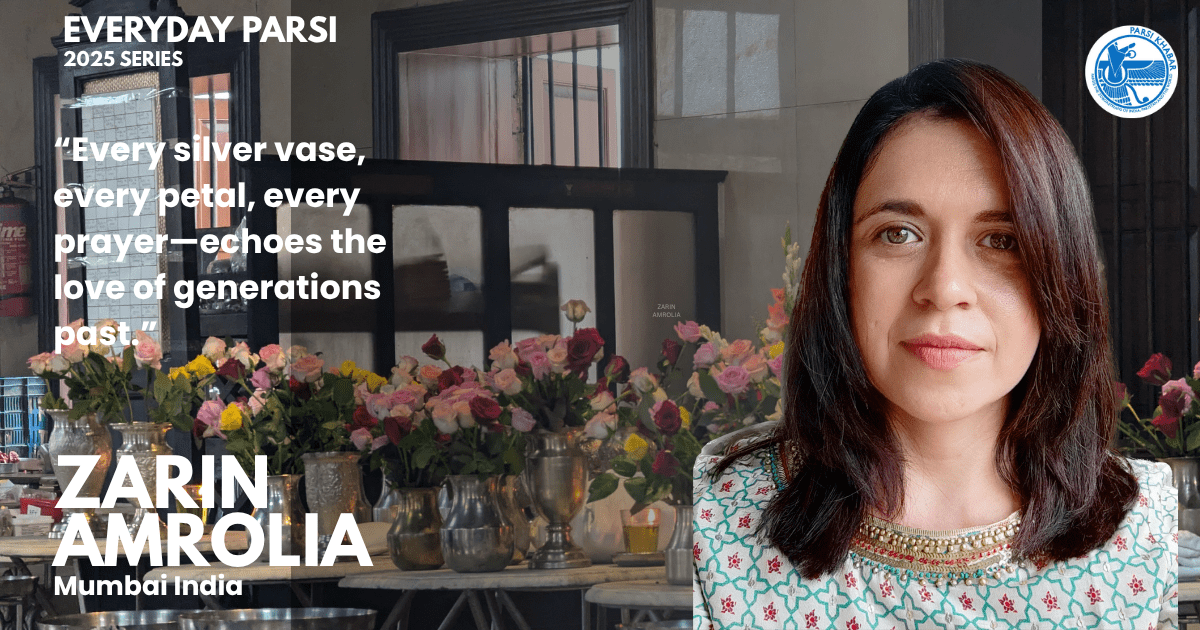
Silver vases belonging to our family were brought out and shown to us—at least one would hold the yellow and peach roses I had carefully chosen. Elder relatives explained that our bodies are vessels for our souls, and during Muktad, the souls and Fravashis of the departed return to this world. We welcomed them with fragrant flowers, sweet aromas, and lovingly prepared food, all laid out on the tables.
Most ethereal of all were the late-night prayers held on the final day of the Gathas—Vahishtoisht Gatha—also known as Pateti. I was just stepping out of my teenage years when my grandparents passed, and I remember willingly attending these prayers. The walk to the Fire Temple in the quiet night felt sacred. In contrast, the Fire Temple brimmed with light and energy. Diyas flickered, ceremonial fires danced, and every reflective surface—silver vases, metal vessels—glowed in their warmth.
Over the years, I’ve visited many Atash Behrams and Agiaries during Muktad. Each one offers a unique yet familiar experience: vibrant flowers wreathed in waves of sandalwood and loban smoke; white and pastel saris; children trying to behave as the Avestan chants lull them. I always look forward to the animated greetings from fellow Zarthostis—floral scarves, topis, radiant smiles—and of course, the sweet malido and fresh pomegranate from the chasni.
It is awe-inspiring to take part in rituals practiced across generations, led by priests with unshakable discipline. A Zarthoshti heritage held together in a language spoken three millennia ago—surviving still, even in today’s volatile world. Perhaps there is no better way to end the year than with gratitude to our ancestors and divine forces.
About Zarin Amrolia
Zarin Amrolia draws inspiration from the vibrant, meditative imagery of the Zoroastrian world for her current series of watercolors, Soul of Fire. Her compositions depict Zarthoshti ceremonies, customs, and the architecture of fire temples, aiming to record and celebrate the community’s luminous spirit.
She continues to practice art alongside an 18-year career in media and brand communications. As part of the Communications team at Shapoorji Pallonji, she authored Iranshah: A Legacy Restored, chronicling the structural restoration of the Iranshah Atash Behram in Udvada, Gujarat. Zarin is also a student of Avesta, Pahlavi, and Ancient Iranian Languages, currently pursuing her master’s degree in the subject from Mumbai University.
Follow Zarin on Instagram: https://www.instagram.com/zarin.amrolia/