Archive for the ‘History’ Category

10
Jul

The Last Parsis: Tales of Survival and Extinction

   Posted by: arzan sam wadia   in Heritage, History, India

Kaevan Umrigar, a filmmaker, and good friend of Parsi Khabar runs his own blog.

His latest article in on Uran

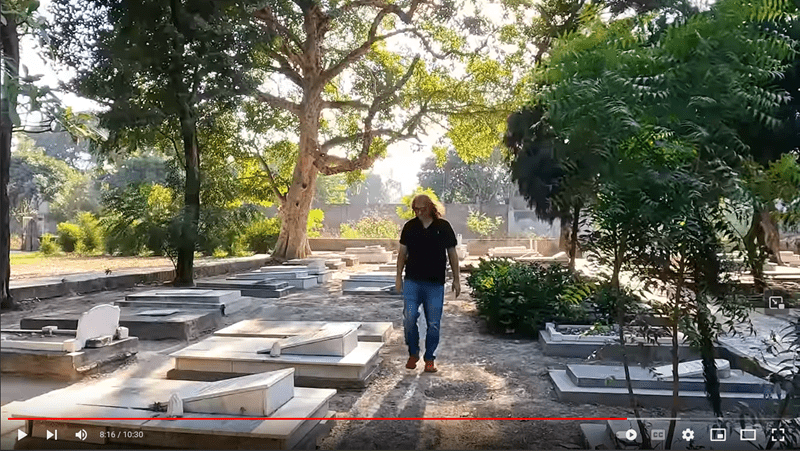
Next on my itinerary was Mora Bunder at Uran, a small fishing village across the harbour from Bombay. The agiary wasn’t far from the jetty, and as I walked towards it I saw a couple of houses that looked unmistakably Parsi. Again, I found the agiary locked. Going around to the back, in one of the buildings in the complex, I met Kersi Sui.

Kersi Sui was the only Parsi left in Uran. He looked after the agiary, though he was not a priest. He told me how he came about this. His parents had come to Uran from Navsari to manage the sanatorium in the agiary complex. The agiary fire was a dadgah, and therefore laymen could tend it too. So whenever the priest had to go to his home-town, he entrusted the fire in their care. The trustees didn’t have enough funds, and neither the Suis nor the priest drew much of a salary. When the priest quit, no one was ready to work for the pittance offered. Rather than let the fire die out, Kersi began to look after it.

Continue reading the entire article here.

Bookmark this entry: These icons link to social bookmarking sites where readers can share and discover new web pages.
  • del.icio.us
  • digg
  • Reddit
  • Furl
  • Facebook
15
May

Shahnameh: The Great Poem That Came Out of Persia

   Posted by: Mehernaaz Sam Wadia   in Books, History, Iran

By ROYA HAKAKIAN

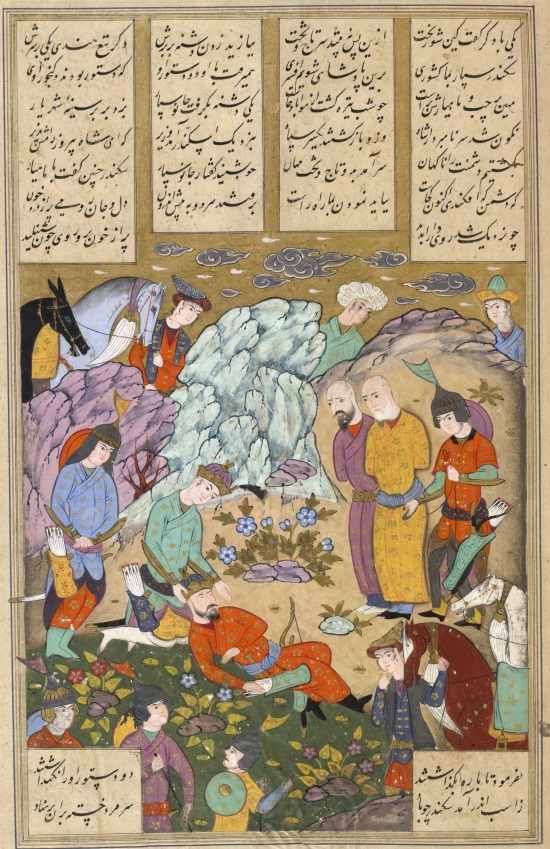
My earliest memories of the Shahnameh, the greatest work ever written in the Persian language, belong to my childhood in Iran. I and other girls in my elementary school recited verses of the epic poem, rounding out our chests and puffing our cheeks in our best effort to strike the pose of peacocks brimming with pride. Too young to grasp the book’s literary merits, we nonetheless understood it to be the deed to our nation’s glory.

If it were possible, Iranians would raise the Shahnameh on flagpoles and swear allegiance to it. No other book captures so much of Iran’s history while revealing the innermost workings of the Iranian sensibility and preoccupations. The Shahnameh has attained its revered status not only because of the truths it speaks but also because it embodies something that goes unspoken: the struggle of Iranians to maintain their identity.

Read the rest of this entry »

Bookmark this entry: These icons link to social bookmarking sites where readers can share and discover new web pages.
  • del.icio.us
  • digg
  • Reddit
  • Furl
  • Facebook
28
Apr

2200-year-old gemstones found in Iran

   Posted by: Shirin Kumaana-Wadia   in History, Iran

Ancient priceless gemstones and jewels belonging to postdated Achaemenid era have been unearthed in Iran’s southern province of Fars.

Archeologists succeeded in discovering over 20 pieces of 2,200-year-old bracelets, necklaces and earrings adorned with agate, ruby and opal in ancient graves behind Salman-e Farsi Dam in Iran’s southern city of Yarj.

“The discovery of such gemstones is a unique achievement. Agates in various colors, ivory, opal and rock crystal (Quartz) in many colors were used to embellish the bracelets, necklaces and earrings,” said Alireza Ja’fari Zand, head of the archeological team at the dam.
Read the rest of this entry »

Bookmark this entry: These icons link to social bookmarking sites where readers can share and discover new web pages.
  • del.icio.us
  • digg
  • Reddit
  • Furl
  • Facebook
28
Apr

Eeda Par Agiary

   Posted by: arzan sam wadia   in Bombay, Heritage, History, Mumbai

Eggs and toddy jars for a fire temple? The good-life-loving Parsis are not finicky about mixing the sacred and the secular. Still, I was intrigued by the E&T detail in Nauzer Bharucha’s report on the 300th anniversary of the Banaji Limji Agiary last Thursday. Mumbai’s oldest fire temple was badly damaged in a fire in 1803. For its reconstruction, the Sethiyas gave munificent sums; the poor contributed the eggs and toddy jars which were smashed to strengthen the foundation. Would it be unforgivable sacrilege to connect this to the standard, egg-topped Parsi dish, and call it ‘eeda par agiary’?

Our agiaries are cool, quiet refuges with no sound louder than the hum of faith. They are adorned with little more than a garlanded picture of the Prophet Zarathustra, and the oil portraits of the endowing family, the uniform grimness of these grandees deepened by the decades of wood smoke. The only dramatic feature is the inner sanctum’s gleaming urn with its leap of flames tended by the white-robed priest. He strikes the bell at each of the 24-hour cycle’s five gehs, its reverberations penetrating the very soul of the vicinity’s cluster of faithful.
Read the rest of this entry »

Bookmark this entry: These icons link to social bookmarking sites where readers can share and discover new web pages.
  • del.icio.us
  • digg
  • Reddit
  • Furl
  • Facebook

Vadodara, April 18 One of the three men was a Barodian; almost 80 years after it was first published, his son will release a new edition of the book today

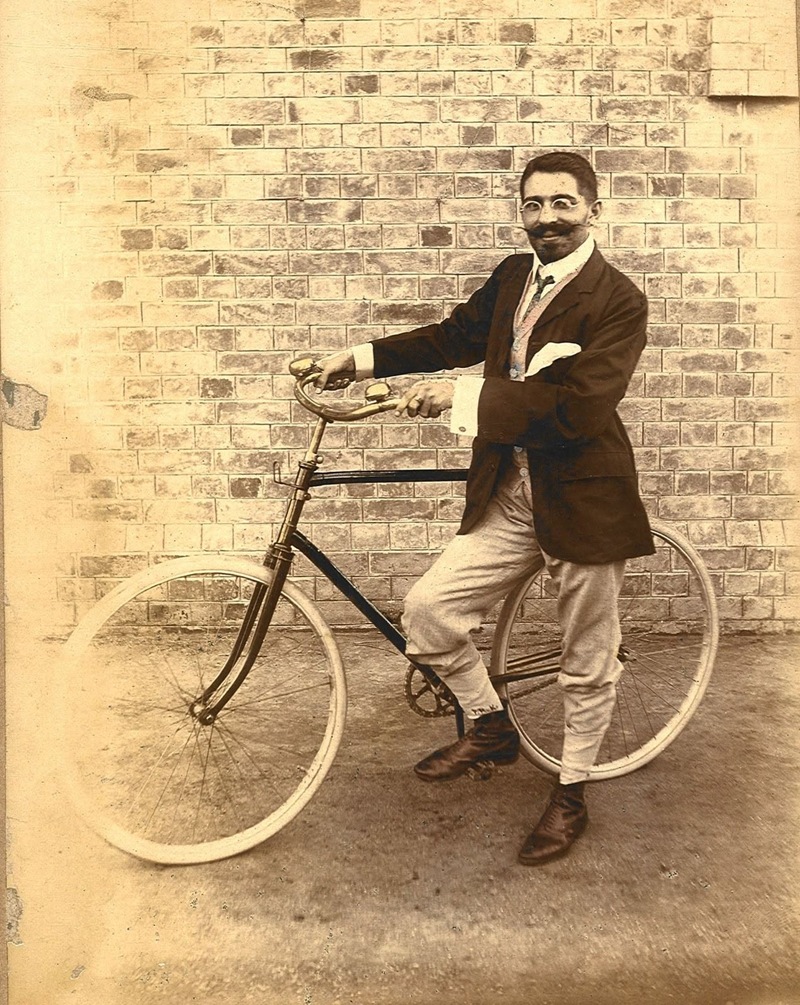
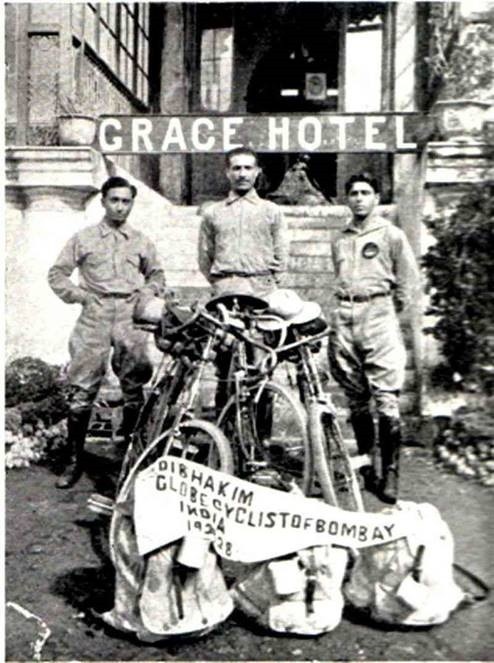
Just in their twenties and living off a shoestring budget, three young Parsis, one from Baroda, ventured on the first ever trip around the world on bicycles on October 15, 1923. The trio covered 44,000 miles in three years and three months across 27 countries and four continents. On their return, Adi Hakim from Vadodara, Jal Bapasola from Mumbai and Rustom Bhumgara from Pune, who later became a freedom fighter, wrote a book of their memoirs from the epic journey, of which but a few copies still exist. The original book includes a foreword by Jawarharlal Nehru and comments from leaders around the world like Benito Mussolini and Calvin Coolidge.”

Now, after five years of labour and commitment, Hakim’s son Daryous will release a new edition of the book in Vadodara on Saturday, almost 80 years after it was first published.

Says Daryous, who is fondly called Dara: “The original line-up of cyclists was six, but only three completed the tour, with three others returning to India for various reasons. In their book, the trio believed they wanted to take India to the world, even as they were caught up in the fervour of the freedom movement.” He says the three were left with not much money and did odd jobs while travelling, for meeting their expenses for food, clothing and shelter. They decided on the trip after meeting at the Mumbai Weightlifting Club, he says.

Read the rest of this entry »

Bookmark this entry: These icons link to social bookmarking sites where readers can share and discover new web pages.
  • del.icio.us
  • digg
  • Reddit
  • Furl
  • Facebook
18
Apr

Around the World in 53 months

   Posted by: Shirin Kumaana-Wadia   in Heritage, History, India, Individuals

Recently we reported about the launching of the book that chronicles the bicycle trip around the world by Parsi cyclists. Below is an article by Ervad Marzban Hathiram, a good friend of the Parsi Khabar, which appeared in the TOI in 2002.

Around the World in 53 months

by Ervad Marzban Hathiram


TIMES NEWS NETWORK [ FRIDAY, NOVEMBER 15, 2002 11:14:10 PM ]


MUMBAI: The three men knelt before Pope Pius XI, thanking God for their luck so far and seeking the pontiff ’s blessings for their onward journey. The date was October 15, 1924. Dressed in khakis, Gustad Hathiram, Keki Pochkhanawala and Adi Hakim were in the midst of an adventure that had commenced exactly a year ago when six young men set out from the dusty streets of Gowalia Tank in Mumbai on an unbelievable expedition—one which involved circumnavigating the globe on bicycle.

After weaving an intricate web of lies to avoid their parents’ ire, holding secret conclaves and making brave attempts to gather money, these three, along with their friends Jal Bapasola, Rustam Bhumgara and Nariman Kapadia had set off with a few clothes, a second-hand compass and crude copies of the map of the world. They chose a route that ensured that they would pass through terribly inhospitable terrains, for their objective was to show the world that, although the British ruled them, Indians were capable of much.

From Mumbai the cyclists headed to Delhi, passing through central India. After meeting the Viceroy, Lord Reading, they cycled through the Punjab and on to Baluchistan, crossing the Duki pass at 11,000 ft. They ploughed through three feet of snow and battled temperatures of minus 13 degrees C before finally reaching Varechhah—the last outpost of colonial India on January 20, 1924. From there, the youngsters sent their first postcards to their parents, revealing the details of their journey (which they had somehow managed to keep secret).

Crossing into their ancient motherland, Iran, the young Parsis reached Tehran, where they met Reza Shah Pahlavi. There, Nariman chose to return back to India and his fiance, while the rest proceeded to Baghdad. Despite dire warnings, they set a new record—crossing the Mesopotamian desert from Baghdad to Aleppo in 23 days. During these 956 kilometers they struggled through shifting sands, temperatures that crossed 55 degrees C and sand-fly-fever- induced delirium, and it was only thanks to a group of Bedouins that they escaped certain death.

Read the rest of this entry »

Bookmark this entry: These icons link to social bookmarking sites where readers can share and discover new web pages.
  • del.icio.us
  • digg
  • Reddit
  • Furl
  • Facebook
18
Apr

With Cyclists Around The World: Book Review

   Posted by: arzan sam wadia   in History, Individuals, Sports

With Cyclists Around The World (Roli, Rs 350)

by Adi B. Hakim, Rustom B. Bhumgara and Jal P. Bapasola

It is the fascinating memoir of three young Parsi men of a group of six from the Bombay Weightlifting Club, who set a precedence in globe-trotting by going around the world in bicycles. Starting in October 1923, they journeyed for over four years, going from the Middle East to south Europe, across the British Isles to America, then covering Japan and China to come “rolling home” through Bengal, Madras and Ceylon. While the authors revel in the “gay amusements” of Paris, they have nothing but scorn for the filthy Italian peasants with dirty neckties, and are repulsed by the Japanese meal of live mice dipped in honey. However, they find the biggest surprise of the trip right in their own country, in Calcutta, when only a handful of people turn up to welcome the cyclists, who had become quite famous elsewhere in the world by then. To read the book is to travel not only all over the globe but also to another time preserved in the memory of the adventurers.

Original Review here.

Bookmark this entry: These icons link to social bookmarking sites where readers can share and discover new web pages.
  • del.icio.us
  • digg
  • Reddit
  • Furl
  • Facebook
11
Apr

Making statues smile

   Posted by: Shirin Kumaana-Wadia   in Bombay, Heritage, History, Mumbai, Statues and Monuments

Statues make it to the news in Mumbai mostly when miscreants use them to stoke trouble in the city. At other times, they stand on busy road junctions or watch dusty playgrounds, derelict and often covered in bird guano.

But for a group called the Bombay Parsi Association (BPA), the city’s statues are more than just obscure monuments from the past. Last week, members of the group honoured the statue of Sir Hormusjee Adenwalla, a philanthropist who was a former chairman of the Union Bank of India and also a trustee of the Bombay Parsi Punchayet in the early part of the last century. Early on Friday morning, members of the group gathered near the Bikha Behram well near Churchgate, where the statue is located, and offered garlands and bouquets.

The BPA’s annual calendar features two more such events featuring statues and monuments. The statue of freedom-fighter Dadabhai Naoroji at Flora Fountain is similarly honoured on September 4, his birth anniversary. On the Zoroastrian equivalent of the All Soul’s Day, the war memorial at Khareghat Colony on Hughes Road too is the venue of a small memorial service.

Read the rest of this entry »

Bookmark this entry: These icons link to social bookmarking sites where readers can share and discover new web pages.
  • del.icio.us
  • digg
  • Reddit
  • Furl
  • Facebook
10
Apr

The Tomb of Cyrus in Danger of Fungus and Lichen

   Posted by: arzan sam wadia   in Heritage, History, Iran

What experts have warned and feared for the past few years about the humidity level at the world heritage site of Pasargadae after the inundation of Sivand dam, has now become a bitter reality as the humidity has risen to a dangerous level, and lichen funguses are growing over the body of the Cyrus the Great’s Mausoleum.

Humidity which was previously unknown to the area is now easily felt. Members of the public and a number of associate members of various Friends of Cultural Heritage Societies who have visited Pasargadae and the Mausoleum during the Norouz holiday, said that the high humidity is apparent, and damp can be smelt for miles.

Fars Province’s Meteorological Centre have also confirmed that the area has been suffering from a drought for the past six months and during this period it has rained only three times, totalling 75millimeters, therefore this amounts to nearly nothing to have an impact on the Pasargadae’s current atmospheric condition.

Back in 2007 an agreement was made between Iran’s Cultural Heritage and Tourism Organisation (ICHTO) and the Ministry of Energy, if the humidity levels become apparent and thus places the heritage site in danger, the dam inundation should be stopped immediately, and necessary measures to be taken to safeguard the ancient site. As the result a small-hygrometer was installed was installed at Pasargadae by the Ministry of Energy to monitor the humidity level. Since then however no access was granted to the experts to read the data, or any information made available to the public regarding the current and exact extent of humidity in the area.

In addition the Islamic regime as well as the Ministry of Energy officials have refused to be interviewed, or willing to issue any statements in this regard. ICHTO which is controlled by the government in Tehran has also refused to give an explanation and its administration has forbidden their staff to accept any interviews or to give any comments regarding this issue.

Sivand Dam became operational in April 06, 2007 by the order of the Islamic regime’s president Mahmood Ahmadinejad, in the presence of a number of high ranking clerics and members of the Islamic republic officials.

To this date the artificial lake at Bolaghi Valley has submerged an Achaemenid village, a large section of the Achaemenid Pardis (Garden), hunting ground, 7,000-years-old industrial settlement, as well as a large number of small pre-historic sites. According to the visitors a large number of trees at Bolaghi Valley, some hundreds and few even thought to have been well-over a thousand year old have also been uprooted and burnt for no reason.

Continue reading the article at the CIAS Site.

Bookmark this entry: These icons link to social bookmarking sites where readers can share and discover new web pages.
  • del.icio.us
  • digg
  • Reddit
  • Furl
  • Facebook
3
Apr

Khada Parsi may stand elsewhere

   Posted by: Mehernaaz Sam Wadia   in Bombay, Heritage, History, Mumbai

Away from the noise and pollution in Byculla, BMC plans to shift the century-old statue to Five Gardens

The landmark Khada Parsi statue may find a new home at Five Gardens near Dadar. The statue now stands between two flyovers in Byculla.The Brihanmumbai Municipal Corporation (BMC) plans to shift the century-old statue of Shet Cursetjee Manockjee to Dadar so that it could be protected from the corrosive effect of pollution. But the idea has met with opposition from residents of nearby Parsi colony who say the BMC has no right to move the statue. The BMC says the statue has deteriorated because of the effect of traffic fumes and bird droppings. Street dwellers use the limbs of the statue to dry clothes; the foot is occupied by pavement dwellers.

Once the statue stood at the centre of a road junction. It still stands in the same place, but has been sandwiched between two flyovers.

Read the rest of this entry »

Bookmark this entry: These icons link to social bookmarking sites where readers can share and discover new web pages.
  • del.icio.us
  • digg
  • Reddit
  • Furl
  • Facebook
25
Mar

Global warming may douse Iranshah fire at Udvada

   Posted by: Mehernaaz Sam Wadia   in Current Affairs, History, India

UDWADA (VALSAD): If there is one place the Parsi community considers holiest of holy in India, it is the small town of Udwada on the Gujarat coast. For two-and-a-half centuries, it has been home to the ‘holy fire’ that they brought from Iran more than 1,300 years ago.

But, just as Parsi numbers are dwindling, the Iran Shah, where the fire is kept, too is threatened by the forces of mother nature. Because of global warming, the rising Arabian Sea is threatening to drown the Iran Shah.

The waves, which rise as high as 12 metres in the monsoon, have already damaged some houses and hotels on the beach. Today, the distance between the damaged houses and Iran-Shah is barely 200 metres.

Read the rest of this entry »

Bookmark this entry: These icons link to social bookmarking sites where readers can share and discover new web pages.
  • del.icio.us
  • digg
  • Reddit
  • Furl
  • Facebook
26
Feb

Parsi fascination

   Posted by: arzan sam wadia   in Bombay, History, Mumbai

I first went to Bombay when I was 14 or 15. An uncle worked for an antique store inside the Taj, then the grandest hotel in India, and lived in a rented flat in Bandra.

The journalistic offerings of the city fascinated me: the film magazines, the tabloids, the society glossies. I remember reading quite a bit about the Parsis: their contributions to the city, their religious practices, their history in India…

Thirty years on, two months ago, I held the latest Outlook in my hand, and with it came a supplement called Mumbai City Limits. The lead article was again about the Parsis. It had the lovable wit Cyrus Broacha and the pink-looking actor Perizaad Zorabian adorning its cover, and the essay inside covered familiar ground. The Parsis’ numbers are said to be dwindling, but the journalistic fascination with the community hasn’t faded a bit.

Is there something in the Parsi culture that particularly tickles journalistic curiosity? Is it their attire, their death rituals, their insistence on marriage within the community?

Granted, the Parsis have done exceptionally well in business (the Tatas, the Godrejs, and the Wadias hail from this community of Persian immigrants, who arrived in India 1,000 years ago), law (you have the Sorabjees and the Palkhiwalas, invariably described by the media as ‘eminent jurists’), but surely, other communities in Mumbai, such as the Bunts from Mangalore and the Marwadis from Rajasthan, can boast a comparable number of achievers?

Continue reading the entire article here.

Bookmark this entry: These icons link to social bookmarking sites where readers can share and discover new web pages.
  • del.icio.us
  • digg
  • Reddit
  • Furl
  • Facebook
22
Jan

New class at Stanford explores Zoroastrianism

   Posted by: arzan sam wadia   in Academia, Education, Heritage, History

New class explores ancient religion Popular faiths rooted in Zoroastrianism

Zoroastrianism, the world’s oldest revealed religion, is the focus of an introductory course this quarter taught by Visiting Prof. Jennifer Rose from the School of Religion at Claremont Graduate University. “Introduction to the Zoroastrian Religion,” organized by the Center for South Asia and a committee of Zoroastrian community members, will explore in detail the origins of the religion, its role in the Iranian empires and its relation to Judaism, Christianity, Manichaeism and Islam.

Zoroastrianism is a significant but little-known religious and cultural tradition that originated in Iran and became an important influence in modern India. The course will highlight how common religious concepts such as universal judgment and renewal, a savior figure and paradise all seem to have been influenced by Zoroastrian teachings.

Yesterday’s first class featured a small gathering of students, allowing for an intimate atmosphere and close interaction with Rose. Many students in attendance expressed personal interest in the subject.

Magali Ferare ‘10, a Comparative Studies major, explained her motive for enrolling in the course.

“I am excited to understand how Zoroastrianism evolved with the people and largely influenced other religions,” she said. “This course provides a historical approach to studying the religion which has complemented my understanding of other religions.”

Read the rest of this entry »

Bookmark this entry: These icons link to social bookmarking sites where readers can share and discover new web pages.
  • del.icio.us
  • digg
  • Reddit
  • Furl
  • Facebook
14
Jan

Bid to exploit Kappawala agiary land thwarted

   Posted by: Shirin Kumaana-Wadia   in Bombay, History, News, outrage

An attempt to commercially exploit a portion of Tardeo’s Kappawala agiary (fire temple) land by one of the trustees has been scuttled after the charity commissioner rejected an application seeking permission to conduct the redevelopment.

The fire in this agiary was consecrated way back in 1857 (the year of the Mutiny), but the imposing building was constructed only in 1941 when the fire was shifted from Fort to Tardeo. What is especially significant for many Parsis is that the last Zoroastrian saint, Dastur Jamshed Ervad Sohrab Kukadaru (1831-1900), was a priest in this agiary.

The charity commissioner’s order on last Tuesday comes as a major respite for a miniscule community, which has been fighting to prevent builders and trustees from usurping large fire temple lands in the city to set up residential buildings.

Read the rest of this entry »

Bookmark this entry: These icons link to social bookmarking sites where readers can share and discover new web pages.
  • del.icio.us
  • digg
  • Reddit
  • Furl
  • Facebook
14
Jan

Iran Plans on Destroying Tomb of King Cyrus, Friend of the Jews

   Posted by: Mehernaaz Sam Wadia   in Heritage, History, Iran, Issues

Iran is planning on submerging the tomb of King Cyrus (Coresh), the Persian King known for authorizing the Jewish exiles to return to Jerusalem to rebuild the Holy Temple.

According to a report by Omedia, an Iranian organization is demanding that the International Criminal Court take action against those responsible.

The Iranian ayatollahs are planning on destroying the tomb as part of a general campaign to sever the Persian people from their non-Islamic heritage; Cyrus was thought to be a Zoroastrian and was one of the first rulers to enforce a policy of religious tolerance on his huge kingdom. Journalist Ran Porat quoted a young Iranian who said that the measures being taken by the Islamic Republic’s regime include the destruction of archaeological sites significant to this heritage.

“The government is in the final stages of constructing a dam in southern Iran that will submerge the archaeological sites of Pasargad and Persopolis – the ancient capital of the Persian Empire,” the report states. “The site, which is considered exceptional in terms of its archaeological wealth and historical importance, houses the tomb of the Persian King Cyrus.”

Cyrus, who lived from 576-530 BCE, liberated Babylonian Jewry from their exile in the famous Declaration of Cyrus (mentioned in the book of Ezra in both Hebrew and Aramaic).

Read the rest of this entry »

Bookmark this entry: These icons link to social bookmarking sites where readers can share and discover new web pages.
  • del.icio.us
  • digg
  • Reddit
  • Furl
  • Facebook
12
Oct

With courage let us all combine

   Posted by: arzan sam wadia   in Current Affairs, Heritage, History

Friyana Billimoria - Friyana Billimoria, in year 11 at Kingswood College, Box Hill, is Youth Ambassador for the Metropolis

Migration works if everyone embraces it wholeheartedly.

MANY centuries ago, a group of people left Persia due to religious persecution. Braving the perilous seas in tiny boats, many perished. A ragged few survived and reached the shores of Gujarat in western India. Obviously, the ministers of the rajah refused entry to the bedraggled lot, dressed strangely, talking gibberish. However, the rajah was a compassionate man and requested the strangers to convince him why they should stay.

The first Persian elder requested a bowl of warm milk and a teaspoon of sugar. The next elder stirred the sugar in the milk until it dissolved. The third urged the rajah to drink the sweetened milk, with not a drop spilled. Thus the migrants would assimilate into the population, enhancing the culture, all being richer for it.

Hence the Parsi Zoroastrians came to live in India and contributed hugely to the economic growth and rich culture. Parsis earned the respect of the Indian community. This is the tale of my ancestors.

Many centuries later, my family migrated to Australia, in 2002, in the quest for education and diverse opportunities to succeed. I was 10. It is amazing how history repeats itself. Unlike my ancestors, we were lucky as we came to Australia out of choice, safely, with language skills and in control of our futures. Today, we are citizens - studying, working and contributing to the Australian economy, culture and way of life. We have achieved so much in such a short time and both Australia and we have benefited.

Read the rest of this entry »

Bookmark this entry: These icons link to social bookmarking sites where readers can share and discover new web pages.
  • del.icio.us
  • digg
  • Reddit
  • Furl
  • Facebook
29
Sep

Experts to determine fate of Naqsh-e Rustam

   Posted by: arzan sam wadia   in Heritage, History, Iran

Experts to determine fate of Naqsh-e Rustam

TEHRAN, Sept. 23 (MNA) — A week-long study by experts will determine the fate of the Achaemenid site of Naqsh-e Rustam in southern Iran’s Fars Province.

The decision was made during a meeting attended by officials from the Cultural Heritage, Tourism and Handicrafts Organization (CHTHO) and the Ministry of Roads and Transportation (MRT) on September 22.

The MRT’s officials have come to an agreement with the CHTHO to modify a nearby railway route which would threaten the existence of the site if it were to become operational.

The final decision will be announced on September 29, CHTHO deputy director Fariborz Dowlatabadi said on Sunday.

The railway route embankment has been constructed at a distance of about 350 meters from Naqsh-e Rustam, but CHTHO’s archaeologists have requested that the distance be increased to 1000 meters.

They believe that if the railway route were to become operational at the shorter distance, train vibrations would eventually damage the monument and also cause the destruction of Zoroaster’s Kaba within less than ten years.

Read the rest of this entry »

Bookmark this entry: These icons link to social bookmarking sites where readers can share and discover new web pages.
  • del.icio.us
  • digg
  • Reddit
  • Furl
  • Facebook
6
Sep

Kangelu Fortress waterproofed for Anahita rituals

   Posted by: arzan sam wadia   in Heritage, History, Iran

Archaeologists surmise Kangelu Fortress waterproofed for Anahita rituals

A team of Iranian archaeologists working on the Kangelu Fortress in northern Iran’s Mazandaran Province have put forward the idea that the Sassanid fortress was built to be waterproof as a suitable site for holding rituals in honor of Anahita, the Zoroastrian goddess of fertility, water and rivers.

Analysis indicates that an oily material has been added to the mortar to waterproof the structure of the building.

The fortress and the terrace-shaped structures situated at both sides have been built with a mortar of gypsum, lime and stone. However it has been observed that gaps in the fortress and the bottom of the adjoining terraces have also been covered with an oily mortar, team director Saman Surtiji told the Persian service of CHN on Sunday.

“With reservation, it can be said that the monument was a type of reservoir for storing water and may have been a temple dedicated to Anahita, goddess of water,” he noted.

Read the rest of this entry »

Bookmark this entry: These icons link to social bookmarking sites where readers can share and discover new web pages.
  • del.icio.us
  • digg
  • Reddit
  • Furl
  • Facebook
6
Sep

Railway Construction near Naqsh-e Rostam Stopped

   Posted by: arzan sam wadia   in Heritage, History, Iran

Following strong oppositions made by Iran’s Cultural Heritage, Handicrafts, and Tourism Organization (ICHHTO) with construction of railway near Naqsh-e Rostam, security guard of ICHHTO has stopped the construction operations.

Tehran, 22 August 2007 (CHN Foreign Desk) - Activities of Isfahan-Shiraz railway construction in a close distance of Naqsh-e Rostam historic site have been stopped due to oppositions raised by cultural heritage authorities.

According to reports released by Marvdasht’s Cultural Heritage Enthusiasts, the activities of road construction machines which were present in the area for building the infrastructure for railway construction have been stopped by Persepolis cultural heritage guards.

Based on the same report, authorities of Persepolis security guard have declared the activities of Isfahan-Shiraz workers just in 500 meters of Naqshe Rostam historic site illegal and following the disagreement of ICHHTO with the project it has stopped railway construction activities.

Read the rest of this entry »

Bookmark this entry: These icons link to social bookmarking sites where readers can share and discover new web pages.
  • del.icio.us
  • digg
  • Reddit
  • Furl
  • Facebook
22
Aug

Zoroastrian Fires and Temples

   Posted by: arzan sam wadia   in Culture, Heritage, History, Institutions, Iran

Fire, the source of heat and light is not only revered in ancient Indo-Iranian rituals but also in modern day Zoroastrianism and Hinduism.

Zoroastrianism, which dominated the Sassanid Empire, is the religion ascribed to the ancient Persian prophet, Zarathushtra (Zoroaster), who lived 3500 years ago.

Fire (Atar), together with clean water (Aban), are considered agents of ritual purity in the Zoroastrian religion.

Despite the Zoroastrian respect for any form of fire, they do not worship it, rather it is used as a medium to communicate with God, whom they call Ahura Mazda, the Lord of Wisdom, the source of order and precision in the universe.

Standing before a sacred fire, Zoroastrians pay homage to a creation that represents life and the power of Ahura Mazda.

There are three kinds of sacred fires in Zoroastrianism, each standing for one sector of ancient society: Atash Dadgah, Adur Aduran, and Atash Behram.

Atash Dadgah is associated with the householder class and burns in houses and during celebrations such as weddings.

Adur Aduran is connected with the warrior class and burns constantly in fire temples. It is called the ‘Fire of Fires’ because it is made up of embers gathered from different fires belonging to different social classes, to symbolize social unity.

Read the rest of this entry »

Bookmark this entry: These icons link to social bookmarking sites where readers can share and discover new web pages.
  • del.icio.us
  • digg
  • Reddit
  • Furl
  • Facebook
22
Aug

Stalwarts of Our Past: Dadabhai Naoroji

   Posted by: arzan sam wadia   in History, Individuals

Dadabhai Naoroji (1825-1917)

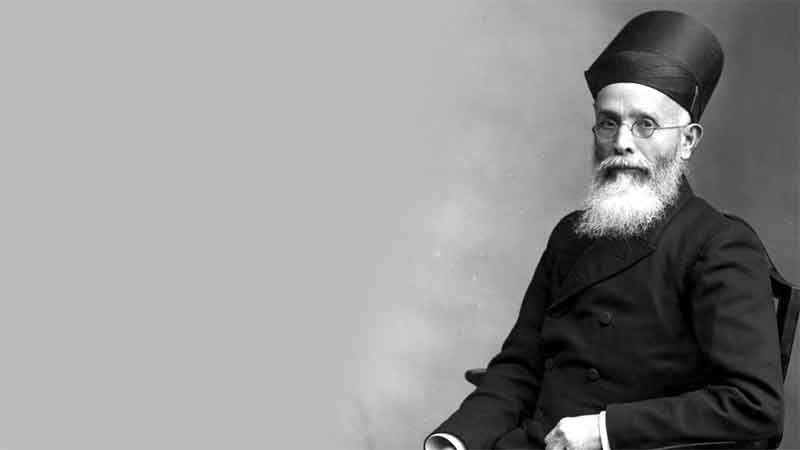
At some point, his picture stared out from our history textbooks. A bespectacled man with a stiff Parsi hat, Dadabhai Naoroji was the Grand Old man of India. He was the first man publicly to voice the demand for swaraj in 1906. Naoroji felt British misrule in India was the result of ignorance, and education was the only way out.

Elphinstone College was where Naoroji was the first Indian to become a professor at the age of 27. He was instrumental in setting up the Indian National Congress and was chosen thrice as party president. He even managed to be elected as a Member of the British Parliament.

Down the street

The eponymous road links Crawford or Mahatma Phule Market in the north to Hutatma Chowk or Flora Fountain in the south, and runs past Chhatrapati Shivaji Terminus.

Read the rest of this entry »

Bookmark this entry: These icons link to social bookmarking sites where readers can share and discover new web pages.
  • del.icio.us
  • digg
  • Reddit
  • Furl
  • Facebook
20
Aug

Celebrating Parsi New Year

   Posted by: arzan sam wadia   in Culture, Customs, Food and Drink, Heritage, History, Opinion

BY Rakshande Italia

If I cherished one special day during the year, besides my birthday, it was the New Year - not Jan. 1, but a day in August when members of my tiny Zoroastrian community in Mumbai, India, celebrated the beginning of their calendar year.

Colloquially referred as Parsi New Year, the day was extra-special as community members, the Parsis, party all day long. One prime reason that this day was special is that unlike the scores of Hindu festivals, which are an all-year-round affair, our community celebrates only two others in the year. Navroze, a celebration of spring equinox, and Khodadsal, the birthday of our prophet Zarathusthtra.

You see, our forefathers landed in India in the eighth century after fleeing the Arab invasion in Persia, refusing to leave their Zoroastrian religion, which is said to be one of the world’s oldest monotheistic religions, founded around 1200 B.C.

Today, there are only 150,000 Zoroastrians left worldwide. While India houses the largest population - 65,000 - the Greater Toronto Area comes in second with 6,000. Toronto is unique because Zoroastrians from India, Pakistan and Iran come together here, sharing the same religion even as they have different customs, cultures and languages.

On Aug. 20, Toronto’s Zoroastrians will celebrate the new year, congregating in two community centres in the GTA - one at Bayview and Steeles avenues and another in Oakville. The evening starts with a Jashan, a prayer ceremony, ending late but only after a sumptuous meal and loads of entertainment.

In India, the community doesn’t congregate together as it does here, but there’s a set pattern to the celebration.

Read the rest of this entry »

Bookmark this entry: These icons link to social bookmarking sites where readers can share and discover new web pages.
  • del.icio.us
  • digg
  • Reddit
  • Furl
  • Facebook

Despite all oppositions made so far by Iran’s Cultural Heritage, Handicrafts, and Tourism Organization (ICHHTO) against construction of Isfahan-Shiraz railway only in 500-meter distance of Naqsh-e Rostam historic site, based on latest reports some measures have been undertaken for marking the railway path according to its original route.

Based on earlier agreements between authorities of Iran’s Ministry of Road and Transportation and ICHHTO, the national project of Isfahan-Shiraz railway was due to change its path and be constructed with the maximum distance from Naqsh-e Rostam to cause the least harm to this historic site. However, its seems by purchasing the farmlands in vicinity of Naqsh-e Rostam and marking the path of the railway, authorities of the project have obviously ignored the previous agreements and are determined to construct the railroad just half kilometer distance of this historic site.

Prior to this, after revising the suggested route by Iran’s Ministry of Road and Transportation, the technical council of ICHHTO decided that the path for construction the railroad must change. Experts of ICHHTO have previously warned that the powerful jolts caused by train would have a harmful effect on the historic monuments in the region including Zoroaster’s Kaba and train vibrations would eventually damage Naqsh-e Rostam monument.

Considering that Pars-e Pasargadae Research Center is determined to prepare the ground for registration of Naqsh-e Rostam in list of UNESCO’s World Heritage site, as annex of Persepolis world heritage site, construction of the railway in such a close distance of this historic site would ruin the chance of world registration of this Achaemenid site forever.

UNESCO asked Iran to give an explanation about construction of the railway near Naqsh-e Rostam in the 31st session of World Heritage Committee.

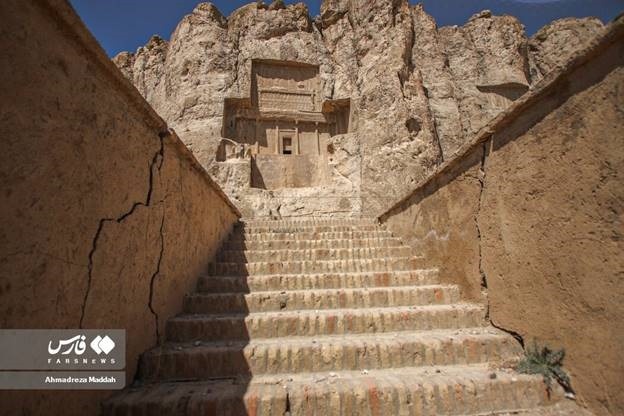
Located in Iranian Fars province, 12 kilometer distance of Persepolis, Naqsh-e Rostam contains four tombs belonging to Achaemenid kings which were carved out of the rock. Kaaba of Zoroaster bears number of inscription belonged to Parthian and Sassanian dynastic eras.

Original article here

Bookmark this entry: These icons link to social bookmarking sites where readers can share and discover new web pages.
  • del.icio.us
  • digg
  • Reddit
  • Furl
  • Facebook
26
Jul

The Story of Polson Butter

   Posted by: arzan sam wadia   in Food and Drink, Gujarat, Heritage, History

A few entrepreneurs, then the government as well, set up dairy operations in the area that made and sent butter to Bombay, but the real growth was to come from a dynamic young Parsi named Pestonji Edulji Dalal who in 1888, aged just 13, started a small shop to roast and grind coffee. According to Ruth Heredia’s The Amul India Story, Dalal’s nickname was Polly, which he adapted into the British sounding Polson’s for this brand name.

Polson’s coffee soon got regular customers among the British and by 1910 Pestonji was well established and looking for new opportunities. So when a customer in the Supply Corps told him of the problems the army still had getting butter, he decided to jump in. Pestonji set up a dairy in Kaira and used his army and railways contacts to ensure that Polson’s was so widely supplied that it became synonymous with butter.

By 1930 Polson’s had opened the most advanced dairy plant in India and dominated the butter business. But as Heredia’s book points out, it was this dominance that caused Polson’s downfall, since it provoked a Gandhian called Tribhuvandas Patel to organise the co-operative that would ultimately become Amul.

Read entire story here

Bookmark this entry: These icons link to social bookmarking sites where readers can share and discover new web pages.
  • del.icio.us
  • digg
  • Reddit
  • Furl
  • Facebook
11
Jul

Conversation From Karachi

   Posted by: arzan sam wadia   in Heritage, History, Individuals, Industry

Talking to 80-year-old Dhanjishae H. Munderji, an occupant of the he Parsi general hospital, over a cup of tea, turned out to be quite an elucidating experience. Speaking on a host of issues, we eventually came to the topic of Karachi in terms of the city as we know it and how it once was.

“You know,” said Munderji, a former professor, “Karachi was once called one of the cleanest cities of the East?”

That remark, seemingly unreal for Karachiites of my generation, came with a tinge of lament for the present situation mixed with a pride of having actually seen the city in its former glory.

In fact, now that one thinks of it, the very location of the infirmary presented a potent example. Sitting right next to the Empress Market in Saddar, the road leading to the infirmary presented an extremely sorry appearance with fly-infested garbage and the overwhelming stench of rotten vegetables, not to mention the mounds of carbon monoxide one had to inhale while stuck in a traffic jam in front of the market. The infirmary’s site itself, however, was, as expected, impeccably clean and green.

Read the rest of this entry »

Bookmark this entry: These icons link to social bookmarking sites where readers can share and discover new web pages.
  • del.icio.us
  • digg
  • Reddit
  • Furl
  • Facebook
3
Jul

Rolling in gold but still poverty-stricken

   Posted by: arzan sam wadia   in Culture, Heritage, History, Issues, Opinion

IN 1865, Jamsetji Nusserwanji Tata - a one-time opium trader and scion of a sparkling line of Parsee priests, Zoroastrians who had fled to western India from persecution in Iran - attended a lecture in Manchester given by Thomas Carlyle.

Carlyle, a cantankerous Scot, was known for his historical and philosophical essays, but he also put his mind to the budding field of political economy.

“The nation which has the steel will have the gold,” Carlyle told the lecture hall, and burnt a deep impression on the visiting Indian merchant.

Jamsetji Tata took Carlyle’s idea and, after opening up textile mills, he in time emerged as India’s mightiest industrialist.

Today, the company he founded is a goliath. Tata Group is the world’s fifth largest steelmaker and sees itself as a symbol of the re-emergence of the Indian economy.

Continue reading the entire article here

Bookmark this entry: These icons link to social bookmarking sites where readers can share and discover new web pages.
  • del.icio.us
  • digg
  • Reddit
  • Furl
  • Facebook
16
May

LAHORE LAHORE AYE: The Parsis of Lahore

   Posted by: arzan sam wadia   in History, Institutions, Opinion

As the sun is about to set, a group of pale tall men in spotless white can be found on the beach, the sacred Zorastrian belt knotted around their waists. They stand at the edge, bend down and immerse both their hands into the water, which they then raise to their forehead, touching it briefly. Thereafter, they untie their sacred belts which they lift briefly to their brows, only to retie them. Then they turn their faces towards the setting sun and utter just three words: Humata, Hakhata, Havershta.

These three words belong to a four thousand year old language. When the sun finally sinks into the sea and its last rays disappear from the horizon, these pale faced men in white gowns turn towards the east three times, three times towards the south and three times towards the west. This they follow by dipping their hands in the sea again, touching their foreheads as they recite sacred texts under their breath. After the completion of the ritual, they disappear into the streets of the throbbing city, which is Bombay.

Read the rest of this entry »

Bookmark this entry: These icons link to social bookmarking sites where readers can share and discover new web pages.
  • del.icio.us
  • digg
  • Reddit
  • Furl
  • Facebook
14
May

Tehmulji Parsi Lying-In Hospital May be Demolished

   Posted by: arzan sam wadia   in