
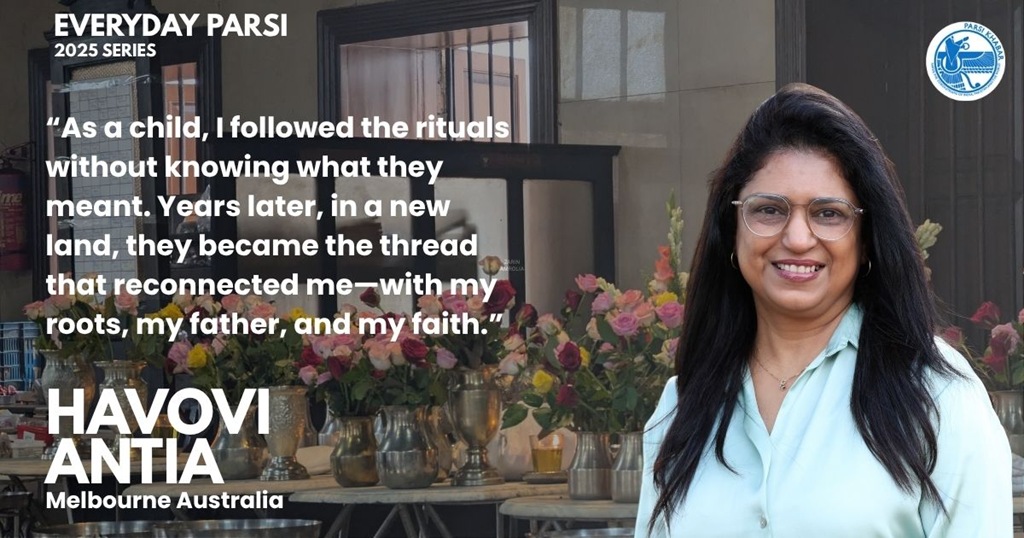
Our fourth author in the Everyday Parsi 2025 is Havovi Antia of Melbourne, Australia.
Muktad: A Journey into Meaning
Growing up in Jamshedpur, my memories of the Muktad Gatha days are few and scattered. Ours was not a particularly religious household, though we held a quiet respect for tradition. I remember the calm of our local Agiary—the tables adorned with vases and fresh flowers, the gentle glow of flickering divas, and the soft murmur of prayers filling the air. People bowed their heads in reverence, but as a child, I understood little of its meaning. I simply followed the motions, unaware of the depth behind those quiet rituals.
It was only after I married into an Athornan family that I began to truly grasp their importance. My husband, Ervad Kaivan Antia, would often share his childhood memories of Muktad—the sacred atmosphere, the prayerful rhythm of those ten days, and the deep sense of connection to his ancestors. When we moved to Melbourne, I witnessed firsthand how much this time meant to him. His commitment to continuing the tradition in a new land stirred something in me. I began to read, reflect, and learn—seeking to connect with something that had once been only a vague childhood memory.
At first, I supported my husband’s wish to conduct Muktad prayers in Melbourne out of love and respect. He took the initiative to begin the ten days of Muktad Gatha for our local Zoroastrian community, creating space for remembrance and reflection.
A few years earlier, I had lost my father in a tragic accident—a grief I carried quietly, without knowing how to honour or reconnect with his memory. When my husband began leading Muktad prayers in Melbourne, something within me shifted. Surrounded by the scent of loban, the solemn rhythm of prayers, and the stillness of that sacred space, I felt a profound sense of peace.
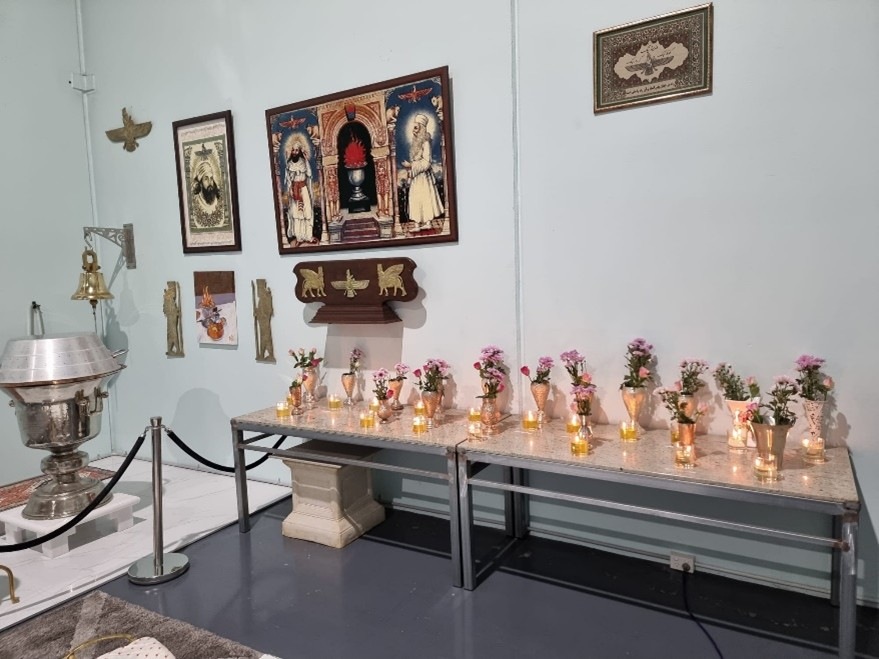
For the first time, I truly believed that the Fravashis—the souls of our dear departed—were present. It felt as though they were gently blessing us, acknowledging our offerings with love. Muktad was no longer a series of rituals; it became something deeply spiritual. In that quiet space of flowers, prayer, and silence, I remembered my father and other loved ones with a sense of calm and connection. The chirping of birds, the cool morning breeze—everything felt like a sign. I was surrounded by love, memory, and divine grace.
Over the years, Muktad and Gatha have taken root here in Melbourne. Despite challenges, we’ve continued to nurture this tradition for our community. Volunteers arrive early to clean and prepare. Friends generously donate a venue. Families bring food to offer. Children participate in satum prayers with joy and pride, eager to be part of something meaningful. It is heartening to witness the Zoroastrian spirit alive and growing in this new land.
Preparing malido, puri, bhakra, and other traditional offerings no longer feels like a task. It is my seh-mai, my act of devotion—a way to honour those who came before. Watching my husband pray late into the night after long workdays, never once complaining, has helped me understand the depth of his faith and why these ten days are so sacred to him.
Today, Muktad is a time I deeply look forward to—a time of solemnity and joy, memory and togetherness. It is a spiritual homecoming. I now understand what I couldn’t as a child: that Muktad is not simply about rituals. It is about presence—welcoming our ancestors back with prayer, fragrance, and reverence. And in doing so, I truly believe they come. Quietly. Lovingly. To bless us all.
About Havovi Antia
Havovi Antia has been living in Melbourne since 2004 and is actively involved in both the social and religious events of the Zoroastrian community. She has been a member of the ZAV Committee for a few years. Professionally, she is the Centre Director of an Early Learning Centre and works as a Sessional Lecturer at Victoria University