

Today is the Ushtavaiti Gatha, the second Gatha day of this year’s muktad. And in the 2025 Everyday Parsi series we feature our seventh author Mahtab Dastur.
The Muktad times have always been a time of prayer and remembrance. When we were younger, we would go to Mumbai every August for Muktad. Every morning we would meet my dad at the Agiary, where he prayed for his parents and his Kaka, along with all the other mobeds. I would look forward to eating the chasni, specifically the bright orange malido (I still miss it). These dasturjis would eventually be the ones who did my navjote, my brother’s navjote, and even his navaar and martab. Over time, they became such a common sight during my time in Mumbai that I began seeing them outside the Agiary too.
One particular memory reminds me of the dedication the head priest, Kaizad uncle, had — the quiet commitment he made. My dad once told me that head priests always wore white. I, the ever-evolving fashionista, couldn’t believe it. And then one day, on the way to the “Naka,” I saw Kaizad uncle running. Apparently dasturjis also exercise. He was in all white clothing, white sneakers included — though his shoes were embellished with rainbow-colored stripes. I guess all-white wasn’t available, or maybe he too wanted to express his inner fashionista. I mention this because I don’t think I’ve ever observed this level of dedication anywhere else. Ever.
And the Muktad times remind me of that dedication.
A few years before the COVID pandemic — perhaps one or two years prior — we stopped going to Mumbai for the Muktad prayers and started praying in Houston. The Muktad prayers here are different — special, but different. Being too young to really remember the transition, my memories of the Muktads are mostly filled with ZAH (the Zoroastrian Association of Houston), with a few scattered scenes from those Mumbai years.
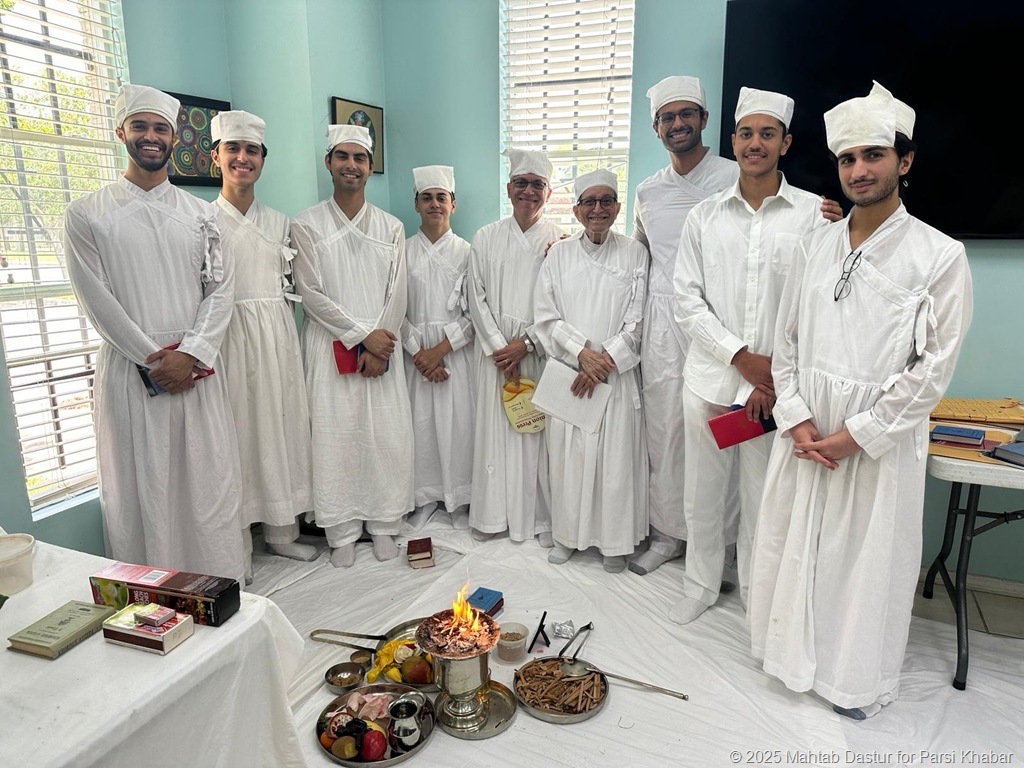
Muktad preparations begin with a deep clean of the entire house — sweeping, dusting, mopping — with special attention to the laundry room. Why? Clothes are washed with meticulous care. As a family, we take out 11 sets of clothing (or as many as we can). Routine number one begins. Once the first load goes into the washer, a metal chair is placed outside the laundry room door. No one may enter without taking a full shower, head to toe, and without touching anything except the towel they’re wearing. Usually, my brother takes on the role of “clean runner,” transferring wet clothes from the washer to the dryer and starting the next load, all while wrapped in a towel. To avoid any “contamination,” the washer and dryer are purposely kept apart. This entire process is repeated for each load — and again during ironing, which takes the longest for the jamaas.
On the first day of our ten-day Muktad (not the eighteen like in Udvada — though maybe we should), we’re up at the (unholy) hour of 4 a.m. What follows is carefully practiced routine number two, perfected over years. After a quick breakfast of chai and bread — or cereal, for us kids — we shower and get dressed, taking care not to touch anything except our towel, the clean clothes in the laundry room, and the metal chairs we’ve laid out and sprayed (showered) with water. Around 5 a.m., Cyrus, a paramobed, often comes over, and we bring him with us to pray at the center. That’s where our prayers happen, an hour drive away, in the kids’ room — or, as we still call it, Vehishta Aunty’s room.
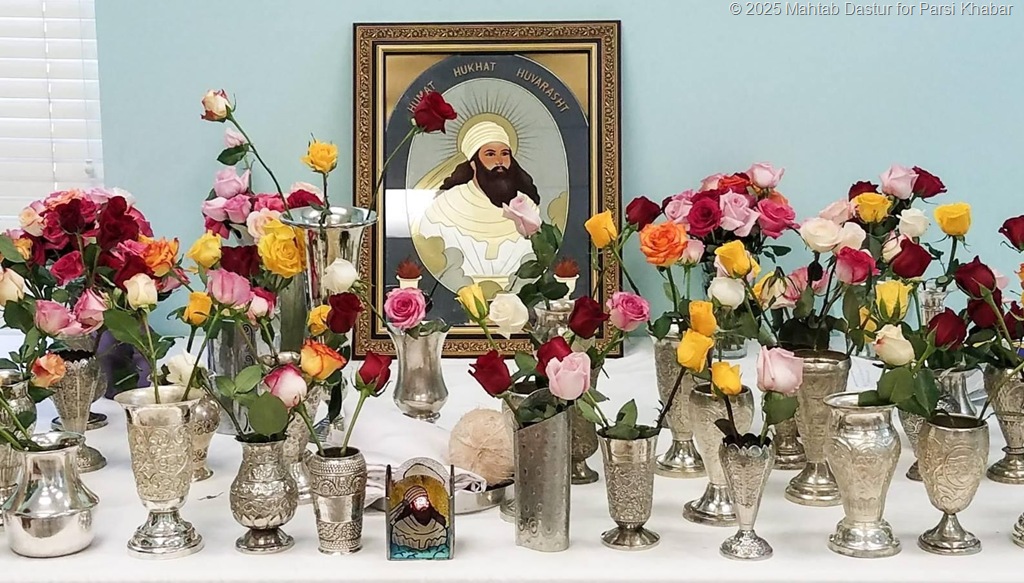
Still half-asleep on the drive (except my dad, who is driving and drinking his chai in typical Dastur fashion), we arrive each morning to the bright, familiar faces of Fred Uncle and Aban Aunty, already busy making parathas and arranging flowers — somehow always more awake than we are. Then comes routine number three: setup. By now, we’re a well-oiled machine, the routine coming to us like stories from the worn pages of a much-loved book. We empty, wash, and refill the vases. Flowers are rinsed, trimmed, and placed inside them. The vases are carried into the prayer room, where Aban Aunty insists they be arranged the “right way.” Fruits are washed, sliced, and set in kumchas. Malido is scooped into kumchas. Water and milk are poured into metal cups to put… into, you guessed it, kumchas. And then there’s my favorite part: the flower kumcha. Carefully snipped roses and peeled petals fill the last dish, beautifully arranged, if I do say so myself (and I do — I’m the one who does it).
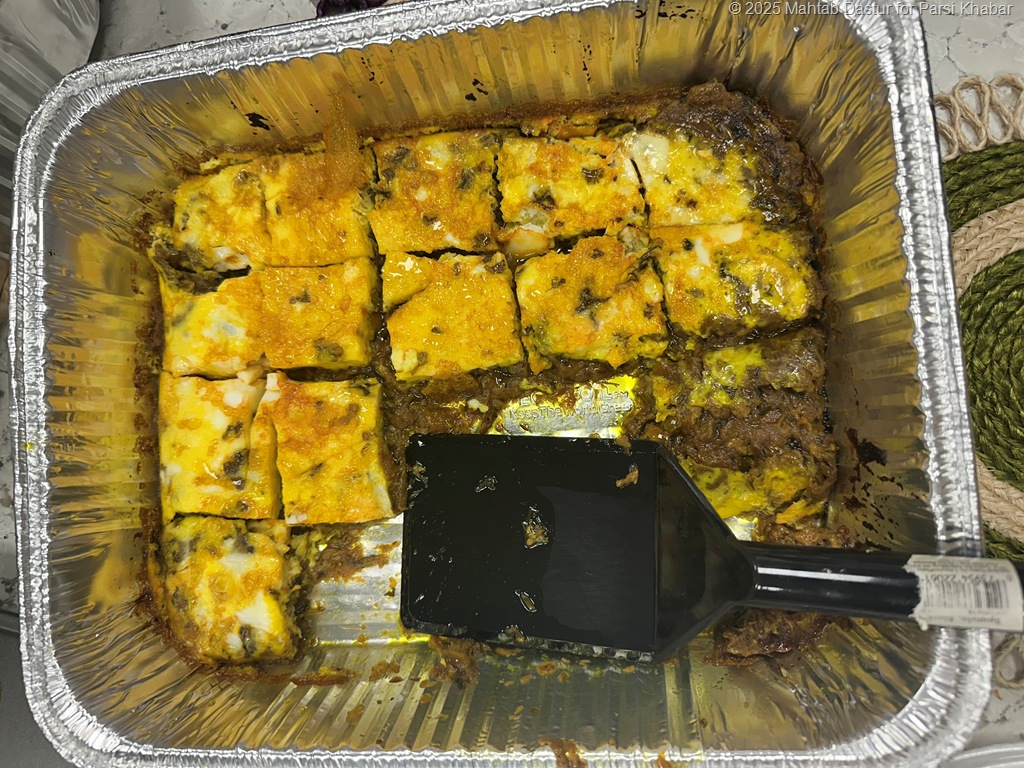
After prayers, we do loban and head to the kitchen, where a delicious, mouth-watering breakfast awaits. Life is good. It’s potluck-style, so every day brings something new — like kera-per-edu (egg on banana). Then we go home. Except not really. My brother and I go to school, and my parents head to work. In fact, we used to need special permission just to miss the first few hours of school — especially tricky since the first day’s attendance gets reported to the state. (Even now, accommodations continue to be made, for which I’m deeply grateful. This year, for example, as I begin my second year at Rice University, I requested and was granted a single room during Muktad so that I can follow the same routine I would at home.)
The thing about going to school after Muktad prayers is we would go through our school day smelling like loban — not quite like smoke, but something sweeter, something headier. But of course, our friends couldn’t tell the difference. We’d have to explain to our friends that no, we don’t smoke. In fact, it would be against the religion. And really, we’re not smokers!
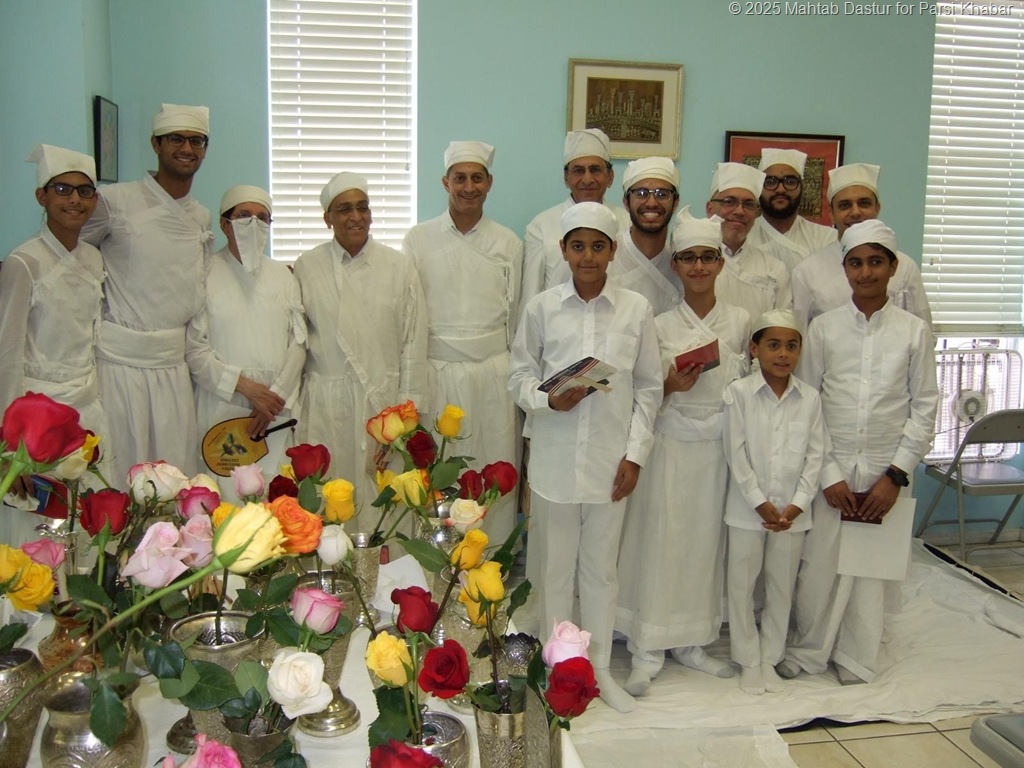
Truthfully, I actually quite enjoy the scent of the loban. Every time I smell it, I’m taken back to Muktads in India — flower vendors lining the sidewalk across the Agiary, and Parsis gathered to buy, hoping the vendor would recognize their name (or a relative’s) and offer a discount. The smell of loban also takes me back to the quiet murmurs in the Pak Iranshah in Udvada at night, where only divos light the room, lulling you to sleep (admittedly, I’ve dozed off there before).
And now, after years of doing Muktad in Houston, the smell of loban grounds me. It reminds me not just of the rituals, but of my quiet commitment — my responsibility to pray for the departed. I think of all the years before, sitting just as I do now, reciting the “usual” prayers like the Geh and Nyashes, and on Gatha days, the entire Gatha.
Muktad reminds me that our faith isn’t just cultural celebrations and good food. It’s also prayer — and doing the harder parts: waking up early, explaining why I smell like loban, requesting room changes, reading long Gathas in Gujarati, and listening to Peshotan uncle (our head priest during Muktad) give lectures after prayers, even as the smell of food from the kitchen tests our focus.
The Muktad is a reminder of the promise I’ve made to myself — to practice my faith to the maximum possible extent, even when it isn’t easy or “enjoyable.”
And in reminding me of the purest parts of our religion, the Muktad brings me back to the parts that make me feel most at peace.
About Mahtab Dastur
Mahtab B. Dastur is a sophomore at Rice University, studying Social Policy and Neuroscience. She currently serves as Rice University’s Student Association External Vice President and the Zoroastrian Youth of North America (ZYNA) Religion & Culture Co-Chair. Her passions beyond the community include youth literacy and healthy relationships, which she supports through her foundations, Books2Smiles and Project CARV. She has also presented on these topics at global leadership conferences, including Girl Up USA, the United Nations (as part of the FEZANA delegation), and Zoroastrian Congresses.