
Today is Ahunavaiti Gatha, the first Gatha Day of this year’s muktad. And in the 2025 Everyday Parsi series we feature our sixth author Ervad Adil Mithaiwala
In the Presence of Fravashis: My Muktad Journey
By Ervad Adil Mithaiwala
It begins with a bell.
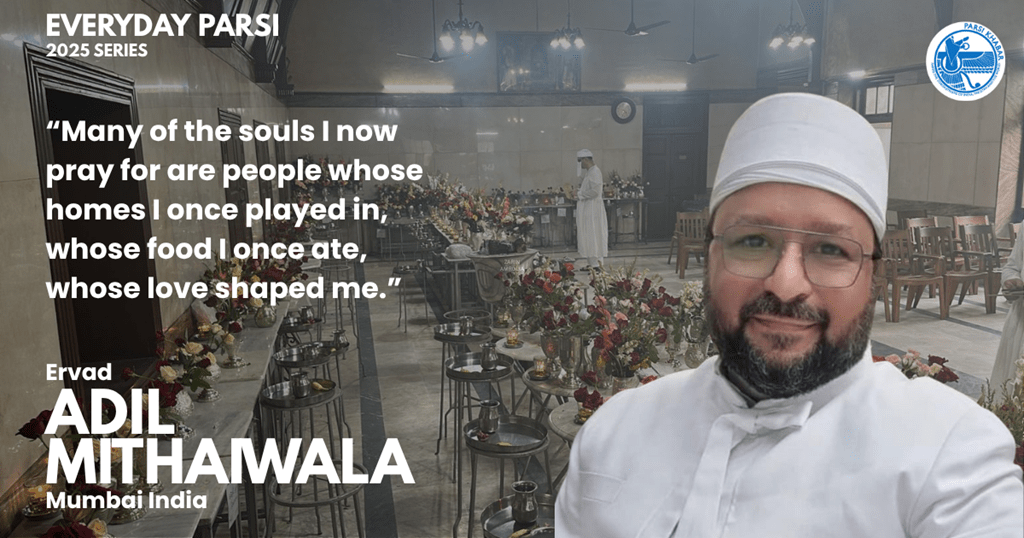
A quiet Agiary at dawn. The air is heavy with sandalwood. The sound of the Boi echoes, soft and profound. I was just a boy of 11 when I first heard it — not as a devotee, but as a Navar-in-training. That bell became my heartbeat.
Becoming a Navar at the tender age of 11, I was one of the early batches of Mobeds to begin using English-transliterated prayer books. I remember those 25 days of Navar training vividly — the solitude of sleeping in the Agiary, the echo of the Boi bell in the stillness of Ushain Geh, and the quiet joy of knowing that the Venidad was scheduled that night, giving me a strange sense of calm and sleep.
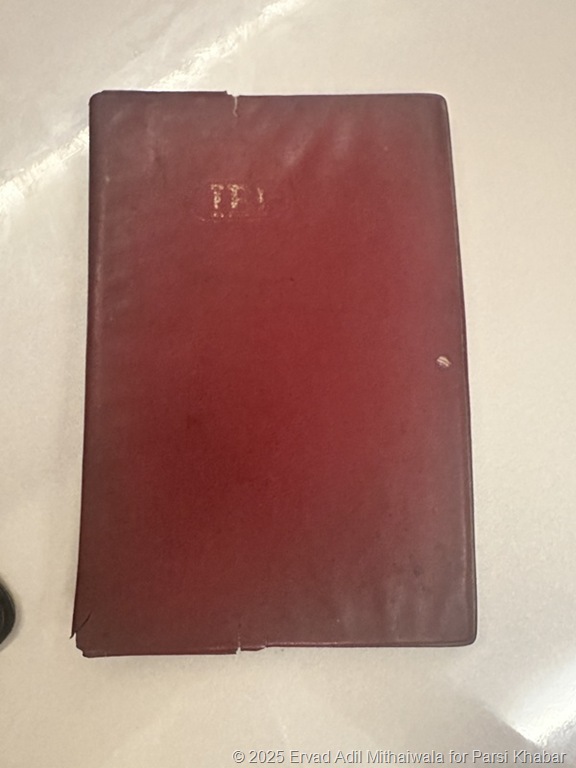
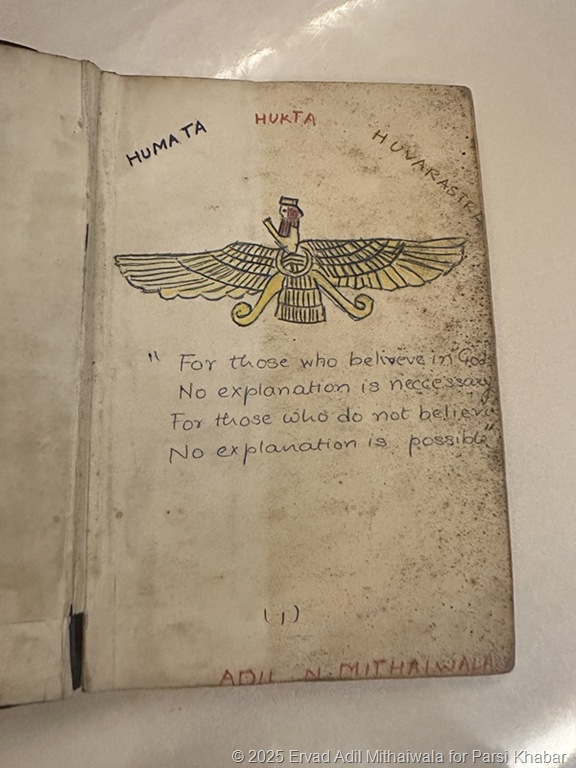
Then came the day I was tied the pagdi — a moment that sealed a lifelong bond with my faith. Soon after my Navar, I was taken by Ervad Hoshang Randeria to Komra Agiary in Pune. At the time, English-printed Afargan or Farokshi books didn’t exist. It was my grandfather — my guru — who lovingly handwrote the entire set of prayers for me in a red-covered book. That red book became my foundation and tool to connect with the Divine.
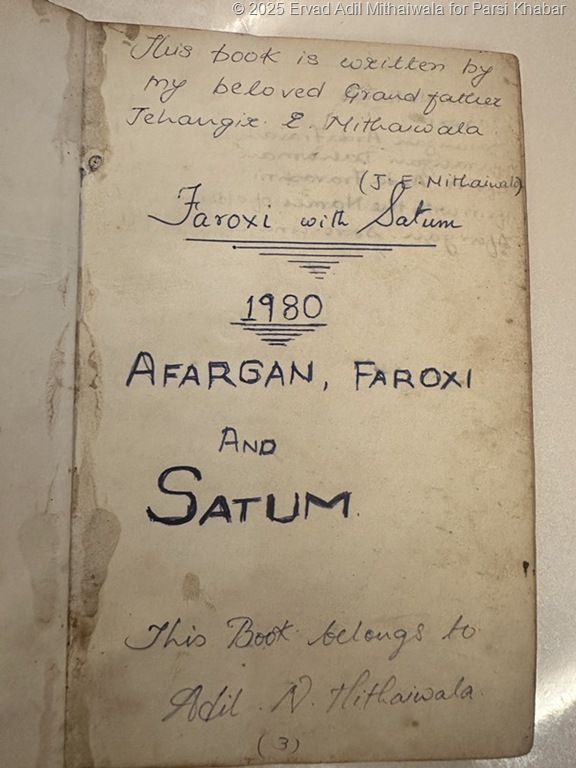
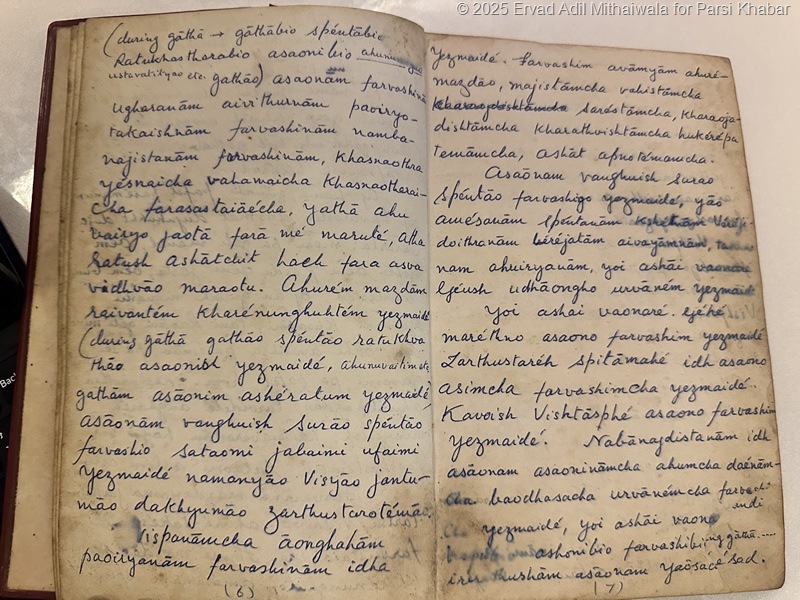
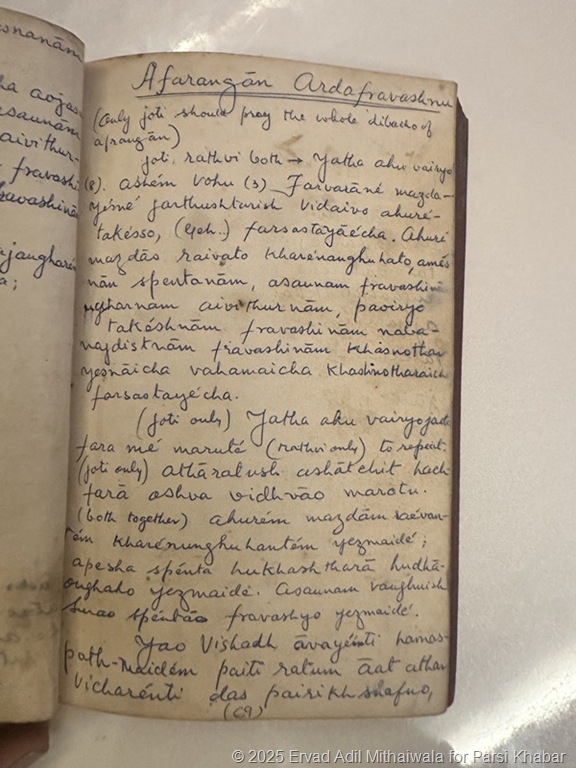
Learning the Rituals — Farokshi and Humility
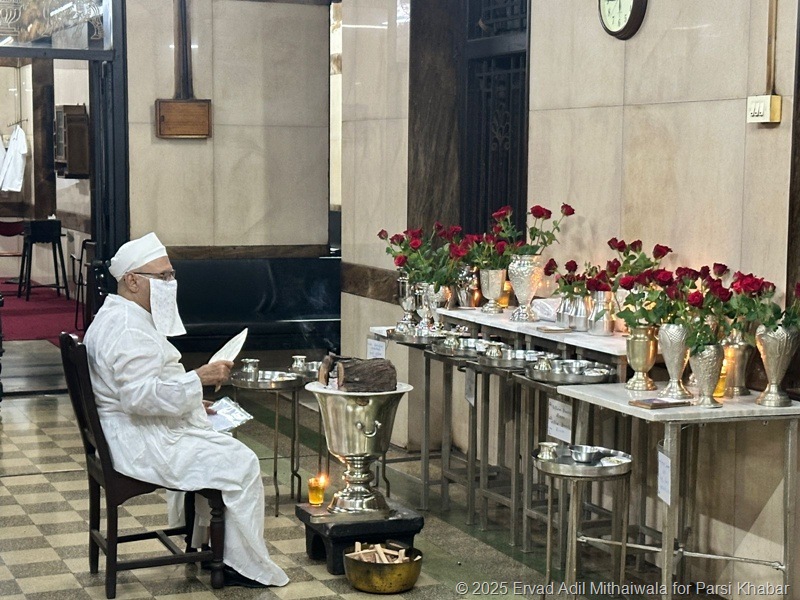
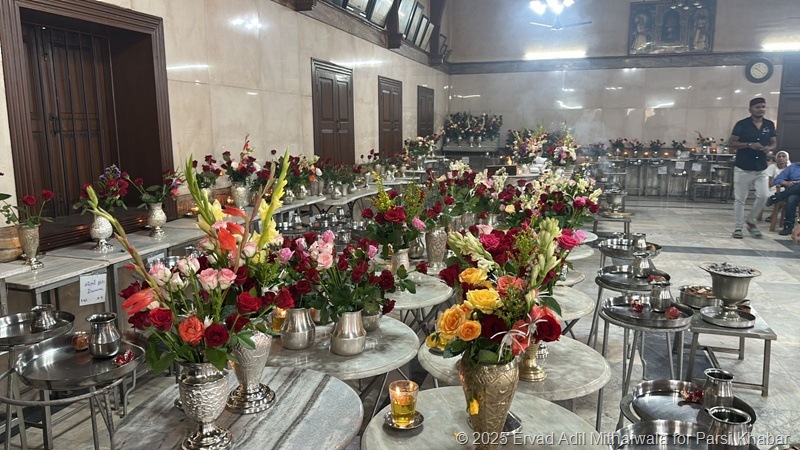
When Muktad arrived that year, I was told to pray only Farokshi, as I hadn’t attended Dadar Athornan for formal Mobed training. I didn’t even know how to place flowers in the khumcha. But I remember how I felt — sitting on that white sheet, facing vases filled with roses and tuberoses, the silver vessels glimmering in the dim light. I prayed loud. Too loud. I didn’t yet know the rhythm, or the humility in tone that Farokshi demands. But my heart was full. That was enough for the souls listening.
For years, I sat in the background — observing, absorbing. Little was given; much was learned.
But the experience — the fragrance of flowers, the atmosphere, the energy — gave me adrenaline and a burning desire to learn.
For the next 3–4 years, I performed limited duties, repeating the same roles, learning slowly. Then came a turning point.
Until one day, I shifted to Sir JJ Agiary, Pune — and into the hands of Er. Eruchshaw Dastur. Discipline met grace.
At the age of 17, I moved to Sir JJ Agiary, Pune, where I was mentored by Er. Eruchshaw Dastur, Panthaky Saheb of Udvada. Immaculate, organized, and spiritually magnetic — he surrounded the Agiary with highly trained Mobeds. It was here that I learned the Afargan, and how to truly pray with rhythm, voice, and throw.
Listening to Darayus Dastur was an experience in itself — his vocal energy unmatched. I absorbed everything I could.
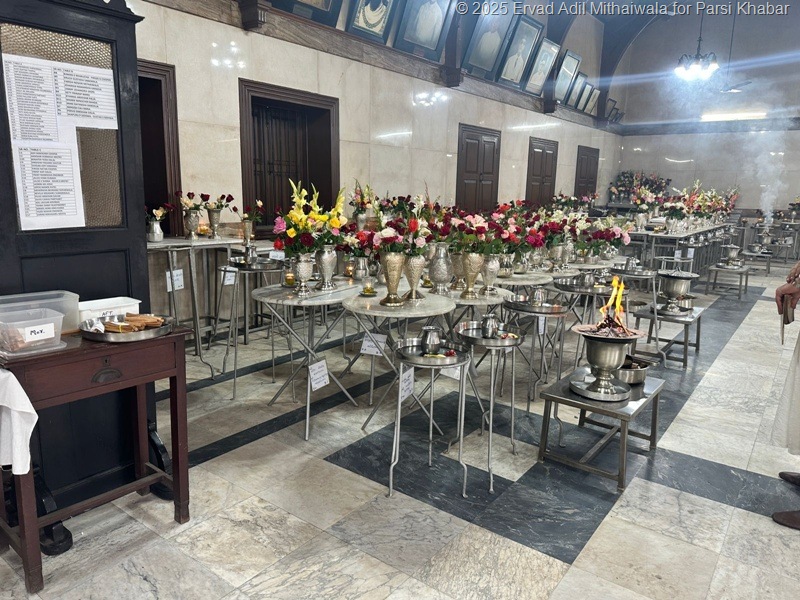
Evenings during Muktad at Sir JJ were sacred. The setting up of tables, replacing flowers, checking satums — it wasn’t work, it was worship. We weren’t just performing rituals; we were preparing for guests — our ancestors. That feeling… no religion can replicate it. You don’t light a diva for the dead. You welcome them home. These were formative years, not just in rituals, but in human connection.
In 1986, I moved to Mumbai and came in contact with Ervad Kaikobad Randeria of Batliwala Agiary, where I stepped into the broader Parsi prayer circle — Parab prayers, Uthamnas, Jashans, days with more work — the learning never stopped.
Years later, life took me to Dubai. Another chapter. Another teacher — Er. Darayus Dastoor.
Later, in Dubai, I spent 12 spiritually rich years alongside Er. Darayus Dastoor, whose style, posture, and presence were profoundly impactful. This time, I was on the other side of the carpet — attending prayers, supporting my sons as they too became Mobeds and prayed alongside legends like him. Twelve years in Dubai — and not a single prayer was turned down. The souls kept visiting, and we kept receiving them.
Returning Home — A Full Circle
In 2016, my mother became unwell and doctors had given up. I was living close to the Agiary and felt a divine pull — a calling to offer myself in service. I believed that through my daily prayers and presence in the Agiary, I could bring some spiritual healing and peace to her.
It was during this time that the Panthaky of Batliwala Agiary, Ervad Viraf Pavri, asked if I could come daily, especially since one of the senior Mobeds had suffered a leg injury. I took it as a sign — a moment of gratitude to Pak Ahura Mazda for guiding me through the most difficult two years of my life in Dubai.
He was also planning to travel to the US for a Navjote and would be away for over a month. He suggested I could take over the morning Boi, but since I was not a Martab, I could not enter the Kebla.
I took this as a sign from above — a moment of realisation that if I became a Martab, I could not only help the Agiary, but also give Boi and offer Baaj prayers for my mother. That’s when I decided to formally become a Martab.
Under the guidance of Ervad Hoshedar Panthaky, I began my journey of learning — not just rituals and words, but deeper understanding and spiritual enlightenment. One of the greatest lessons I learned was that when you are truly happy, instead of partying, pause and pray. Be thankful. That lesson has brought me closer to the sacred work of a Mobed, and even closer to my mother, now in the spiritual realm.
Learning never stopped. I learned and performed many prayers and kriyas — Boi, Baaj, Navjote, Uthamna, Ashirwad, and more — taught by greats and guided by Ervads like Viraf Pavri, Hoshedar Panthaky, Khushrow Kanga, and Sherezad Pavri. Each year deepened my roots.
The Deeper Realisation — A Soul’s Purpose
Over the years, I’ve had a powerful realisation: God brings certain people into our lives for a reason — and sometimes, that reason only becomes clear much later.
As I stand in the Kebla, offering Boi prayers or reciting the Muktad liturgies, I am overwhelmed by a quiet but deep emotion. Many of the souls I now pray for are people in whose homes I once played as a child, eaten meals lovingly prepared by them, or been cared for with affection. It’s as though life has brought me full circle — and in that circle lies a divine plan.
It feels as if I have been chosen by them, guided by their Fravashis, to be the one to voice their remembrance. As if I was gifted by Pak Ahura Mazda the art of praying — not just with clarity, but with devotion so sincere that their families feel comforted, their grief softened, and their hearts given peace.
There is no greater fulfilment than seeing the glimmer of solace in the eyes of a grieving family, knowing that your prayer touched something eternal.
I have now been praying every single day for nearly a decade. And Muktad — it’s not an annual ritual. It’s an annual reunion. A spiritual Navjote of our bond with those who came before us.
Muktad — My Personal Festival of Faith
Today, Muktad to me is:
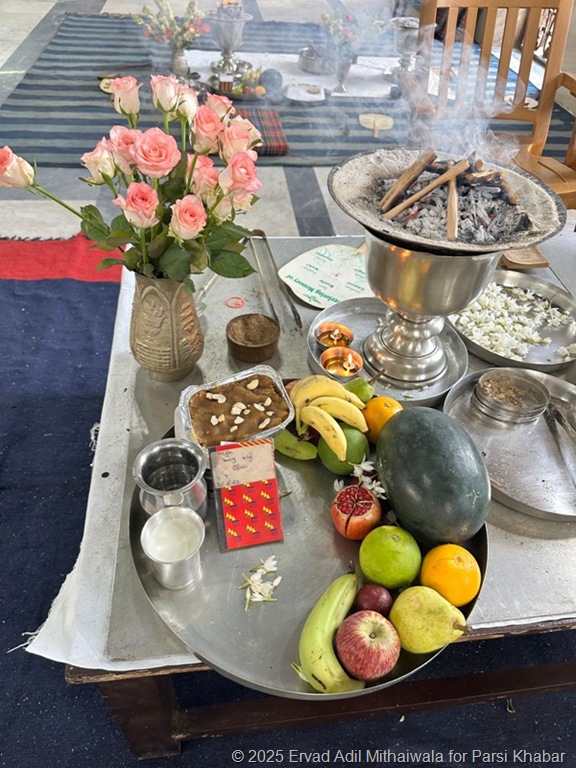
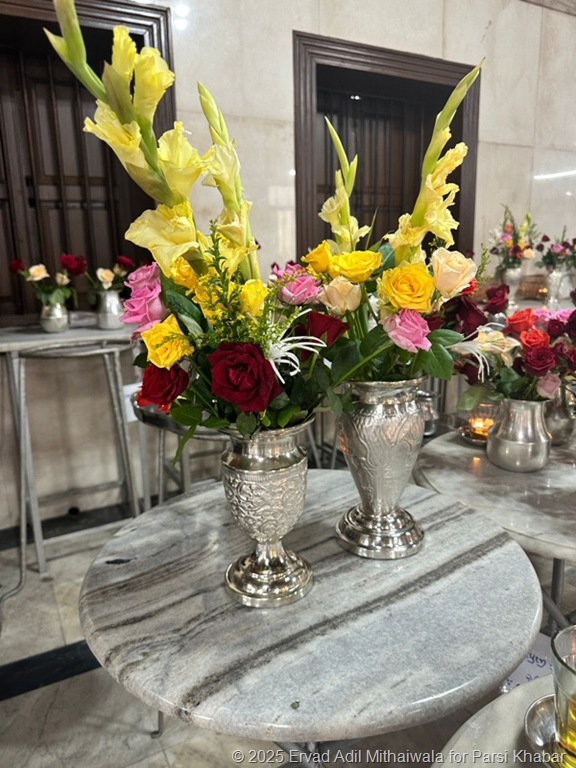
- The energy of vases and flowers.
- The love in the satums families bring — food cooked with memories.
- The quiet tears and radiant smiles of those feeling their loved ones close.
- The group of Mobeds — standing, sitting in their white jamas, and the sound of our prayers — the mathravani — floating in the air. That sight, that feel, that experience is beyond words. It cannot be explained — it must be felt. It must be lived.
- And finally, on Pateti day, comes the valavo, when about 100 people gather in the evening, pray the Patet Pashemani for ourselves, and say a final goodbye to our Fravashis. I bet every single person has tears in their eyes and softness in their heart. However, the New Day and New Year bring their own freshness.
- The fragrance of har, the white clothes, the sense of renewal before Navroze.
I’ve now prayed 365 days a year for over a decade, often for people whose lives once touched mine in small or big ways.
To those who ask me, “Ketla varas sudhi bhanavanu?” I ask — do you stop remembering your parents because a calendar said so?
“You’re not paying for words. You’re upholding a relationship.”
“Faith is an offering — not a transaction.”
“If you don’t hear the name recited by a Mobed, the ruvān still hears your niyat.”
“Prayers are letters of love — never undelivered.”
To forget one’s ancestors is to cut off the roots of one’s own tree.
And in every Boi, every Afargan, every whispered Farokshi — I feel those roots grounding me deeper in my din, in my duty, and in my identity as a Zarthoshti Mobed.
Muktad is not for the dead. It’s for the living. It’s a time when the air thickens with blessings, when the house smells of loban and roses, when vases shine like silver suns and satums sit lovingly prepared by hands that once fed their loved ones.
I have seen tears in people’s eyes when they see their loved one’s name written again. I have heard the silence of peace after a properly recited Afargan. I have witnessed Mobeds who carry their duty not as a job, but as their Asha.
There is greatness in our prayers. There is beauty in our rituals. And there is healing in our remembrance. From those who wrote books for us by hand, to those who tied our pagdis, to those who still bring us home-cooked satums — the soul of our community lives in these rituals.
We are not worshipping the dead. We are honouring the light they left behind. We are inviting them, once a year, to join us, to sit beside us, to feel our love. And we must never let that light go out.
This is my Muktad. My inheritance. My offering.
“To forget one’s ancestors is to cut off the roots of one’s own tree.”
Let us remember. Let us pray. Let us honour.
I often recall the words of an elder Mobed I once served alongside:
Muktad maa sukh nathi — shanti chhe.
(“There may not be joy in Muktad, but there is peace.”)
And that peace is profound.
To every Zarthoshti family today, I say this: Muktad is your opportunity to keep your connection alive with those who gave you life, values, and culture. You may not hear their voices — but they hear your prayers. They feel your remembrance.
Even if you cannot attend the Agiary, you can:
- Light a diva at home with love and intention.
- Say a small Ashem Vohu or Yatha Ahu prayer in their memory.
- Cook their favourite dish and think of them while you do.
- Sponsor a prayer through a Mobed you trust.
It is not the size of the ritual, but the sincerity of your remembrance that matters.
Muktad is a gift. A time to pause, reflect, and feel that sacred thread between generations.
In remembering them, we honour ourselves.
May the Fravashis bless us always.
— Ervad Adil Mithaiwala
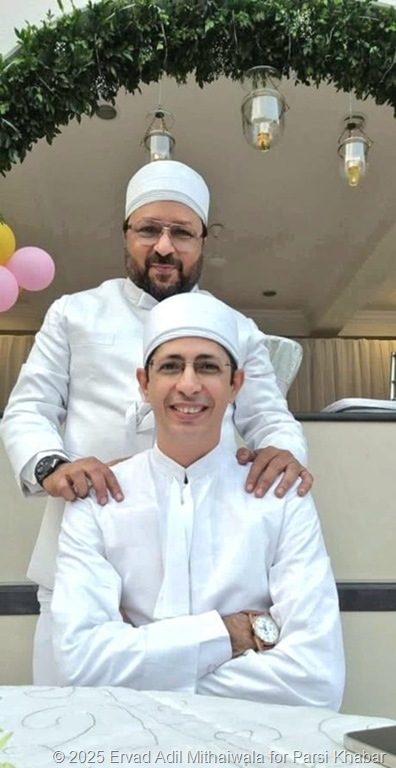
Ervad Adil MIthaiwala standing behind Ervad Viraf Pavri, the Panthaki Saheb of the Batliwalla Agiary in Tardeo, Mumbai, India