Archive for the ‘Iran’ Category

25
Jul

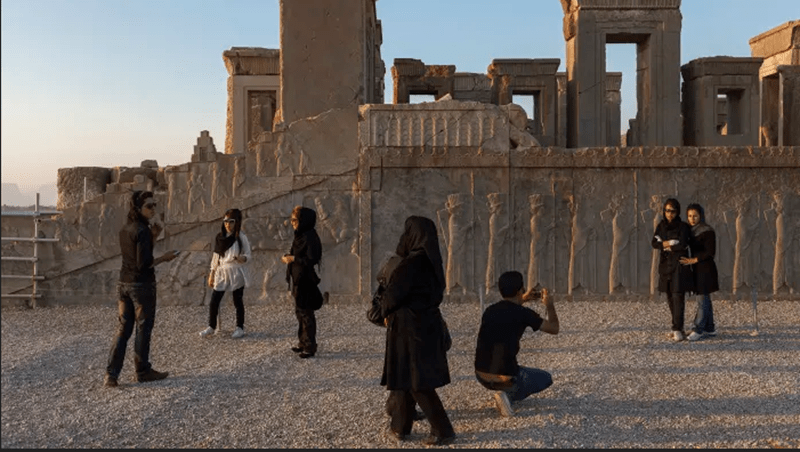
Persia: Ancient Soul of Iran

   Posted by: arzan sam wadia   in Heritage, History, Iran

The August 2008 issue of the National Geographic has “Persia: Ancient Soul of Iran” as its cover story.

I just finished reading the printed issue. The photographs as usual are fantastic. The stories are very interesting in a very non-political way and brings out the remnant traces of the glory that was Persia.

If you cannot get your hands on the latest issue, check out the online link at National Geographic.

Bookmark this entry: These icons link to social bookmarking sites where readers can share and discover new web pages.
  • del.icio.us
  • digg
  • Reddit
  • Furl
  • Facebook
15
May

Shahnameh: The Great Poem That Came Out of Persia

   Posted by: Mehernaaz Sam Wadia   in Books, History, Iran

By ROYA HAKAKIAN

My earliest memories of the Shahnameh, the greatest work ever written in the Persian language, belong to my childhood in Iran. I and other girls in my elementary school recited verses of the epic poem, rounding out our chests and puffing our cheeks in our best effort to strike the pose of peacocks brimming with pride. Too young to grasp the book’s literary merits, we nonetheless understood it to be the deed to our nation’s glory.

If it were possible, Iranians would raise the Shahnameh on flagpoles and swear allegiance to it. No other book captures so much of Iran’s history while revealing the innermost workings of the Iranian sensibility and preoccupations. The Shahnameh has attained its revered status not only because of the truths it speaks but also because it embodies something that goes unspoken: the struggle of Iranians to maintain their identity.

Read the rest of this entry »

Bookmark this entry: These icons link to social bookmarking sites where readers can share and discover new web pages.
  • del.icio.us
  • digg
  • Reddit
  • Furl
  • Facebook
5
May

A Passion for Persia, Disneyland and Dolphins

   Posted by: arzan sam wadia   in Culture, Current Affairs, Iran

KISH, Iran — The indoor dolphin show was in full swing as Hossein Sabet walked in to a burst of applause from the 1,200 people in attendance. Clad in tight beige equestrian pants and tall black boots, he waved at the crowd and went straight to his office behind the pool.

Tourists at the hotel, which incorporates replicas of ancient landmarks that symbolize Persia at the zenith of its power.

Kish is accessible to foreigners who do not have a visa.

Mr. Sabet, 58, an Iranian who spends most of his time in Germany, is no performer, however. He is a businessman and something of a local legend, having invested more than $300 million here in hotels and attractions like the dolphin show, the only one in the Middle East.

Read the rest of this entry »

Bookmark this entry: These icons link to social bookmarking sites where readers can share and discover new web pages.
  • del.icio.us
  • digg
  • Reddit
  • Furl
  • Facebook

You have to feel sorry for vultures. For animal campaigners they are a difficult case. Other, more photogenic, slightly less sinister creatures may gain the world’s sympathy at the drop of a hat, but raising money to save the world’s most proficient scavenger is a different matter.


As far as the Asian vulture is concerned, however, the situation is now urgent. Asian vultures may be ugly, but soon, if current trends continue, their unprepossessing appearance will be consigned to history.

Read the rest of this entry »

Bookmark this entry: These icons link to social bookmarking sites where readers can share and discover new web pages.
  • del.icio.us
  • digg
  • Reddit
  • Furl
  • Facebook
28
Apr

2200-year-old gemstones found in Iran

   Posted by: Shirin Kumaana-Wadia   in History, Iran

Ancient priceless gemstones and jewels belonging to postdated Achaemenid era have been unearthed in Iran’s southern province of Fars.

Archeologists succeeded in discovering over 20 pieces of 2,200-year-old bracelets, necklaces and earrings adorned with agate, ruby and opal in ancient graves behind Salman-e Farsi Dam in Iran’s southern city of Yarj.

“The discovery of such gemstones is a unique achievement. Agates in various colors, ivory, opal and rock crystal (Quartz) in many colors were used to embellish the bracelets, necklaces and earrings,” said Alireza Ja’fari Zand, head of the archeological team at the dam.
Read the rest of this entry »

Bookmark this entry: These icons link to social bookmarking sites where readers can share and discover new web pages.
  • del.icio.us
  • digg
  • Reddit
  • Furl
  • Facebook
24
Apr

Possible Existence of a Sasanian Fire Temple in Sarab-e Mort

   Posted by: Mehernaaz Sam Wadia   in Iran

Archaeologists working at Sarab-Mort site in Kermanshah Province announced the news of the possible discovery of a Sasanian Fire Temple adjacent to the Parthian Manor house, reported Persian service of ISNA on Monday 21, 2008.

“During this year’s [archaeological salvage] excavation, we have unearthed the religious section of the structure; it consists of a Chahar-Taqi (free-standing Zoroastrian Fire Temple), which in fact was a private chapel,” said Yousef Moradi, director of archaeological salvage operation team at Sarab-e Mort.

The Parthian manor house consists of various sections including official, administrative, ceremonial and religious.

Moradi stated: “we started our excavation in the Parthian manor house last year. Last season we discovered the official, administrative and ceremonial quarters, and this year the religious section. However, the residential quarter has totally been destroyed and there is no hope of finding the private chamber belonging to the lord of the manor.”

Read the rest of this entry »

Bookmark this entry: These icons link to social bookmarking sites where readers can share and discover new web pages.
  • del.icio.us
  • digg
  • Reddit
  • Furl
  • Facebook
21
Apr

Ancient game boards and compass discovered in southern Iran

   Posted by: arzan sam wadia   in Heritage, Iran

Archaeological studies on some engravings on rocks on Khark Island have identified them as a compass and ancient game boards.

The engravings are between 2000 and 3000 years old, archaeologist Reza Moradi Ghiasabadi, who conducted the recently concluded studies, told the Persian service of CHN on Saturday.

The compass has been etched in rectangular form with rounded angles on a flat rock located on the ground beside an ancient route, Moradi Ghiasabadi explained. A curve has been engraved on the upper half and four lines forming a cross stretch to the four sides of the rectangular shape, he noted.

The lines have been placed in a position to determine the cardinal points and have only two degrees of error based on the Global Positioning System (GPS), he added.

The compass has been damaged in some parts because it appears to have been severed from a larger rock in a collapse.

Read the rest of this entry »

Bookmark this entry: These icons link to social bookmarking sites where readers can share and discover new web pages.
  • del.icio.us
  • digg
  • Reddit
  • Furl
  • Facebook
17
Apr

US Takes 3D Shots of Iran Inscriptions

   Posted by: Mehernaaz Sam Wadia   in Iran

TEHRAN: The Oriental Institute of the University of Chicago has started taking three-dimensional pictures of Iran’s Achaemenid inscriptions.

The pictures will enable people to read the various inscriptions should they be damaged in the future, press tv quoted Abdolmajid Arfaei, a prominent Iranian linguist and inscriptions expert, as saying.

There are thousands of inscriptions 5000 of which will be photographed as they have already been read, leaving over 10,000 to be photographed at a later time, Arfaei added.

The Oriental Institute of the University of Chicago preserves thousands of inscriptions belonging to Iran’s Persepolis. They contain valuable information about life during the Achaemenid dynasty.

Original article here.

Bookmark this entry: These icons link to social bookmarking sites where readers can share and discover new web pages.
  • del.icio.us
  • digg
  • Reddit
  • Furl
  • Facebook
17
Apr

Iran to depict Shahnameh in miniatures

   Posted by: Shirin Kumaana-Wadia   in Iran

Renowned Iranian miniaturists are to portray parts of the stories told by the prominent poet Ferdowsi in his magnum opus, Shahnameh.

Some 25 artists will take part in the project including prominent painters Mahmoud Farshchian and Majid Mehregan.

The miniaturists will undertake the project on the sidelines of the International Conference of Painting Shahnameh, which will be held from May 14 to 17, 2008 at Iran’s Academy of Arts.

Shahnameh or ‘The Book of Kings’, recounts Iran’s mythical history from the creation of the world until Islam was established in the country.

Original article here.

Bookmark this entry: These icons link to social bookmarking sites where readers can share and discover new web pages.
  • del.icio.us
  • digg
  • Reddit
  • Furl
  • Facebook
10
Apr

The Tomb of Cyrus in Danger of Fungus and Lichen

   Posted by: arzan sam wadia   in Heritage, History, Iran

What experts have warned and feared for the past few years about the humidity level at the world heritage site of Pasargadae after the inundation of Sivand dam, has now become a bitter reality as the humidity has risen to a dangerous level, and lichen funguses are growing over the body of the Cyrus the Great’s Mausoleum.

Humidity which was previously unknown to the area is now easily felt. Members of the public and a number of associate members of various Friends of Cultural Heritage Societies who have visited Pasargadae and the Mausoleum during the Norouz holiday, said that the high humidity is apparent, and damp can be smelt for miles.

Fars Province’s Meteorological Centre have also confirmed that the area has been suffering from a drought for the past six months and during this period it has rained only three times, totalling 75millimeters, therefore this amounts to nearly nothing to have an impact on the Pasargadae’s current atmospheric condition.

Back in 2007 an agreement was made between Iran’s Cultural Heritage and Tourism Organisation (ICHTO) and the Ministry of Energy, if the humidity levels become apparent and thus places the heritage site in danger, the dam inundation should be stopped immediately, and necessary measures to be taken to safeguard the ancient site. As the result a small-hygrometer was installed was installed at Pasargadae by the Ministry of Energy to monitor the humidity level. Since then however no access was granted to the experts to read the data, or any information made available to the public regarding the current and exact extent of humidity in the area.

In addition the Islamic regime as well as the Ministry of Energy officials have refused to be interviewed, or willing to issue any statements in this regard. ICHTO which is controlled by the government in Tehran has also refused to give an explanation and its administration has forbidden their staff to accept any interviews or to give any comments regarding this issue.

Sivand Dam became operational in April 06, 2007 by the order of the Islamic regime’s president Mahmood Ahmadinejad, in the presence of a number of high ranking clerics and members of the Islamic republic officials.

To this date the artificial lake at Bolaghi Valley has submerged an Achaemenid village, a large section of the Achaemenid Pardis (Garden), hunting ground, 7,000-years-old industrial settlement, as well as a large number of small pre-historic sites. According to the visitors a large number of trees at Bolaghi Valley, some hundreds and few even thought to have been well-over a thousand year old have also been uprooted and burnt for no reason.

Continue reading the article at the CIAS Site.

Bookmark this entry: These icons link to social bookmarking sites where readers can share and discover new web pages.
  • del.icio.us
  • digg
  • Reddit
  • Furl
  • Facebook
3
Apr

Persian Day Parade In NYC

   Posted by: arzan sam wadia   in Iran, New York

The Persian Day Parade was held in NYC to celebrate Navroze. The parade was organised by the Iranian-American association.

Continue here for more pictures and a detailed report.

Bookmark this entry: These icons link to social bookmarking sites where readers can share and discover new web pages.
  • del.icio.us
  • digg
  • Reddit
  • Furl
  • Facebook
31
Jan

Sadeh Celebrations in Iran

   Posted by: Mehernaaz Sam Wadia   in Culture, Customs, Iran

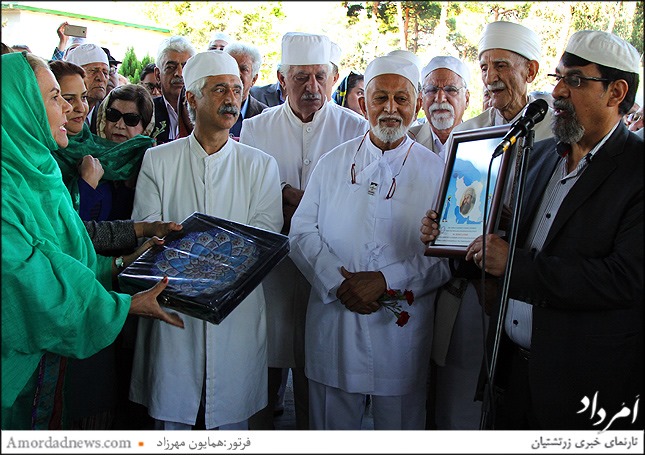
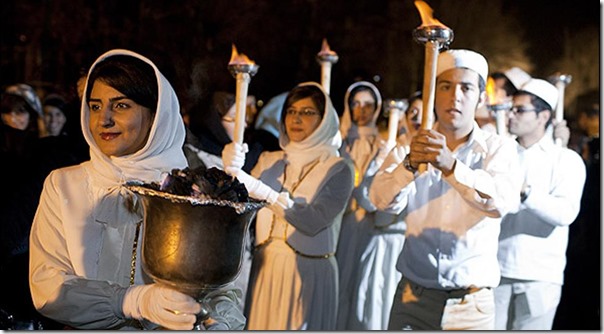
Iran’s Zoroastrian minorities gathered at their temples across Iran on Wednesday to mark Sadeh _ an ancient feast celebrating the creation of fire that has been observed since the days when their religion was the overwhelming belief in the powerful Persian empire.

In Cham, a small mountainous village outside Yazd in central Iran, hundreds of Zoroastrians came for the celebration.

They listened to three priests, all dressed in white to symbolize purity, recite verses from Avesta, the holy Zoroastrian book. The congregation then walked down from the village temple, led by two brightly dressed girls holding torches, to set ablaze a pile of wood.

«Fire is considered sacred in Zoroastrian beliefs, but it is not only a festival,» said priest Kamran Lorian. «What is more important, Sadeh is an opportunity bringing people together in order to love each other and promote understanding, love and affection.

Read the rest of this entry »

Bookmark this entry: These icons link to social bookmarking sites where readers can share and discover new web pages.
  • del.icio.us
  • digg
  • Reddit
  • Furl
  • Facebook
17
Jan

Godrej hosts Salman Rushdie, angers Muslims

   Posted by: arzan sam wadia   in Industry, Iran, Issues

An Islamic group in India is asking Muslims to boycott products of a top Indian business group if its owner does not apologise for hosting author Salman Rushdie on a brief holiday this week.

Rushdie stayed at the bungalow of the Godrej family while visiting Mumbai, where he was born and spent many of his early years. The author is a personal friend of the Godrejs, who are one of the big business families in India.

The fact that Rushdie was invited by the Godrejs has angered the All-India Ulema Council - a national grouping of Muslim organisations - which says the family had not cared for the sentiments of Muslims whom Rushdie had offended with his writings.

“We really hope Mr Godrej realises the hurt he has caused us and says sorry for it,” Maulana Mehmood Daryabadi, a council official, said. “Otherwise, we are asking Muslims all over to boycott his company’s products.”

The Godrejs were not available for comment.

The late Ayatollah Ruhollah Khomeini, Iran’s supreme religious leader, pronounced a fatwa on the author of Satanic Verses among others, in 1989 that called on Muslims to kill Rushdie because of perceived blasphemy in that novel. Rushdie was forced to live in hiding for nine years. In June, he was selected for a knighthood by Britain’s Queen Elizabeth, again angering some Muslims in Iran and Pakistan.

Recently, the presence of another controversial writer, exiled Bangladeshi Taslima Nasreen, has sparked riots by Muslims offended by her books. Threats against her have forced authorities to house her in a secret security facility in New Delhi since November, and she has appealed for more freedom.

Bookmark this entry: These icons link to social bookmarking sites where readers can share and discover new web pages.
  • del.icio.us
  • digg
  • Reddit
  • Furl
  • Facebook
14
Jan

Iran Plans on Destroying Tomb of King Cyrus, Friend of the Jews

   Posted by: Mehernaaz Sam Wadia   in Heritage, History, Iran, Issues

Iran is planning on submerging the tomb of King Cyrus (Coresh), the Persian King known for authorizing the Jewish exiles to return to Jerusalem to rebuild the Holy Temple.

According to a report by Omedia, an Iranian organization is demanding that the International Criminal Court take action against those responsible.

The Iranian ayatollahs are planning on destroying the tomb as part of a general campaign to sever the Persian people from their non-Islamic heritage; Cyrus was thought to be a Zoroastrian and was one of the first rulers to enforce a policy of religious tolerance on his huge kingdom. Journalist Ran Porat quoted a young Iranian who said that the measures being taken by the Islamic Republic’s regime include the destruction of archaeological sites significant to this heritage.

“The government is in the final stages of constructing a dam in southern Iran that will submerge the archaeological sites of Pasargad and Persopolis – the ancient capital of the Persian Empire,” the report states. “The site, which is considered exceptional in terms of its archaeological wealth and historical importance, houses the tomb of the Persian King Cyrus.”

Cyrus, who lived from 576-530 BCE, liberated Babylonian Jewry from their exile in the famous Declaration of Cyrus (mentioned in the book of Ezra in both Hebrew and Aramaic).

Read the rest of this entry »

Bookmark this entry: These icons link to social bookmarking sites where readers can share and discover new web pages.
  • del.icio.us
  • digg
  • Reddit
  • Furl
  • Facebook
21
Dec

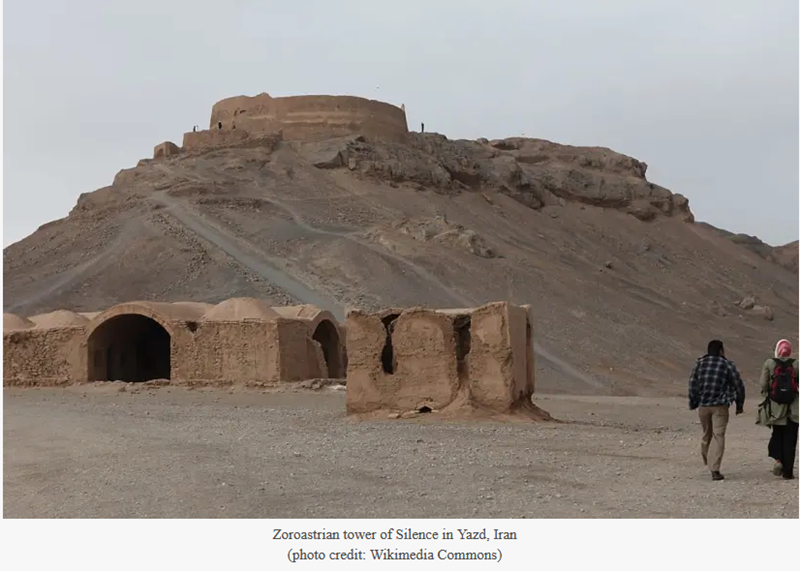
Tower of Silence, Zoroastrian charnel house

   Posted by: arzan sam wadia   in Customs, Iran

A Tower of Silence is the place where Zoroastrians laid their dead to rest in the life-giving power of the sun.

Zarathustra is the ancient Persian prophet who founded Zoroastrianism 3500 years ago. The ancient creed which was the dominant religion during the Sassanid era greatly influenced other religions and is still practiced worldwide, especially in Iran and India.

The followers of Zarathustra consider death a temporary triumph of evil over good. They believe a dead body is impure and the evil spirit will therefore enter anything exposed to the corpse.

All creation and natural elements are deemed sacred in Zoroastrianism and followers are prohibited from defiling the sky, earth, water, plants, animals, man, and fire.

Ancient Zoroastrians used to carry their dead to the top of hills or low mountains away from populated centers and sacred natural elements.

Zoroastrians expose their corpses to the sun as they believe it has the ability to destroy pollutants and disintegrate flesh.

The exposure procedure is called ‘Khurshed nigerishn’ which in Pahlavi means ‘beholding by the sun’.

In ancient times bodies were fastened to the ground so that they could not be dragged toward any life form, vegetation, water body or human settlements and defile them.

In Iran, Zoroastrians placed their dead on the top of a tower, called the Tower of Silence, which had an almost flat roof with a perimeter slightly higher than the center.

The roof was divided into three concentric rings. The bodies of men were arranged around the outer ring, women inside the second circle, and children in the innermost ring.

When the sun disintegrated the body and the birds stripped the body of its flesh, the remaining bones were collected in stone ossuaries with holes to allow the deceased to look upon the sun. Ossuaries would then be laid within specially erected structures.

At the funeral, the body was placed upon three flat stone blocks surrounded by a rectangular thin line of sand to protect mourners from the corpse demon.

Zoroastrian population has stopped this ancient practice for forty years now. Today, they bury bodies and use a layer of concrete to secure the ground from contamination.

Towers of Silence still stand in many parts of Iran, especially in the provinces of Yazd, Kerman and Tehran.

Some of these towers date back to the Sassanid era and others date back to more than 3000 years.

Bookmark this entry: These icons link to social bookmarking sites where readers can share and discover new web pages.
  • del.icio.us
  • digg
  • Reddit
  • Furl
  • Facebook
7
Dec

Among the Zoroastrians

   Posted by: arzan sam wadia   in Culture, Heritage, Iran

The Washington Post has a great feature titled “Among the Zoroastrians”

Jackie Lyden vividly brings out the culture and lives of the few Zoroastrians still living in the desert plateau of Yazd, around 350 miles southeast of Tehran.There are beautiful photographs by Nancy Andrews.

The article has a lot of interactive multimedia worth checking out. Click here

Bookmark this entry: These icons link to social bookmarking sites where readers can share and discover new web pages.
  • del.icio.us
  • digg
  • Reddit
  • Furl
  • Facebook
29
Sep

Experts to determine fate of Naqsh-e Rustam

   Posted by: arzan sam wadia   in Heritage, History, Iran

Experts to determine fate of Naqsh-e Rustam

TEHRAN, Sept. 23 (MNA) — A week-long study by experts will determine the fate of the Achaemenid site of Naqsh-e Rustam in southern Iran’s Fars Province.

The decision was made during a meeting attended by officials from the Cultural Heritage, Tourism and Handicrafts Organization (CHTHO) and the Ministry of Roads and Transportation (MRT) on September 22.

The MRT’s officials have come to an agreement with the CHTHO to modify a nearby railway route which would threaten the existence of the site if it were to become operational.

The final decision will be announced on September 29, CHTHO deputy director Fariborz Dowlatabadi said on Sunday.

The railway route embankment has been constructed at a distance of about 350 meters from Naqsh-e Rustam, but CHTHO’s archaeologists have requested that the distance be increased to 1000 meters.

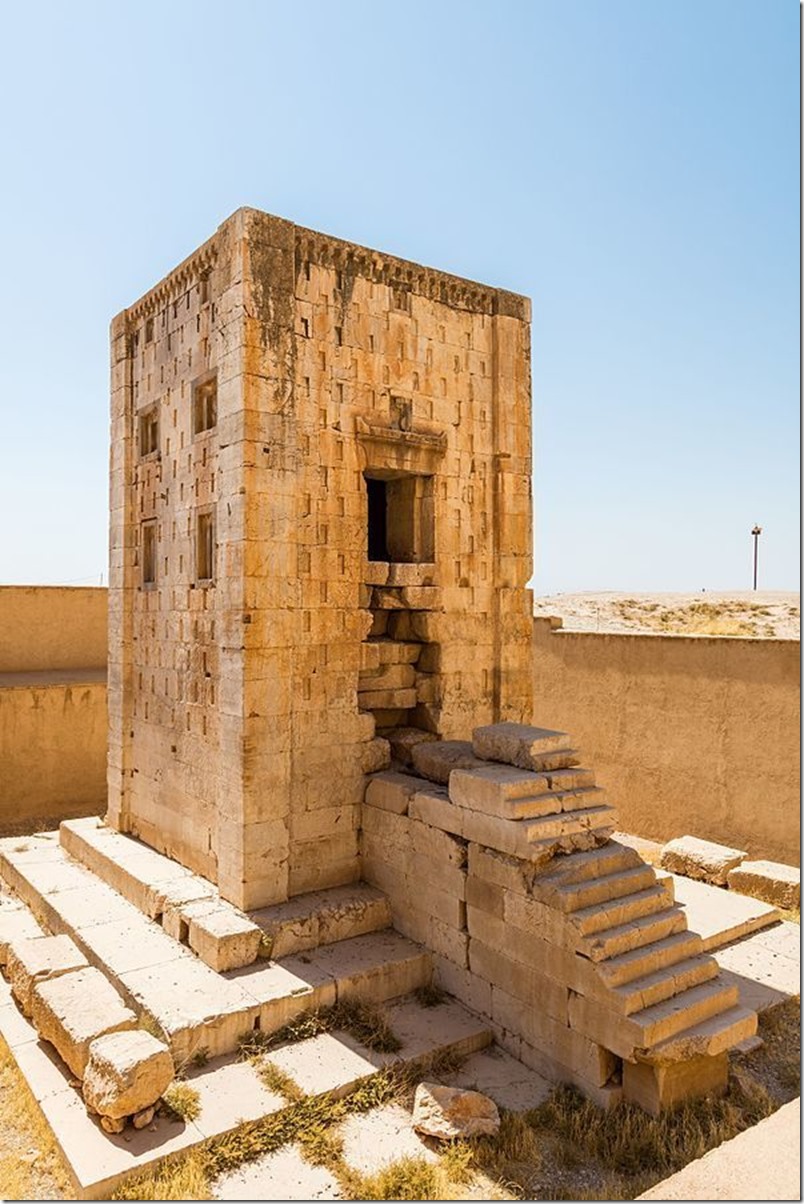
They believe that if the railway route were to become operational at the shorter distance, train vibrations would eventually damage the monument and also cause the destruction of Zoroaster’s Kaba within less than ten years.

Read the rest of this entry »

Bookmark this entry: These icons link to social bookmarking sites where readers can share and discover new web pages.
  • del.icio.us
  • digg
  • Reddit
  • Furl
  • Facebook
8
Sep

Sons And Other Flammable Objects By Porochista Khakpour

   Posted by: arzan sam wadia   in Books, Iran

Sons And Other Flammable ObjectsBy Porochista Khakpour. 398 pages. $24. Grove Press.

By Judy Budnitz

In the opening scenes of Porochista Khakpour’s novel “Sons and Other Flammable Objects,” we meet the Adam family. The Adams fled their homeland, Iran, during the revolution, and now live in Southern California in an apartment complex called Eden Gardens. There, the father, Darius, begins a campaign to protect the local blue jays by belling the complex’s cats, provoking the perplexed irritation of his neighbors and the embarrassment of his son, Xerxes. Years later, when Darius visits his now grown son in his apartment in New York, Xerxes asks his father to explain the incident. Darius instead relates a different story, one from his childhood that has weighed on his conscience ever since, a story that also involves birds but in which he is abuser rather than savior. The story so shocks his son and shames Darius that the two resolve never to speak to each other again. What purports to be their final conversation, appropriately enough, concerns the allowable weight of carry-on baggage.

Read the rest of this entry »

Bookmark this entry: These icons link to social bookmarking sites where readers can share and discover new web pages.
  • del.icio.us
  • digg
  • Reddit
  • Furl
  • Facebook
6
Sep

Kangelu Fortress waterproofed for Anahita rituals

   Posted by: arzan sam wadia   in Heritage, History, Iran

Archaeologists surmise Kangelu Fortress waterproofed for Anahita rituals

A team of Iranian archaeologists working on the Kangelu Fortress in northern Iran’s Mazandaran Province have put forward the idea that the Sassanid fortress was built to be waterproof as a suitable site for holding rituals in honor of Anahita, the Zoroastrian goddess of fertility, water and rivers.

Analysis indicates that an oily material has been added to the mortar to waterproof the structure of the building.

The fortress and the terrace-shaped structures situated at both sides have been built with a mortar of gypsum, lime and stone. However it has been observed that gaps in the fortress and the bottom of the adjoining terraces have also been covered with an oily mortar, team director Saman Surtiji told the Persian service of CHN on Sunday.

“With reservation, it can be said that the monument was a type of reservoir for storing water and may have been a temple dedicated to Anahita, goddess of water,” he noted.

Read the rest of this entry »

Bookmark this entry: These icons link to social bookmarking sites where readers can share and discover new web pages.
  • del.icio.us
  • digg
  • Reddit
  • Furl
  • Facebook
6
Sep

Railway Construction near Naqsh-e Rostam Stopped

   Posted by: arzan sam wadia   in Heritage, History, Iran

Following strong oppositions made by Iran’s Cultural Heritage, Handicrafts, and Tourism Organization (ICHHTO) with construction of railway near Naqsh-e Rostam, security guard of ICHHTO has stopped the construction operations.

Tehran, 22 August 2007 (CHN Foreign Desk) - Activities of Isfahan-Shiraz railway construction in a close distance of Naqsh-e Rostam historic site have been stopped due to oppositions raised by cultural heritage authorities.

According to reports released by Marvdasht’s Cultural Heritage Enthusiasts, the activities of road construction machines which were present in the area for building the infrastructure for railway construction have been stopped by Persepolis cultural heritage guards.

Based on the same report, authorities of Persepolis security guard have declared the activities of Isfahan-Shiraz workers just in 500 meters of Naqshe Rostam historic site illegal and following the disagreement of ICHHTO with the project it has stopped railway construction activities.

Read the rest of this entry »

Bookmark this entry: These icons link to social bookmarking sites where readers can share and discover new web pages.
  • del.icio.us
  • digg
  • Reddit
  • Furl
  • Facebook
22
Aug

Zoroastrian Fires and Temples

   Posted by: arzan sam wadia   in Culture, Heritage, History, Institutions, Iran

Fire, the source of heat and light is not only revered in ancient Indo-Iranian rituals but also in modern day Zoroastrianism and Hinduism.

Zoroastrianism, which dominated the Sassanid Empire, is the religion ascribed to the ancient Persian prophet, Zarathushtra (Zoroaster), who lived 3500 years ago.

Fire (Atar), together with clean water (Aban), are considered agents of ritual purity in the Zoroastrian religion.

Despite the Zoroastrian respect for any form of fire, they do not worship it, rather it is used as a medium to communicate with God, whom they call Ahura Mazda, the Lord of Wisdom, the source of order and precision in the universe.

Standing before a sacred fire, Zoroastrians pay homage to a creation that represents life and the power of Ahura Mazda.

There are three kinds of sacred fires in Zoroastrianism, each standing for one sector of ancient society: Atash Dadgah, Adur Aduran, and Atash Behram.

Atash Dadgah is associated with the householder class and burns in houses and during celebrations such as weddings.

Adur Aduran is connected with the warrior class and burns constantly in fire temples. It is called the ‘Fire of Fires’ because it is made up of embers gathered from different fires belonging to different social classes, to symbolize social unity.

Read the rest of this entry »

Bookmark this entry: These icons link to social bookmarking sites where readers can share and discover new web pages.
  • del.icio.us
  • digg
  • Reddit
  • Furl
  • Facebook

Despite all oppositions made so far by Iran’s Cultural Heritage, Handicrafts, and Tourism Organization (ICHHTO) against construction of Isfahan-Shiraz railway only in 500-meter distance of Naqsh-e Rostam historic site, based on latest reports some measures have been undertaken for marking the railway path according to its original route.

Based on earlier agreements between authorities of Iran’s Ministry of Road and Transportation and ICHHTO, the national project of Isfahan-Shiraz railway was due to change its path and be constructed with the maximum distance from Naqsh-e Rostam to cause the least harm to this historic site. However, its seems by purchasing the farmlands in vicinity of Naqsh-e Rostam and marking the path of the railway, authorities of the project have obviously ignored the previous agreements and are determined to construct the railroad just half kilometer distance of this historic site.

Prior to this, after revising the suggested route by Iran’s Ministry of Road and Transportation, the technical council of ICHHTO decided that the path for construction the railroad must change. Experts of ICHHTO have previously warned that the powerful jolts caused by train would have a harmful effect on the historic monuments in the region including Zoroaster’s Kaba and train vibrations would eventually damage Naqsh-e Rostam monument.

Considering that Pars-e Pasargadae Research Center is determined to prepare the ground for registration of Naqsh-e Rostam in list of UNESCO’s World Heritage site, as annex of Persepolis world heritage site, construction of the railway in such a close distance of this historic site would ruin the chance of world registration of this Achaemenid site forever.

UNESCO asked Iran to give an explanation about construction of the railway near Naqsh-e Rostam in the 31st session of World Heritage Committee.

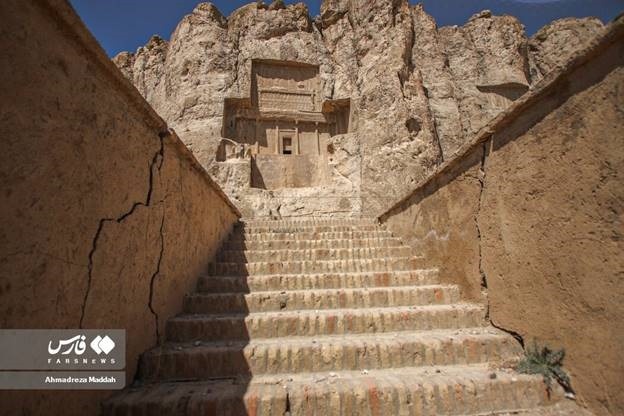
Located in Iranian Fars province, 12 kilometer distance of Persepolis, Naqsh-e Rostam contains four tombs belonging to Achaemenid kings which were carved out of the rock. Kaaba of Zoroaster bears number of inscription belonged to Parthian and Sassanian dynastic eras.

Original article here

Bookmark this entry: These icons link to social bookmarking sites where readers can share and discover new web pages.
  • del.icio.us
  • digg
  • Reddit
  • Furl
  • Facebook
11
Apr

A war is but a loser’s game

   Posted by: arzan sam wadia   in Culture, History, Iran, Issues, Opinion

by Farrukh Dhondy

I can’t remember which teacher it was who ventured to tell us about the Battle of Thermopylae all those years ago. Three hundred Spartans held the pass at the aforesaid place against the invading hordes of the Persian Emperor Xerxes. The 300 of the title faced a million Persians. Our class was told that this was one of the episodes of history in which the valiant — who shall taste of death but once — fought against the cowardly, deceitful, callous weight of Persian numbers and I cheered for the Spartans.

All over the world the populations of countries such as India, outside the ambit of Western power, go to the movies and cheer for the cowboys — until they realise that they are the Indians. The pull of myths that serve the West is stronger than any historical self awareness, unless it is mediated by ideological powers that forbid Western films and control the minds of the young — as I imagine happens in Iran or in Al Qaeda training camps.

Read the rest of this entry »

Bookmark this entry: These icons link to social bookmarking sites where readers can share and discover new web pages.
  • del.icio.us
  • digg
  • Reddit
  • Furl
  • Facebook

Microphones, Planes, and Stereotypes: Those behind the Making of ‘300′

By Touraj Daryaee and Warren Soward, California State University, Fullerton

I have been following reactions to the movie ‘300′ and to my article which appeared on Payvand and in the Orange County Register. Of course each of these venues has their own constituency and so reactions have been somewhat different, to say the least. I am still quite disturbed by the intentions of the film. In fact, it is these scholarly pursuits that make me dig a bit deeper, past the slogans and moralistic hyperbolae. I see now that the reason that I reacted to ‘300′ needs some explanation, in order that our friends understand why this is not just a movie.

Yes, Zack Snyder’s ‘300′ is just a movie, based on a graphic novel, a form of comic book, by Frank Miller. But let’s talk about some of the people involved in making the film. Who is Frank Miller? Oh, he writes comic books. Do you accept the premise that one’s political ideology and worldview affects her or his creative work? If you say no, there is no need for you to read another word of this article and please either get an education or just head to the beach. Otherwise, if you feel that intent might be important, let’s see how Mr. Miller, Mr. Snyder, and their consultants see the world and the “others,” i.e., the people of the Middle East.

Read the rest of this entry »

Bookmark this entry: These icons link to social bookmarking sites where readers can share and discover new web pages.
  • del.icio.us
  • digg
  • Reddit
  • Furl
  • Facebook
11
Apr

Bistoun Complex: Tourist Destination

   Posted by: arzan sam wadia   in Culture, History, Iran

Bistoun mountain with its world famous myths is annually visited by a great number of tourists from around the world at the beginning of spring.

According to cultural heritage experts, the tablet of Darius is one of the most important and beautiful ancient objects of the world-famous Bistoun Complex.

The historical Bistoun Complex, which is located 30 kilometers to the northeast of Kermanshah, is Iran’s eighth international monument.

At the order of Darius from Achaemenid dynasty in 522 BC, his own image along with a number of other figures were engraved on Bistoun mountain.

Meanwhile, some of his orders, advices and conquests have been engraved on stone in cuneiform script as well as in three languages, including ancient Parsi, Ilami and Babylonian.

The stone tablet, which is six meters long and 3.2 meters wide, includes 414 lines. The 1.78-meter figure of Darius with crowned head and a long shirt is seen to the left of the tablet, while raising up his right hand and holding an arrow in his left hand.

Original article here

Bookmark this entry: These icons link to social bookmarking sites where readers can share and discover new web pages.
  • del.icio.us
  • digg
  • Reddit
  • Furl
  • Facebook
5
Apr

Discovering the Zoroastrian Temple of Yazd

   Posted by: arzan sam wadia   in Heritage, Iran

The historic city of Yazd in central Iran is home to a Zoroastrian temple built nearly 1,500 ago.

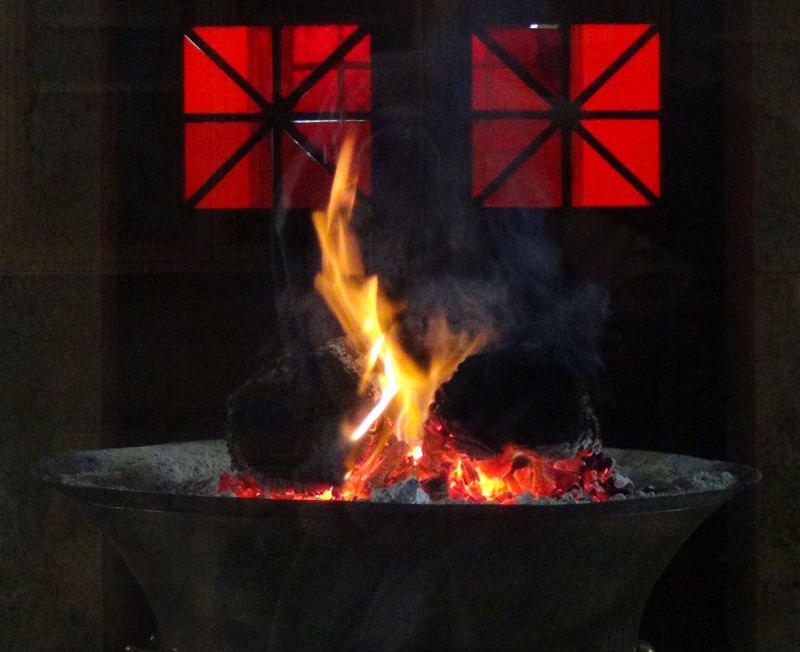
The holy fire which the Zoroastrians hold sacred is ritualistically preserved in the temple. Its flames have been kept alive for years, the worshippers fastidious in their care to keep the fire burning.

The main building of the temple sits on a raised platform in a spacious courtyard surrounded by old evergreen trees.

A large, circular and shallow pool, situated in front of the building, greets visitors on entering the compound, lending an air of grace and beauty to the surroundings.

Read the rest of this entry »

Bookmark this entry: These icons link to social bookmarking sites where readers can share and discover new web pages.
  • del.icio.us
  • digg
  • Reddit
  • Furl
  • Facebook
5
Apr

The Islamization of Europe

   Posted by: arzan sam wadia   in Heritage, History, India, Iran, Issues, Opinion

Excerpt from a longer article here

Mary Boyce, Emeritus Professor of Iranian Studies at the University of London, has confirmed the external validity of Bat Ye’or’s analytical approach in her description of how jihad and dhimmitude (without the latter being specifically identified as such) transformed Zoroastrian society in an analogous manner. Boyce has written definitive assessments of those Zoroastrian communities which survived the devastating jihad conquests of the mid 7th through early 8th centuries 20. The Zoroastrians experienced an ongoing, inexorable decline over the next millennium due to constant sociopolitical and economic pressures exerted by their Muslim rulers, and neighbor. Boyce describes these complementary phenomena based on an historical analysis, and her personal observations living in the (central Iranian) Yezd area during the 1960s:

“Either a few Moslems settled on the outskirts of a Zoroastrian village, or one or two Zoroastrian families adopted Islam. Once the dominant faith had made a breach, it pressed in remorselessly, like a rising tide. More Moslems came, and soon a small mosque was built, which attracted yet others. As long as Zoroastrians remained in the majority, their lives were tolerable; but once the Moslems became the more numerous, a petty but pervasive harassment was apt to develop. This was partly verbal, with taunts about fire-worship, and comments on how few Zoroastrians there were in the world, and how many Moslems, who must therefore posses the truth; and also on how many material advantages lay with Islam. The harassment was often also physical; boys fought, and gangs of youth waylaid and bullied individual Zoroastrians.

Read the rest of this entry »

Bookmark this entry: These icons link to social bookmarking sites where readers can share and discover new web pages.
  • del.icio.us
  • digg
  • Reddit
  • Furl
  • Facebook
4
Apr

Persepolis Today

   Posted by: arzan sam wadia   in Culture, Heritage, History, Institutions, Iran

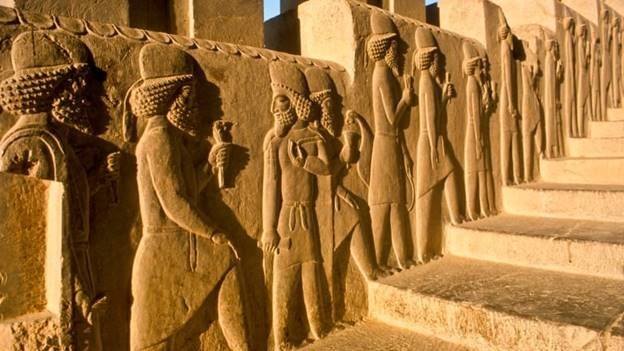
Two videos showing Persepolis today and a glimpse of the grandeur of what it was in its day.

Bookmark this entry: These icons link to social bookmarking sites where readers can share and discover new web pages.
  • del.icio.us
  • digg
  • Reddit
  • Furl
  • Facebook
3
Apr

300 Evil-Doers

   Posted by: arzan sam wadia   in Iran, Issues, Opinion

It’s been said that the movie “300″ draws certain analogies about the US and its fight for freedom. People say that the Spartan’s fight with the Persian armies is a lot like the American struggle against the government of Iran, and the fight to bring democracy to a tyrannical state. While this writer would have to agree that there are lots of analogies to be drawn from the story, they are very different from the ones currently being proposed.

Every thinking person knows that there really isn’t a separation of church from state. Religious beliefs naturally shape opinions and become ideas that eventuate in action - no one is immune. Look at our present political situation with the US Republicans exerting overwhelming pressure on the government and shaping its policy based on their religious beliefs. Will people living a thousand years from now know that the foreign policy of the most powerful nation on earth was formed by biblical prophecies? Or will they only study the political meanderings of a growing empire?